







Biotechnology Bulletin ›› 2026, Vol. 42 ›› Issue (4): 310-320.doi: 10.13560/j.cnki.biotech.bull.1985.2025-0678
Previous Articles Next Articles
ZHU Zhi-yan1,2( ), SONG Zhi-wei2, HE Shan2, ZHANG De-qing1, HE Yong2(), TIAN Zhi-hong2()
Received:2025-06-27
Online:2026-04-26
Published:2026-04-30
Contact:
HE Yong, TIAN Zhi-hong
E-mail:201673036@yangtzeu.edu.cn;warers@yangtzeu.edu.cn;zhtian@yangtzeu.edu.cn
ZHU Zhi-yan, SONG Zhi-wei, HE Shan, ZHANG De-qing, HE Yong, TIAN Zhi-hong. Identification and Control Characteristics of Antagonistic Bacteria against Tobacco Target Spot Disease[J]. Biotechnology Bulletin, 2026, 42(4): 310-320.
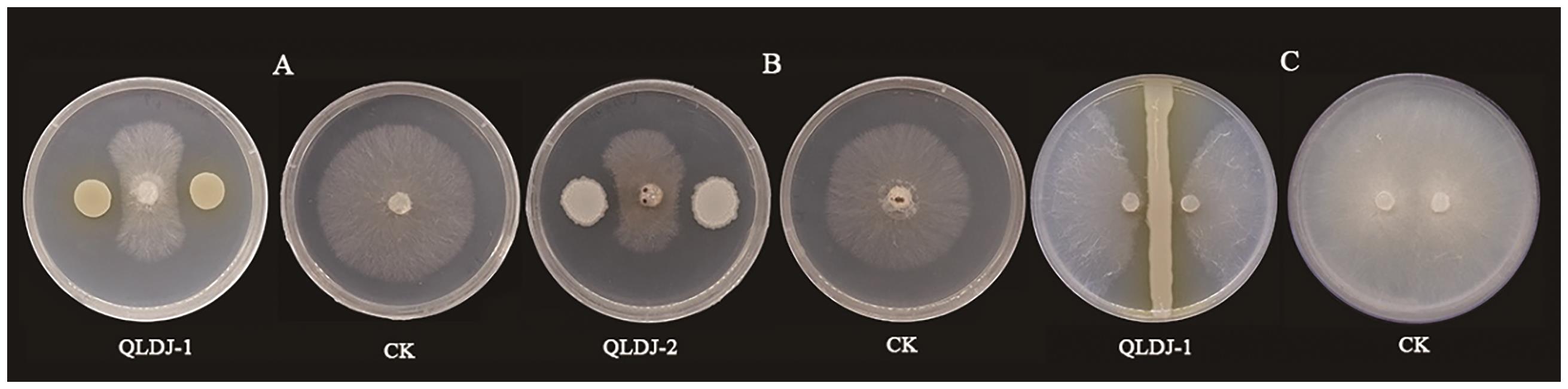
Fig. 1 Plate confrontation of bacterial strain QLDJ-1 and QLDJ-2 fermentation broth against Rhizoctonia solani
项目 Item | 阳性/阴性 Positive (+)/ Negative (-) |
|---|---|
| 生化反应 Biochemical test | + |
| 淀粉水解 Starch hydrolysis | + |
| 接触酶 Catalase production | + |
| 尿素酶 Urease production | + |
| 蔗糖利用 Sucrose utilization | - |
| 生化反应 Biochemical test | + |
| 脂酶 Esterase production | - |
| 硝酸盐还原 Nitrate reduction | - |
| 甲基红试验 Methyl red test | - |
| VP反应 VP test | - |
| 柠檬酸盐利用 Citrate utilization | + |
Table 1 Physiological and biochemical characteristics of strain QLDJ-1
项目 Item | 阳性/阴性 Positive (+)/ Negative (-) |
|---|---|
| 生化反应 Biochemical test | + |
| 淀粉水解 Starch hydrolysis | + |
| 接触酶 Catalase production | + |
| 尿素酶 Urease production | + |
| 蔗糖利用 Sucrose utilization | - |
| 生化反应 Biochemical test | + |
| 脂酶 Esterase production | - |
| 硝酸盐还原 Nitrate reduction | - |
| 甲基红试验 Methyl red test | - |
| VP反应 VP test | - |
| 柠檬酸盐利用 Citrate utilization | + |
抗生素 Antibiotics | 浓度 Concentration (μg/mL) | 敏感性 Sensibility | ||
|---|---|---|---|---|
| 24 h | 72 h | |||
氨苄青霉素 Ampicillin | 5 | + | + | |
| 50 | + | + | ||
| 100 | + | + | ||
卡那霉素 Kanamycin | 5 | - | + | |
| 50 | - | - | ||
| 100 | - | - | ||
潮霉素 Hygromycin | 5 | + | + | |
| 50 | + | + | ||
| 100 | + | + | ||
链霉素 Streptomycin | 5 | + | + | |
| 50 | + | + | ||
| 100 | - | + | ||
Table 2 Antibiotic sensitivity analysis of strain QLDJ-1
抗生素 Antibiotics | 浓度 Concentration (μg/mL) | 敏感性 Sensibility | ||
|---|---|---|---|---|
| 24 h | 72 h | |||
氨苄青霉素 Ampicillin | 5 | + | + | |
| 50 | + | + | ||
| 100 | + | + | ||
卡那霉素 Kanamycin | 5 | - | + | |
| 50 | - | - | ||
| 100 | - | - | ||
潮霉素 Hygromycin | 5 | + | + | |
| 50 | + | + | ||
| 100 | + | + | ||
链霉素 Streptomycin | 5 | + | + | |
| 50 | + | + | ||
| 100 | - | + | ||
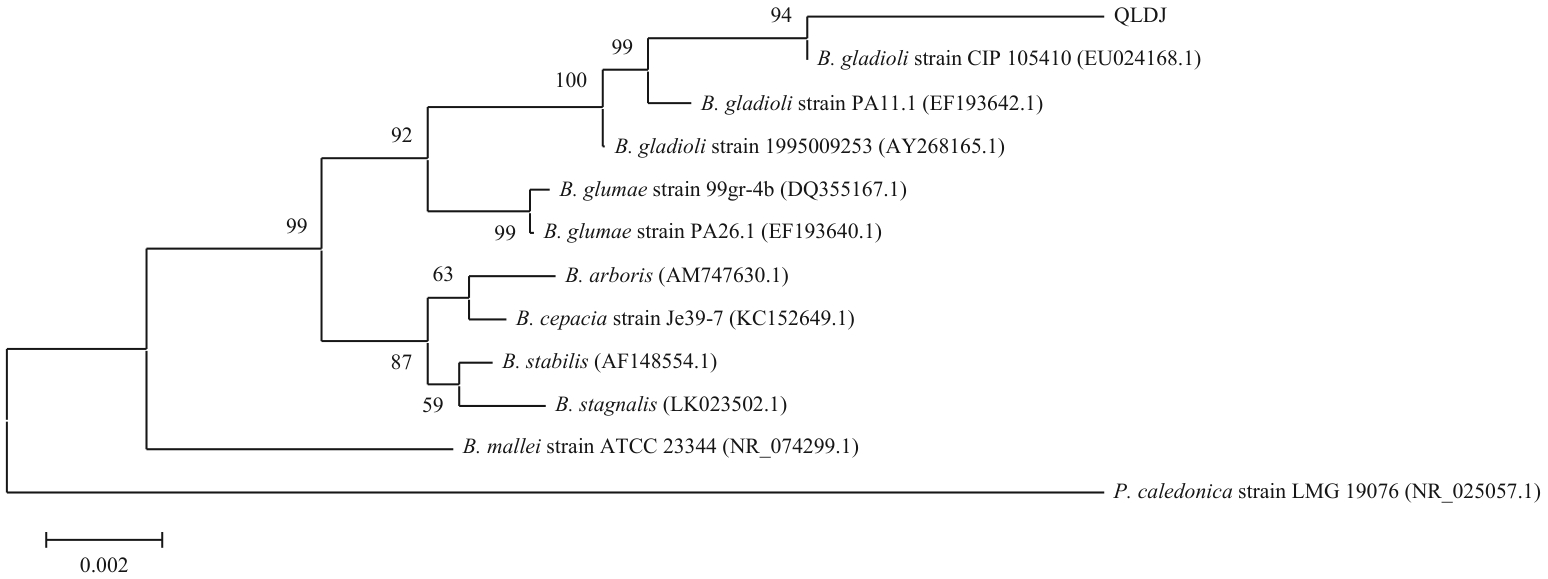
Fig. 2 QLDJ-1 gene evolutionary tree based on 16S rDNA gene sequence similarity
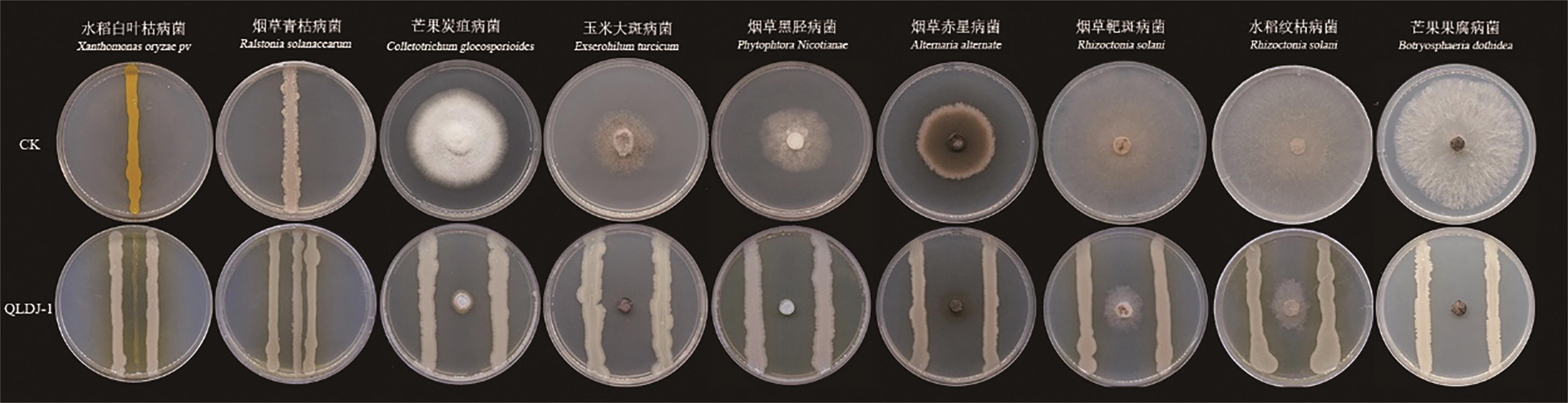
Fig. 3 Antagonistic effects of biocontrol strain QLDJ-1 against 9 different plant pathogens
病原菌 Pathogenic bacteria | 病害名称 Disease | 最长培养时间 Maximum culture time (h) | 最终抑菌圈直径 Final inhibition zone diameter (mm) | 最终相对抑菌率 Final inhibition rate (%) |
|---|---|---|---|---|
立枯丝核菌 Rhizoctonia solani | 烟草靶斑病 Target spot disease | 96 | 63.667±2.268aA | 72.107±2.788bcB |
交链格孢菌 Alternaria alternata | 烟草赤星病 Brown spot | 120 | 36.083±2.504bB | 81.490±1.614abAB |
茄科雷尔氏菌 Ralstonia solanacearum | 烟草青枯病 Bacterial wilt | 72 | 3.333±1.258eD | 32.273±9.796eD |
寄生疫霉菌 Phytophthora parasitica var. Nicotianae | 烟草黑胫病 Black shank | 168 | 31.500±1.000bcBC | 79.740±0.515abcAB |
立枯丝核菌 Rhizoctonia solani | 水稻纹枯病 Sheath blight | 72 | 64.438±3.710aA | 71.598±4.123bcB |
黄单胞菌 Xanthomonas oryzae pv | 水稻白叶枯病 Bacterial leaf blight | 96 | 5.167±1.041eD | 70.637±6.870cB |
炭疽病菌 Colletotrichum gloeosporioides | 芒果炭疽病 Anthracnose | 120 | 36.813±8.017bB | 74.527±9.500bcAB |
葡萄座腔菌 Botryosphaeria dothidea | 芒果果腐病 Fruit rot | 84 | 67.000±1.146aA | 88.370±1.026aA |
大斑突脐孢菌 Exserohilum turcicum | 玉米大斑病 Northern leaf blight | 120 | 29.038±1.338cdBC | 78.380±0.759abcAB |
Table 3 Determination of the broad-spectrum antimicrobial activity of strain QLDJ-1
病原菌 Pathogenic bacteria | 病害名称 Disease | 最长培养时间 Maximum culture time (h) | 最终抑菌圈直径 Final inhibition zone diameter (mm) | 最终相对抑菌率 Final inhibition rate (%) |
|---|---|---|---|---|
立枯丝核菌 Rhizoctonia solani | 烟草靶斑病 Target spot disease | 96 | 63.667±2.268aA | 72.107±2.788bcB |
交链格孢菌 Alternaria alternata | 烟草赤星病 Brown spot | 120 | 36.083±2.504bB | 81.490±1.614abAB |
茄科雷尔氏菌 Ralstonia solanacearum | 烟草青枯病 Bacterial wilt | 72 | 3.333±1.258eD | 32.273±9.796eD |
寄生疫霉菌 Phytophthora parasitica var. Nicotianae | 烟草黑胫病 Black shank | 168 | 31.500±1.000bcBC | 79.740±0.515abcAB |
立枯丝核菌 Rhizoctonia solani | 水稻纹枯病 Sheath blight | 72 | 64.438±3.710aA | 71.598±4.123bcB |
黄单胞菌 Xanthomonas oryzae pv | 水稻白叶枯病 Bacterial leaf blight | 96 | 5.167±1.041eD | 70.637±6.870cB |
炭疽病菌 Colletotrichum gloeosporioides | 芒果炭疽病 Anthracnose | 120 | 36.813±8.017bB | 74.527±9.500bcAB |
葡萄座腔菌 Botryosphaeria dothidea | 芒果果腐病 Fruit rot | 84 | 67.000±1.146aA | 88.370±1.026aA |
大斑突脐孢菌 Exserohilum turcicum | 玉米大斑病 Northern leaf blight | 120 | 29.038±1.338cdBC | 78.380±0.759abcAB |
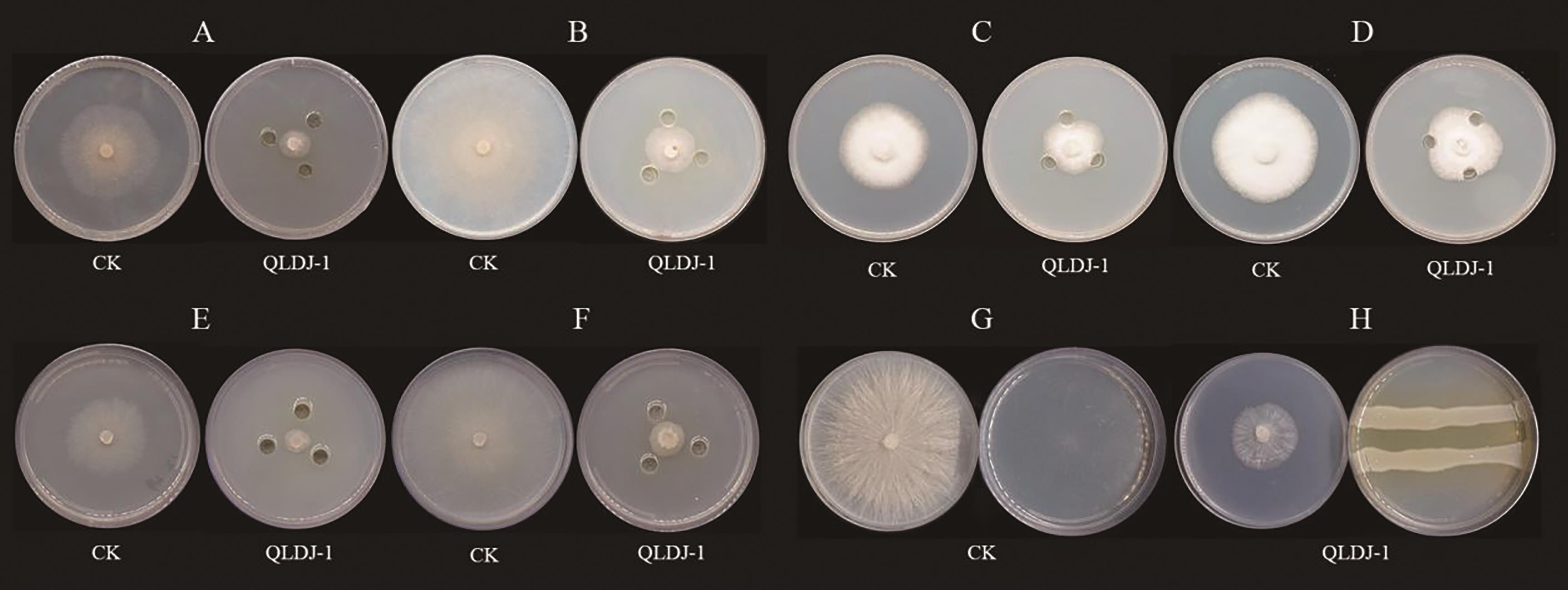
Fig. 4 Antagonistic effects of ethyl acetate compounds and volatile substances from QLDJ-1A: Compounds antagonizing tobacco target spot disease for 24 h. B: Compounds antagonizing tobacco target spot disease for 72 h. C: Compounds antagonizing mango anthracnose for 96 h. D: Compounds antagonizing mango anthracnose for 120 h. E: Compounds antagonizing Rhizoctonia solani for12 h. F: Compounds antagonizing Rhizoctonia solani for 48 h. G, H: Compounds antagonizing Rhizoctonia solani for 48 h
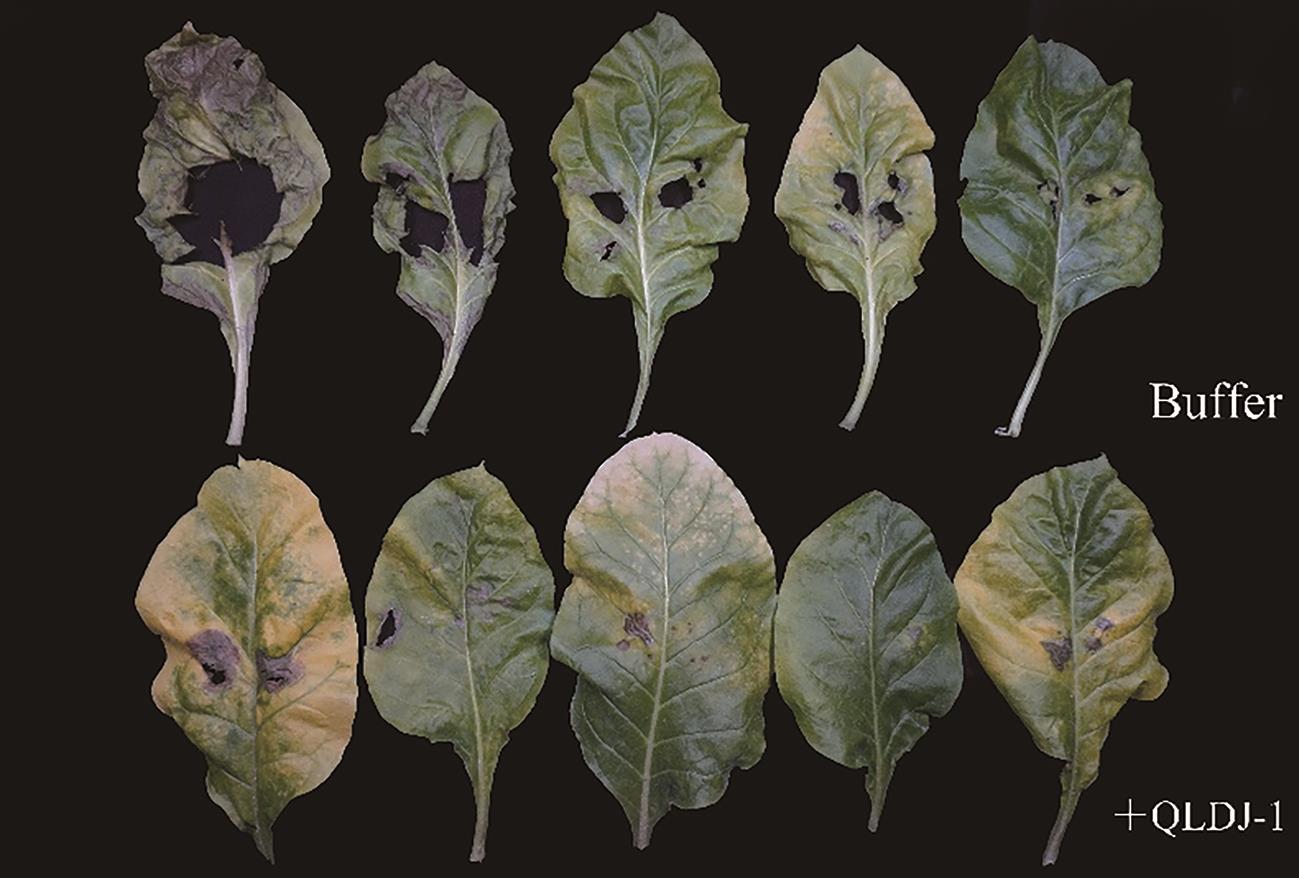
Fig. 5 Effects of QLDJ-1 on controlling tobacco target spot disease under potted cultivation in greenhouse (72 h)
处理 Treatment | 最低病级 The lowest grade disease | 最高病级 The highest grade disease | 病情指数 Disease index | 相对防效 Control effect (%) |
|---|---|---|---|---|
| CK | 1 | 9 | 47.74 | - |
| QLDJ-1 | 0 | 5 | 15.72 | 67.07 |
Table 4 Effects of strain QLDJ-1 on tobacco target spot disease indexes
处理 Treatment | 最低病级 The lowest grade disease | 最高病级 The highest grade disease | 病情指数 Disease index | 相对防效 Control effect (%) |
|---|---|---|---|---|
| CK | 1 | 9 | 47.74 | - |
| QLDJ-1 | 0 | 5 | 15.72 | 67.07 |
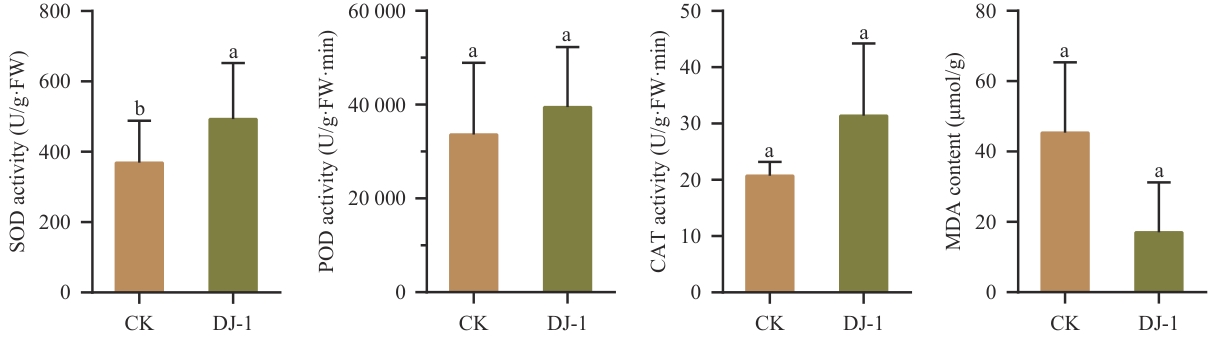
Fig. 6 Effects of QLDJ-1 on SOD, POD, CAT and MDA contents in the tobacco leaves after inoculation with target spot disease pathogensDifferent lowercase letters indicate significant differences (P<0.05). The same below

Fig. 7 Expressions of related genes in the tobacco leaves treated with QLDJ-1 under disease stressRS: Rhizoctonia solani. DJ-1: QLDJ-1, +RS -DJ-1: CK
| [1] | 吴元华, 王左斌, 刘志恒, 等. 我国烟草新病害—靶斑病 [J]. 中国烟草学报, 2006, 12(6): 22, 51. |
| Wu YH, Wang ZB, Liu ZH, et al. Target spot disease, a new tobacco disease in China [J]. Acta Tabacaria Sin, 2006, 12(6): 22, 51. | |
| [2] | 刘欣茹, 张杰, 王学坚, 等. 烟草靶斑病有性孢子形成环境条件及致病性的田间观测 [J]. 云南农业大学学报: 自然科学, 2020, 35(2): 221-226. |
| Liu XR, Zhang J, Wang XJ, et al. Study on the environmental factors and virulence of basidiospore of tobacco target spot in tobacco field [J]. J Yunnan Agric Univ Nat Sci, 2020, 35(2): 221-226. | |
| [3] | 苏燕妮, 董雪, 赵艳琴, 等. 东北地区烟草靶斑病菌(Rhizoctonia solani)融合群、致病力分化及品种抗病性研究 [J]. 植物保护, 2016, 42(1): 170-174. |
| Su YN, Dong X, Zhao YQ, et al. Anastomosis groups, pathogenicity differentiation of Rhizoctonia solani from tobacco target spot in the Northeast China and the disease resistance of tobacco varieties [J]. Plant Prot, 2016, 42(1): 170-174. | |
| [4] | Wu YH, Zhao YQ, Fu Y, et al. First report of target spot of flue-cured tobacco caused by Rhizoctonia solani AG-3 in China [J]. Plant Dis, 2012, 96(12): 1824. |
| [5] | 邓浏平, 陈怡璇, 傅雪平, 等. 烟草靶斑病致病机理及防治技术研究进展 [J]. 湖南农业科学, 2021(3): 114-118. |
| Deng LP, Chen YX, Fu XP, et al. Research progress on pathogenic mechanism and control technology of tobacco target spot [J]. Hunan Agric Sci, 2021(3): 114-118. | |
| [6] | 伏颖, 吴元华, 穆凌霄, 等. 烟草靶斑病室内药剂筛选 [J]. 江苏农业科学, 2011, 39(3): 153-155. |
| Fu Y, Wu YH, Mu LX, et al. Screening of indoor agents for tobacco target spot disease [J]. Jiangsu Agric Sci, 2011, 39(3): 153-155. | |
| [7] | 刘斯泓, 纪明山. 防治烟草靶斑病的复配药剂配方筛选及田间药效试验 [J]. 江苏农业科学, 2014, 42(6): 140-143. |
| Liu SH, Ji MS. Screening and field efficacy test of compound medicament for controlling tobacco target spot disease [J]. Jiangsu Agric Sci, 2014, 42(6): 140-143. | |
| [8] | 周建全, 张忠光, 董雪, 等. 不同药剂对烟草靶斑病的抑菌作用及田间药效研究 [J]. 安徽农业科学, 2015, 43(25): 96-97, 99. |
| Zhou JQ, Zhang ZG, Dong X, et al. Inhibition effect and field control effect of different fungicides on tobacco target spot [J]. J Anhui Agric Sci, 2015, 43(25): 96-97, 99. | |
| [9] | 王潮钟, 黄翯, 董雪, 等. 防治烟草靶斑病药剂的筛选 [J]. 河南农业科学, 2016, 45(1): 92-95. |
| Wang CZ, Huang H, Dong X, et al. Screening of fungicides for control of tobacco target spot [J]. J Henan Agric Sci, 2016, 45(1): 92-95. | |
| [10] | 王左斌, 吴元华, 赵秀香, 等. "嘧肽菌净" 对烟草靶斑病的抑菌作用及田间药效试验 [J]. 烟草科技, 2007, 40(9): 61-64. |
| Wang ZB, Wu YH, Zhao XX, et al. Inhibition effect and field control effect of 6% mitaijunjing on tobacco target spot [J]. Tob Sci Technol, 2007, 40(9): 61-64. | |
| [11] | 司洪阳, 杜红, 郝学政, 等. 1.8%嘧肽·多抗水剂对烟草靶斑病病菌(Rhizoctonia solani)的作用机制研究 [J]. 江苏农业科学, 2018, 46(2): 67-69. |
| Si HY, Du H, Hao XZ, et al. Study on the mechanism of action of 1.8% Azoxypeptide · Multi water repellent on tobacco target spot pathogen (Rhizoctonia solani) [J]. Jiangsu Agric Sci, 2018, 46(2): 67-69. | |
| [12] | 马欣, 寇宝石, 李继博, 等. 新农药8%井冈霉素可溶液剂对烟草靶斑病的防治效果 [J]. 安徽农业科学, 2022, 50(11): 133-134. |
| Ma X, Kou BS, Li JB, et al. The control effect of the new pesticide 8% Jinggangmycin SL on tobacco target spot disease [J]. J Anhui Agric Sci, 2022, 50(11): 133-134. | |
| [13] | 尹秀娟, 肖艳松, 李思军, 等. 防治烟草靶斑病复配增效配方筛选及田间防效 [J]. 农药, 2022, 61(6): 453-457. |
| Yin XJ, Xiao YS, Li SJ, et al. Selection on synergetic ratio of combine pesticides to tobacco target spot and field control effect [J]. Agrochemicals, 2022, 61(6): 453-457. | |
| [14] | Ownley BH, RLJr Ashby, Reddick BB, et al. Effect of biological and chemical controls, cultivar, host age, and planting method on severity of target spot, caused by Thanatephorus cucumeris, on float-grown tobacco seedlings [J]. Tobacco Science, 1996, 40(4): 137-146. |
| [15] | Tarantino P, Caiazzo R, Carella A, et al. Control of Rhizoctonia solani in a tobacco-float system using low rates of iprodione- and iprodione-resistant strains of Gliocladium roseum [J]. Crop Prot, 2007, 26(8): 1298-1302. |
| [16] | 徐传涛, 张崇, 张明金, 等. 四川省烟草靶斑病病原鉴定及生物防治研究 [J]. 湖北农业科学, 2021, 60(8): 87-90. |
| Xu CT, Zhang C, Zhang MJ, et al. Identification and biological control of tobacco target spot disease (Rhizoctonia solani Kühn) in Sichuan tobacco planting areas [J]. Hubei Agric Sci, 2021, 60(8): 87-90. | |
| [17] | 谭志远, 彭桂香, 徐培智, 等. 普通野生稻(Oryza rufipogon)内生固氮菌多样性及高固氮酶活性 [J]. 科学通报, 2009, 54(13): 1885-1893. |
| Tan ZY, Peng GX, Xu PZ, et al. Diversity and high nitrogenase activity of endophytic diazotrophs isolated from Oryza rufipogon Griff [J]. Chin Sci Bull, 2009, 54(13): 1885-1893. | |
| [18] | 刘丽辉, 彭桂香, 黄淑芬, 等. 落地生根内生固氮菌多样性和促生特性 [J]. 微生物学通报, 2019, 46(10): 2538-2547. |
| Liu LH, Peng GX, Huang SF, et al. Diversity and growth promotion of endophytic diazotrophic bacteria isolated from Bryophyllum pinnatum [J]. Microbiol China, 2019, 46(10): 2538-2547. | |
| [19] | 赵斌, 何绍江. 微生物学实验教程 [M]. 北京: 高等教育出版社, 2013. |
| Zhao B, He SJ. Microbiology experiment course [M]. Beijing: Higher Education Press, 2013. | |
| [20] | 东秀珠, 蔡妙英. 常见细菌系统鉴定手册 [M]. 北京: 科学出版社, 2001. |
| Dong XZ, Cai MY. Handbook of systematic identification of common bacteria [M]. Beijing: Science Press, 2001. | |
| [21] | Baker GC, Smith JJ, Cowan DA. Review and re-analysis of domain-specific 16S primers [J]. J Microbiol Meth, 2003, 55(3): 541-555. |
| [22] | Liu YX, Shi JX, Feng YG, et al. Tobacco bacterial wilt can be biologically controlled by the application of antagonistic strains in combination with organic fertilizer [J]. Biol Fertil Soils, 2013, 49(4): 447-464. |
| [23] | 陈泽斌, 夏振远, 雷丽萍, 等. 防治烟草黑胫病有益内生细菌的筛选及其抑菌作用 [J]. 中国烟草学报, 2013, 19(5): 112-117. |
| Chen ZB, Xia ZY, Lei LP, et al. Screening of endophytic beneficial bacteria to tobacco black shank control and its bacteriostasis [J]. Acta Tabacaria Sin, 2013, 19(5): 112-117. | |
| [24] | 邓振山, 马亚茹, 何园, 等. 苹果树内生菌筛选及其对苹果腐烂病防治效果 [J]. 微生物学杂志, 2016, 36(4): 16-21. |
| Deng ZS, Ma YR, He Y, et al. Screening endophytic bacteria strains of anti-apple tree decay (Valsa ceratosperma) from apple trees and their control effect [J]. J Microbiol, 2016, 36(4): 16-21. | |
| [25] | 惠非琼, 马杰, 刘剑, 等. 印度梨形孢诱导烟草的抗病性分析 [J]. 烟草科技, 2014, 47(11): 74-79. |
| Hui FQ, Ma J, Liu J, et al. Disease resistance analysis of Nicotiana tabacum induced by Piriformospora indica [J]. Tob Sci Technol, 2014, 47(11): 74-79. | |
| [26] | 李合生. 植物生理生化实验原理和技术 [M]. 北京: 高等教育出版社, 2000. |
| Li HS. Principles and techniques of plant physiological biochemical experiment [M]. Beijing: Higher Education Press, 2000. | |
| [27] | 陈建勋, 王晓峰. 植物生理学实验指导 [M]. 广州: 华南理工大学出版社, 2002. |
| Chen JX, Wang XF. Experimental guidance in plant physiology [M]. Guangzhou: South China University of Technology Press, 2002. | |
| [28] | 彭兵, 刘剑, 惠非琼, 等. 印度梨形孢诱导烟草对黑胫病的抗性及其机理的初步研究 [J]. 农业生物技术学报, 2015, 23(4): 432-440. |
| Peng B, Liu J, Hui FQ, et al. Piriformospora indica inducing tobacco resistance to black shank and its preliminary mechanism [J]. J Agric Biotechnol, 2015, 23(4): 432-440. | |
| [29] | Čechová L, Holub D, Kurka M, et al. Quantitative LIBS imaging of cadmium in plant tissues with matrix-based calibration supported by micro-X-ray fluorescence spectroscopy [J]. Spectrochim Acta Part B At Spectrosc, 2026, 235: 107389. |
| [30] | Tian Q, Gong Y, Liu S, et al. Endophytic bacterial communities in wild rice (Oryza officinalis) and their plant growth-promoting effects on perennial rice [J]. Front Plant Sci, 2023, 14: 1184489. |
| [31] | 刘春菊, 杜传印, 梁子敬, 等. 烟草根际溶磷细菌的筛选鉴定及抑菌促生效果研究 [J]. 中国烟草科学, 2020, 41(1): 9-15, 29. |
| Liu CJ, Du CY, Liang ZJ, et al. Screening and identification of phosphorus-solubilizing bacteria in tobacco rhizosphere and their antibacterial and growth-promoting effects [J]. Chin Tob Sci, 2020, 41(1): 9-15, 29. | |
| [32] | Sun Y, Cheng Z, Glick BR. The presence of a 1-aminocyclopropane-1-carboxylate (ACC) deaminase deletion mutation alters the physiology of the endophytic plant growth-promoting bacterium Burkholderia phytofirmans PsJN [J]. FEMS Microbiol Lett, 2009, 296(1): 131-136. |
| [33] | 闵莉静, 郭璐, 叶建仁. 基于嗜铁素介导的吡咯伯克霍尔德氏菌JK-SH007促生作用机制研究 [J]. 南京林业大学学报: 自然科学版, 2019, 43(6): 165-172. |
| Min LJ, Guo L, Ye JR. Mechanism of Burkholderia pyrrocinia JK-SH007 growth-promoting to plant via siderophore-mediation [J]. J Nanjing For Univ Nat Sci Ed, 2019, 43(6): 165-172. | |
| [34] | Mendes R, Pizzirani-Kleiner AA, Araujo WL, et al. Diversity of cultivated endophytic bacteria from sugarcane: genetic and biochemical characterization of Burkholderia cepacian Complex isolates [J]. Appl Environ Microbiol, 2007, 73(22): 7259-7267. |
| [35] | 唐滢, 雷平, 张翠央, 等. 抑真菌伯克霍尔德氏菌Z1的分离鉴定及其抑菌物质分析 [J]. 生命科学研究, 2020, 24(6): 484-493, 498. |
| Tang Y, Lei P, Zhang CY, et al. Isolation and identification of Burkholderia sp. Z1 and analysis of its antifungal components [J]. Life Sci Res, 2020, 24(6): 484-493, 498. | |
| [36] | Rynjah D, Browne RB, Gogoi M, et al. Ethyl acetate fraction of Rhododendron arboreum as potential therapeutic against drug-resistant bacterial isolates through experimental and in silico approach [J]. Proc Indian Natl Sci Acad, 2024, 90(3): 786-798. |
| [37] | 于晓庆, 郗丽君, 刘永光, 等. 洋葱伯克霍尔德氏菌株Lyc2的鉴定及对棉苗的防病促生作用 [J]. 植物病理学报, 2007, 37(4): 426-432. |
| Yu XQ, Xi LJ, Liu YG, et al. Physio-biochemical characterization and molecular identification of Burkholderia cepacia isolate Lyc2 as a PGPR to cotton seedlings [J]. Acta Phytopathol Sin, 2007, 37(4): 426-432. | |
| [38] | 陈凯, 李纪顺, 杨合同, 等. 越南伯克霍尔德氏工程菌株B418-37的温室防病增产效果 [J]. 山东农业科学, 2008, 40(7): 58-60. |
| Chen K, Li JS, Yang HT, et al. Biocontrol and yield-increasing effects of Burkholderia vietnamiensis recombinant strain B418-37 in greenhouse [J]. Shandong Agric Sci, 2008, 40(7): 58-60. | |
| [39] | Zhang GY, Dong JH, Han C, et al. Physiological and biochemical measurements reveal how Styrax Japonica seedlings response to flooding stress [J]. Forests, 2025, 16(4): 634. |
| [40] | 牟志美, 路国兵, 冀宪领, 等. 桑树内生拮抗细菌Burkholderia cepacia Lu10-1的分离鉴定及其内生定殖 [J]. 微生物学报, 2008, 48(5): 623-630. |
| Mu ZM, Lu GB, Ji XL, et al. Identification and colonization of an antagonistic endophytic Burkholderia cepacia Lu10-1 isolated from mulberry [J]. Acta Microbiol Sin, 2008, 48(5): 623-630. |
| [1] | ZHANG Man, DANG Jing-bo, JIANG Yuan, WEI Jie, XING Jie, WANG Zhe, SUN Li. Screening, Identification and Efficacy Determination of Biocontrol Bacteria against Pear Fire Blight [J]. Biotechnology Bulletin, 2026, 42(1): 279-293. |
| [2] | JIA Xue, SUI Li, ZOU Xiao-wei, LU Yang, ZHANG Zheng-kun, LI Qi-yun. Effects of the Mycovirus BbOCuV1 on the Growth and Development of Host Beauveria bassiana and Its Pathogenicity to Ostrinia furnacalis Larvae [J]. Biotechnology Bulletin, 2025, 41(7): 312-325. |
| [3] | ZHANG Ji-chang, XU Yun-feng, JIANG Ling-yan. Optimization of Fermentation Conditions of Endophytic Bacterium ZW21 Isolated from Stylosanthes and Stability Analysis of Antimicrobial Substances [J]. Biotechnology Bulletin, 2025, 41(5): 280-289. |
| [4] | WU Qiong, CHEN De-yong, ZHU He, WANG Dan, ZHANG Xiao-jun, CHEN Jie-yin. Biocontrol Effect of Burkholderia contaminans KRS634 on Cotton Red Rot Disease [J]. Biotechnology Bulletin, 2025, 41(12): 294-303. |
| [5] | MU Xue-nan, WU Tong, ZHENG Zi-wei, ZHANG Yue, WANG Zhi-gang, XU Wei-hui. Screening, Identification and Biocontrol Potential Analysis of an Antagonistic Strain against Ralstonia solanacearum [J]. Biotechnology Bulletin, 2025, 41(1): 276-286. |
| [6] | LIU Qian, MA Lian-jie, ZHANG Hui, WANG Dong, FAN Mao, LIAO Dun-xiu, ZHAO Zheng-wu, LU Wen-cai. Screening, Identification and Control Effects of Biocontrol Strain TN2 against Pepper Anthracnose [J]. Biotechnology Bulletin, 2025, 41(1): 287-297. |
| [7] | WANG Fang, YU Lu, QI Ze-zheng, ZHOU Chang-jun, YU Ji-dong. Screening and Biocontrol Effect of Antagonistic Bacteria against Soybean Root Rot [J]. Biotechnology Bulletin, 2024, 40(7): 216-225. |
| [8] | FAN Zong-qiang, FENG Jing-han, ZHENG Li-xue, WANG Shuo, PENG Xiang-qian, CHEN Fang. Study on the Control and Induced Resistance in Cucumber with Bacillus subtilis B579 against Cucumber Fusarium Wilt [J]. Biotechnology Bulletin, 2024, 40(7): 226-234. |
| [9] | XU Wei-fang, LI He-yu, ZHANG Hui, HE Zi-ang, GAO Wen-heng, XIE Zi-yang, WANG Chuan-wen, YIN Deng-ke. Efficacy and Its Mechanism of Bacterial Strain HX0037 on the Control of Anthracnose Disease of Trichosanthes kirilowii Maxim [J]. Biotechnology Bulletin, 2024, 40(4): 228-241. |
| [10] | XU Pei-dong, YI Jian-feng, CHEN Di, PAN Lei, XIE Bing-yan, ZHAO Wen-jun. Research Progress in the Biocontrol Secondary Metabolites of Bacillus velezensis [J]. Biotechnology Bulletin, 2024, 40(3): 75-88. |
| [11] | LI Xue, LI Rong-ou, KONG Mei-yi, HUANG Lei. The Growth Promoting Effect of Bacillus amyloliquefaciens SQ-2 on Rice [J]. Biotechnology Bulletin, 2024, 40(2): 109-119. |
| [12] | DING Yan-zhe, YAO Xin-xin, SUN Zhuo, YANG Li-min, HAN Zhong-ming, WANG Yun-he. Isolation, Screening and the Optimization of Fermentation Conditions of Biocontrol Bacteria against Eleutherococcus senticosus Black Spot [J]. Biotechnology Bulletin, 2024, 40(12): 218-226. |
| [13] | MA Yun-tao, HU Li-na, SUN Wen-jing, TANG Lian-geng, SUN Si-yuan, DENG Xin-yu, SUN Li. Screening and Identification of Antagonistic Bacterium JK2 Against Fire Blight Disease and the Optimization of Its Fermentation Conditions [J]. Biotechnology Bulletin, 2024, 40(11): 202-213. |
| [14] | YE Liu-jian, HE Yu-lan, WANG Xiao-hu, WEI Sheng-bo, HE Shuang, ZHU Qi-xia, LU Jie, ZHOU Li-qin. Effects of Bacillus amyloliquefaciens YK3 on the Control of Citrus reticulata cv. Orah Canker and Its Influence on the Network of Phyllosphere Bacteria [J]. Biotechnology Bulletin, 2024, 40(11): 248-258. |
| [15] | LI Xi, BIAN Zi-jun, NING Zhou-shen, LIU Hong-yu, ZENG Bing, DONG Wei. Studies on the Growth-promoting Effect of Bacillus Strain from Rhizosphere in Ionic Rare Earth Ores [J]. Biotechnology Bulletin, 2024, 40(11): 259-268. |
| Viewed | ||||||
|
Full text |
|
|||||
|
Abstract |
|
|||||
