







• 研究报告 • 下一篇
牛梓宇1, 牛泽霖1, 谷冰艳1, 贾怡菲1, 周晓栋2, 刘刚1, 王冬梅1( ), 王荣纳1()
收稿日期:2026-03-02
出版日期:2026-08-28
通讯作者:
王冬梅dongmeiwang63@163.com作者简介:第一联系人:同等贡献
基金资助:
NIU Zi-yu1, NIU Ze-lin1, GU Bing-yan1, JIA Yi-fei1, ZHOU Xiao-dong2, LIU Gang1, WANG Dong-mei1(), WANG Rong-na1()
Received:2026-03-02
Published:2026-08-28
摘要:
目的 针对前期挖掘到的小麦抗叶锈病相关蛋白TaNPR1,筛选其互作蛋白并验证与激酶TaCIPK10的互作关系,为进一步解析TaNPR1调控小麦抗叶锈病的分子机制提供依据。 方法 构建pGBKT7-TaNPR1诱饵载体,利用酵母双杂交技术筛选其互作蛋白;通过转录组数据分析编码候选互作蛋白基因的表达模式;采用亚细胞定位、蛋白结构对接模拟、酵母双杂交(Y2H)、双分子荧光互补(BiFC)技术对候选互作蛋白TaCIPK10进行亚细胞定位分析和互作验证。 结果 在小麦酵母双杂交文库中共筛选到86个TaNPR1候选互作蛋白,其中TaCIPK10在抗病品种TcLr26接种叶锈菌24 h后表达显著上调;亚细胞定位显示TaCIPK10主要定位在细胞膜;蛋白结构对接模拟表明二者在结构上具有互作潜力;Y2H和BiFC实验证实TaNPR1和TaCIPK10在体外和体内均存在直接互作。 结论 TaNPR1与钙信号相关激酶TaCIPK10直接互作,推测钙信号通路可能通过磷酸化机制参与水杨酸介导的小麦抗叶锈病调控网络。
牛梓宇, 牛泽霖, 谷冰艳, 贾怡菲, 周晓栋, 刘刚, 王冬梅, 王荣纳. 小麦TaNPR1互作蛋白的筛选及其与TaCIPK10互作验证[J]. 生物技术通报, doi: 10.13560/j.cnki.biotech.bull.1985.2026-0251.
NIU Zi-yu, NIU Ze-lin, GU Bing-yan, JIA Yi-fei, ZHOU Xiao-dong, LIU Gang, WANG Dong-mei, WANG Rong-na. Screening of TaNPR1-interacting Proteins in Wheat and Validation of Its Interaction with TaCIPK10[J]. Biotechnology Bulletin, doi: 10.13560/j.cnki.biotech.bull.1985.2026-0251.
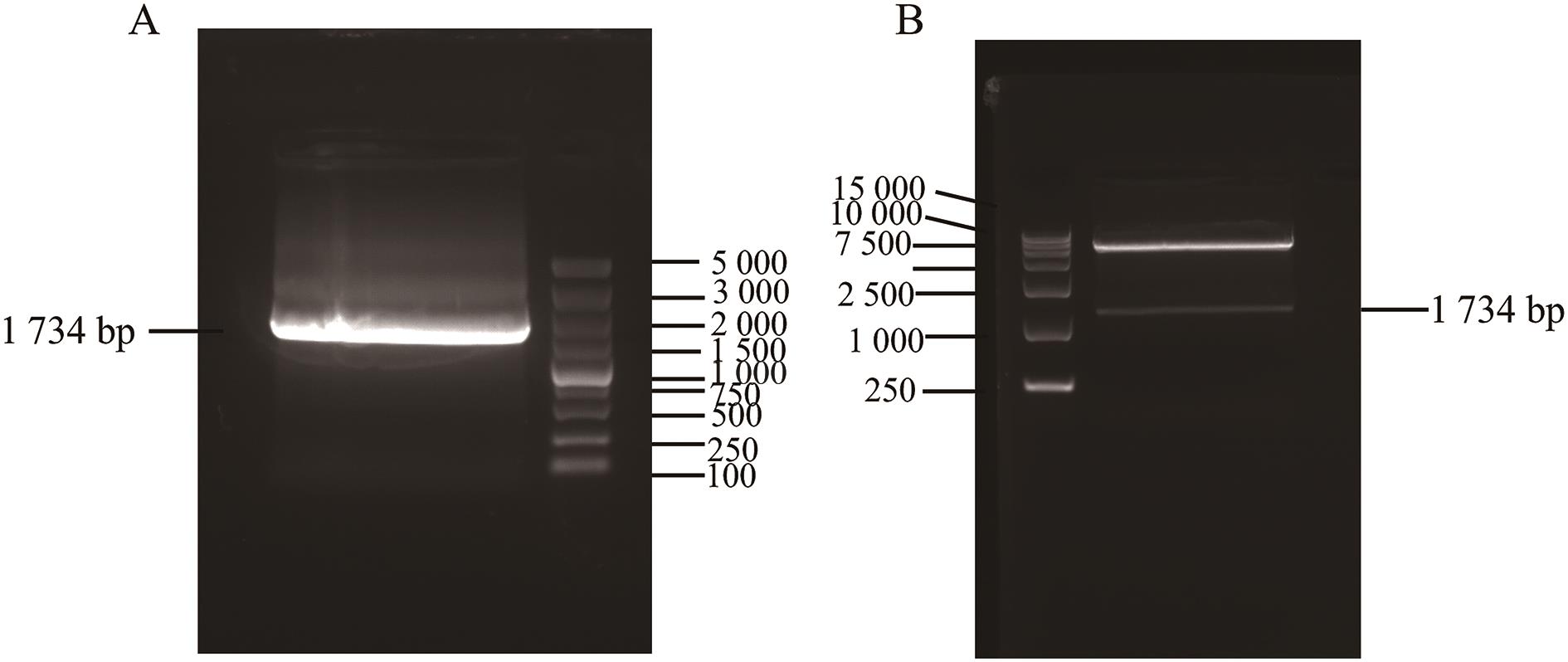
图1 pGBKT7-TaNPR1诱饵载体构建A:TaNPR1基因扩增产物;B:pGBKT7-TaNPR1诱饵载体双酶切验证
Fig. 1 Construction of the pGBKT7-TaNPR1 bait vectorA: TaNPR1 gene amplification product; B: double digestion verification of pGBKT7-TaNPR1 bait vector
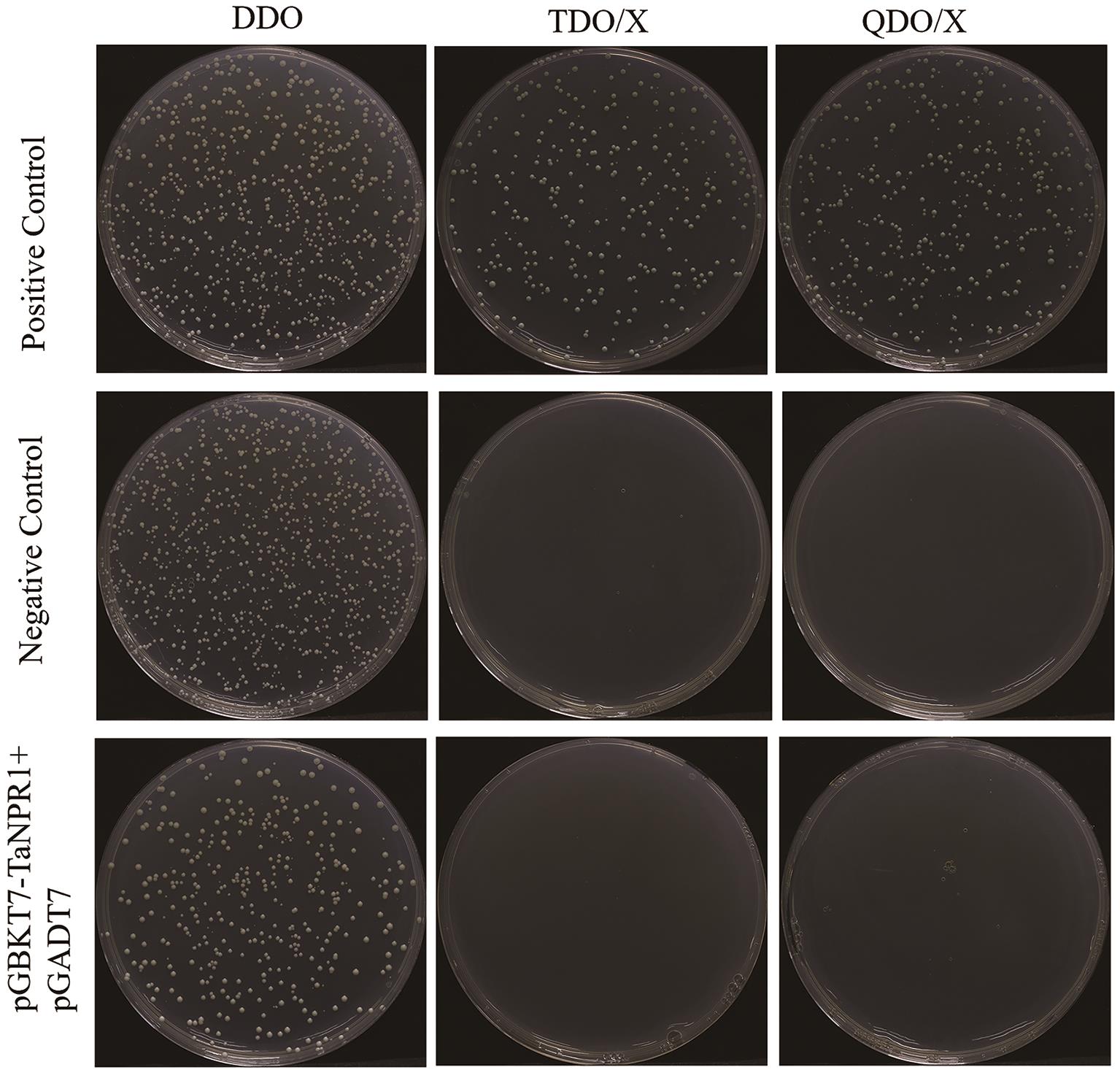
图2 pGBKT7-TaNPR1诱饵载体自激活和毒性检测
Fig. 2 Autoactivation and toxicity detection of pGBKT7-TaNPR1 bait protein
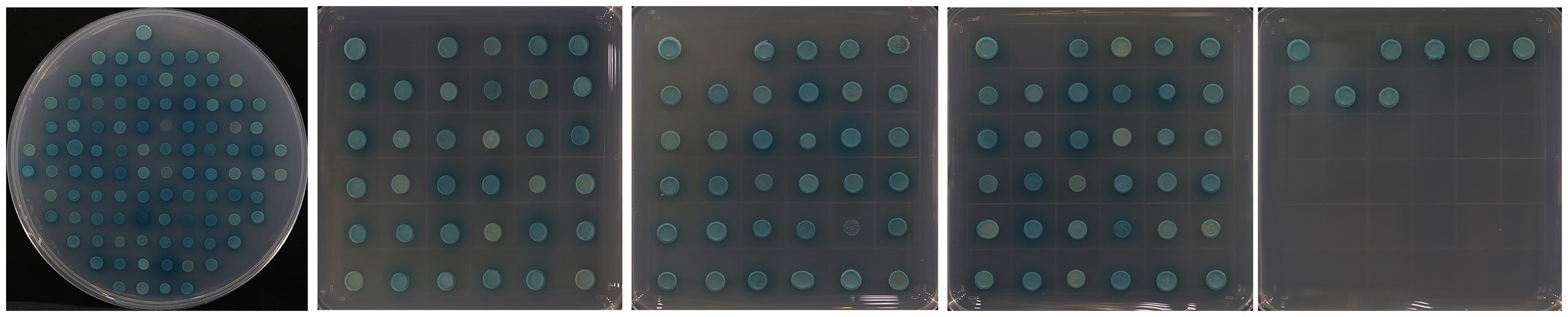
图3 TaNPR1互作蛋白的筛选
Fig. 3 Screening of TaNPR1-interacting proteins
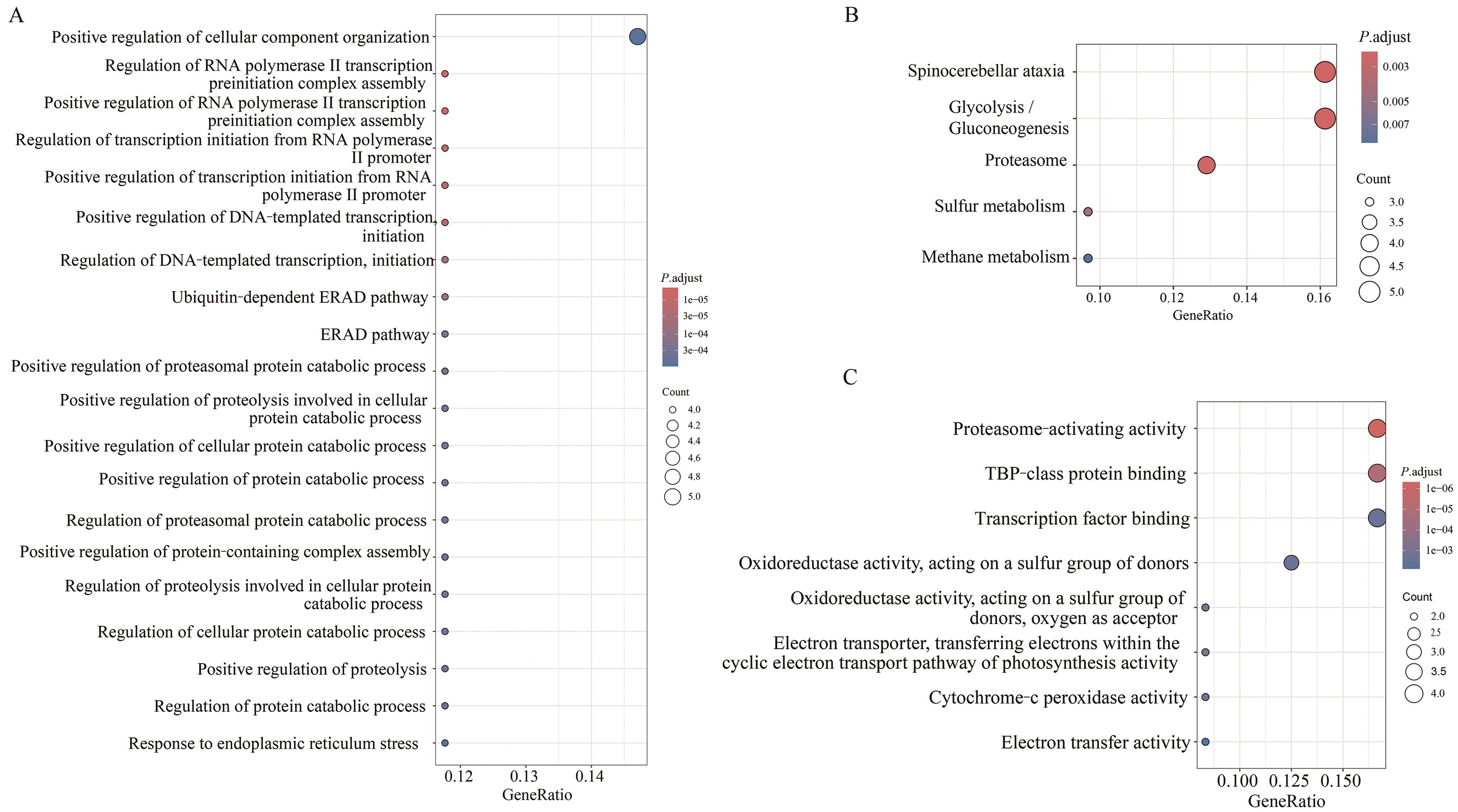
图4 TaNPR1互作蛋白的功能注释及通路分析A:生物过程;B:KEGG通路;C:分子功能
Fig. 4 Functional annotation and pathway analysis of TaNPR1-interacting proteinsA: Biological process; B: KEGG pathway; C: molecular function
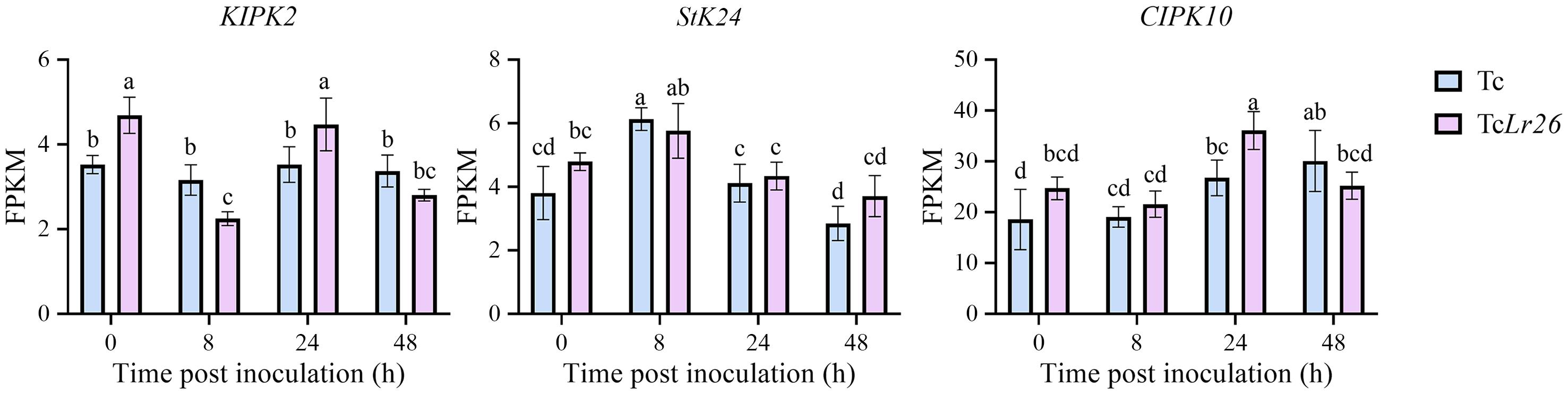
图5 TaKIPK2、TaStK24和TaCIPK10在接种叶锈菌后不同时间点表达模式分析不同的小写字母表示显著差异(P<0.05);FPKM表示每百万个有效测序片段中,每千碱基转录本长度上的片段数目
Fig. 5 Analysis of the expression patterns of TaKIPK2, TaStK24, and TaCIPK10 at different time points after inoculation with leaf rust fungusDifferent lowercase letters indicate significant differences (P<0.05); FPKM indicates the number of fragments per kilobase of transcript length in every million effective sequencing fragments
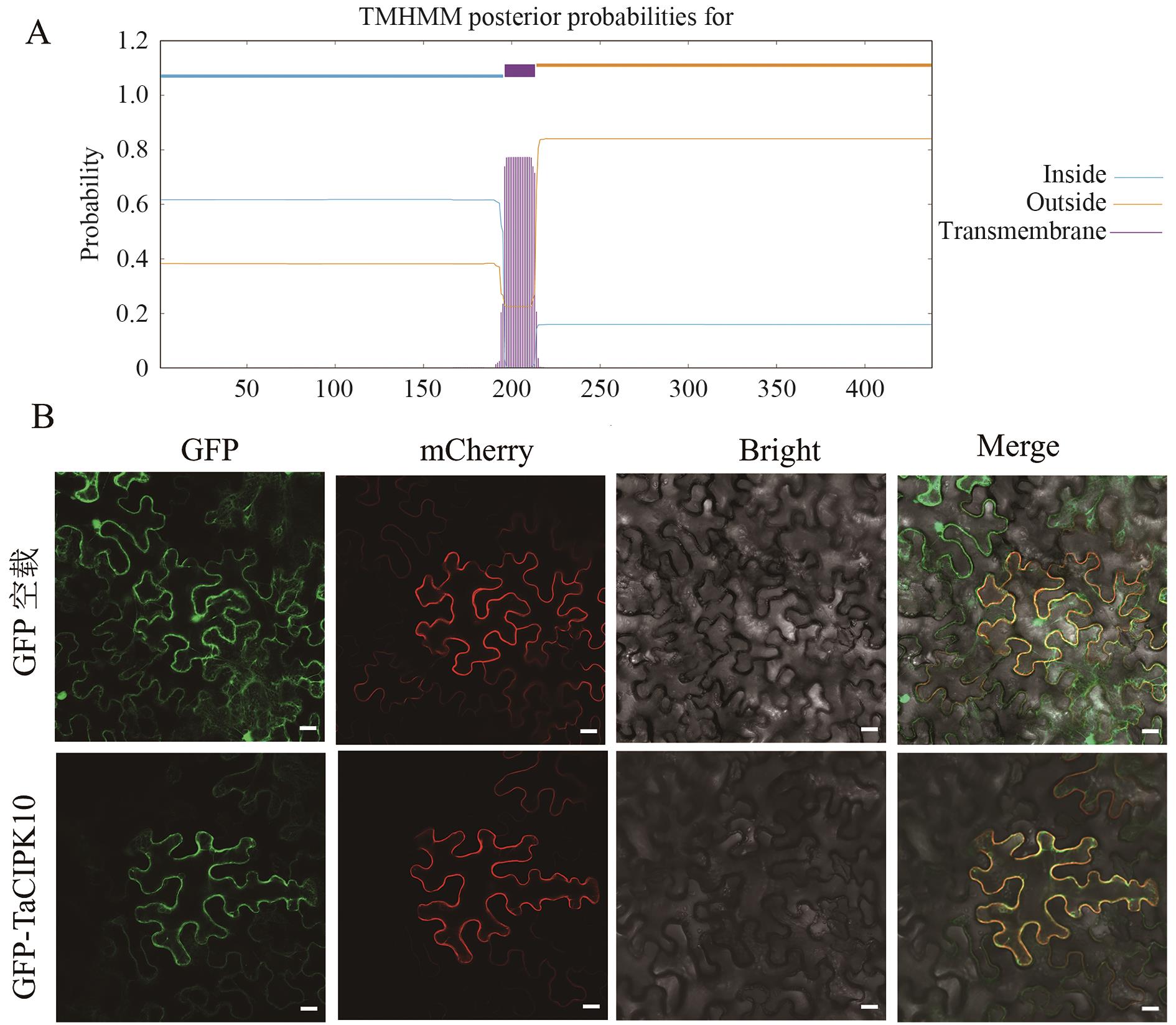
图6 TaCIPK10的亚细胞定位A:TaCIPK10跨膜结构域预测;B:TaCIPK10亚细胞定位;Bright:明场;GFP:绿色荧光蛋白;mCherry:红色荧光蛋白;Merge:叠加场。比例尺为20 μm
Fig. 6 Subcellular localization of TaCIPK10A: Prediction of the transmembrane domain of TaCIPK10; B: subcellular localization of TaCIPK10. Bright: Bright field. GFP: Green fluorescent protein. mCherry: Red fluorescent protein. Merge: Merged images of the GFP, mCherry and bright field images. Scale bar: 20 μm
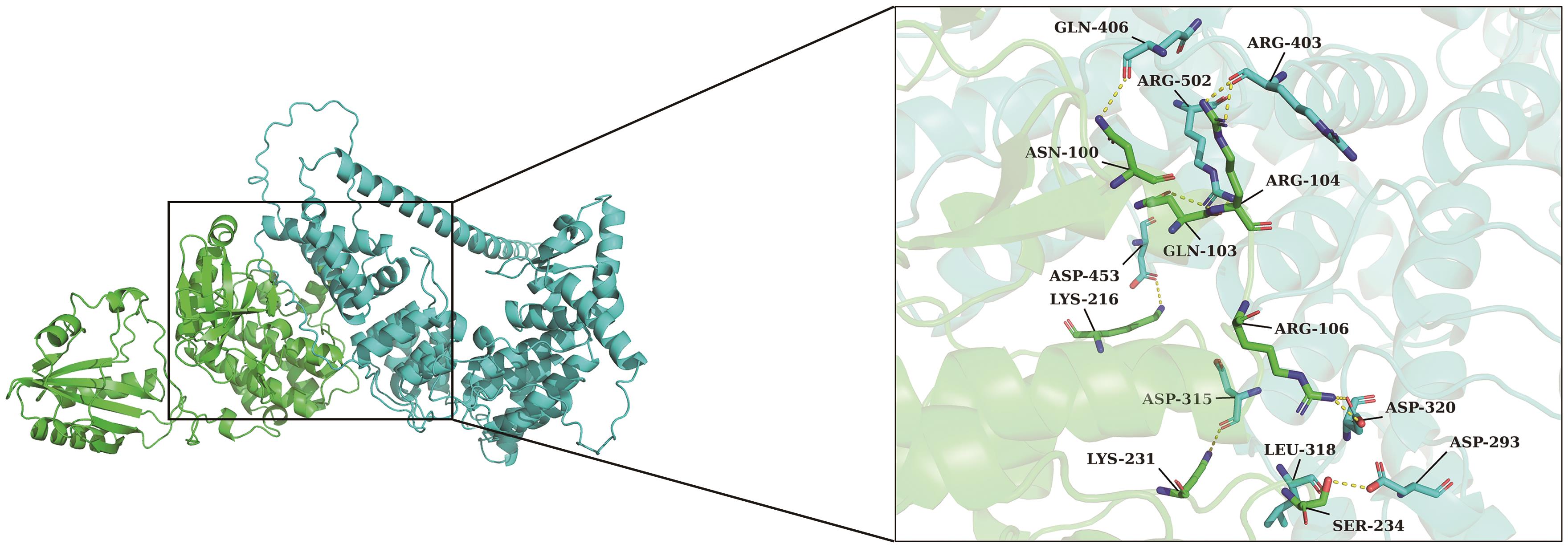
图7 蛋白三维结构及互作预测模型
Fig. 7 Protein 3D structure and interaction prediction models
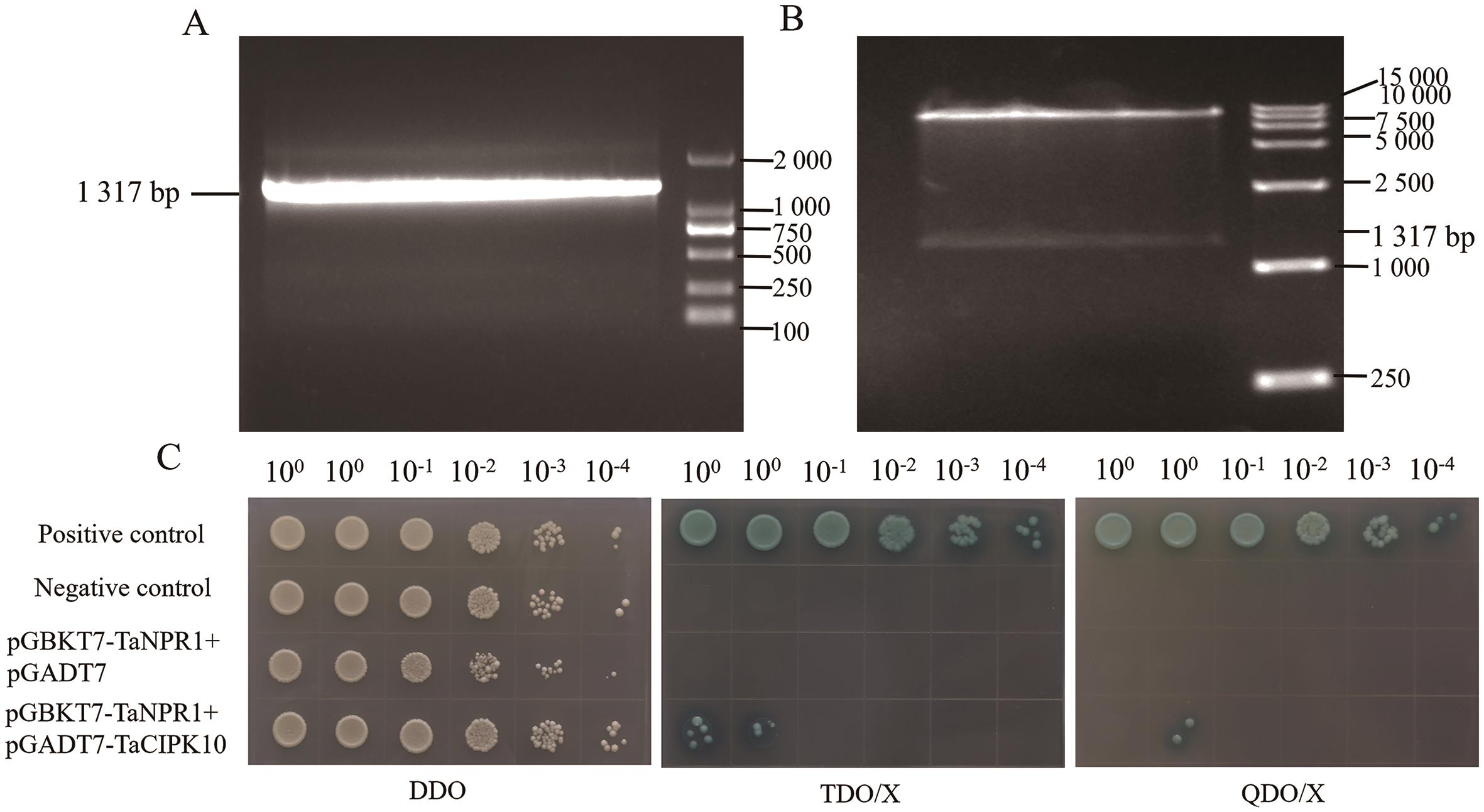
图8 pGADT7-TaCIPK10载体构建及TaNPR1与CIPK10互作的酵母双杂交验证A:TaCIPK10基因扩增产物;B:pGADT7-TaCIPK10载体单酶切验证;C:TaNPR1与TaCIPK10酵母双杂交
Fig. 8 Construction of pGADT7-TaCIPK10 vector and yeast two-hybrid verification of the interaction between TaNPR1 and TaCIPK10A: Amplification product of TaCIPK10 gene; B: single enzyme digestion verification of pGADT7-TaCIPK10 vector; C: yeast two-hybrid of TaNPR1 and TaCIPK10
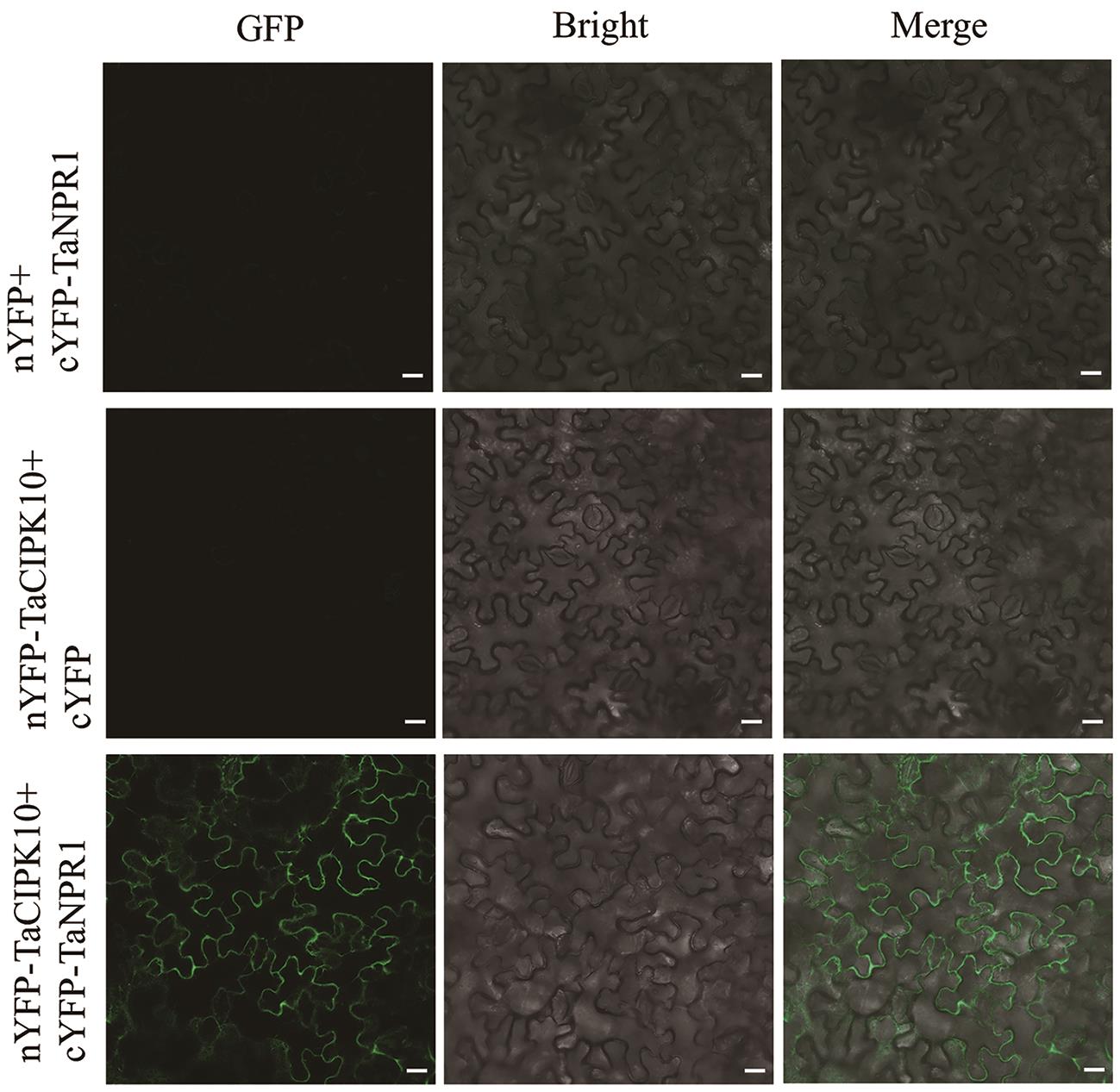
图9 TaNPR1和TaCIPK10的BiFC互作验证GFP:绿色荧光蛋白;Bright:明场;Merge:叠加。比例尺为20 μm
Fig. 9 BiFC interaction verification of TaNPR1 and TaCIPK10GFP: Green fluorescent protein. Bright: Bright field. Merge: Merged images of the GFP and bright field images. Scale bar: 20 μm
| [1] | Zhao J, Kang ZS. Fighting wheat rusts in China: a look back and into the future [J]. Phytopathol Res, 2023, 5: 6. |
| [2] | Tong JY, Zhao C, Liu D, et al. Genome-wide atlas of rust resistance loci in wheat [J]. Theor Appl Genet, 2024, 137(8): 179. |
| [3] | 刘琳琳, 甄军波, 刘迪, 等. NPR1调控植物抗病机制及功能研究进展 [J]. 中国棉花, 2020(7): 1-6, 19. |
| Liu LL, Zhen JB, Liu D, et al. Advances of the mechanism and function of disease resistance regulated by NPR1 in plants [J]. China Cotton, 2020(7): 1-6, 19. | |
| [4] | Zavaliev R, Mohan R, Chen TY, et al. Formation of NPR1 condensates promotes cell survival during the plant immune response [J]. Cell, 2020, 182(5): 1093-1108.e18. |
| [5] | Lee HJ, Park YJ, Seo PJ, et al. Systemic immunity requires SnRK2.8-mediated nuclear import of NPR1 in Arabidopsis [J]. Plant Cell, 2015, 27(12): 3425-3438. |
| [6] | Saleh A, Withers J, Mohan R, et al. Posttranslational modifications of the master transcriptional regulator NPR1 enable dynamic but tight control of plant immune responses [J]. Cell Host Microbe, 2015, 18(2): 169-182. |
| [7] | Bihani SC, Tarushi, Srivastava AK. Decoding the calcium signal: Structural insights into CBL-CIPK pathway in plants [J]. Acta BBA Gen Subj, 2025, 1869(8): 130819. |
| [8] | Kaya C, Uğurlar F, Adamakis IS. Molecular mechanisms of CBL-CIPK signaling pathway in plant abiotic stress tolerance and hormone crosstalk [J]. Int J Mol Sci, 2024, 25(9): 5043. |
| [9] | He FX, Wang C, Sun HL, et al. Simultaneous editing of three homoeologues of TaCIPK14 confers broad-spectrum resistance to stripe rust in wheat [J]. Plant Biotechnol J, 2023, 21(2): 354-368. |
| [10] | Liu P, Duan YH, Liu C, et al. The calcium sensor TaCBL4 and its interacting protein TaCIPK5 are required for wheat resistance to stripe rust fungus [J]. J Exp Bot, 2018, 69(18): 4443-4457. |
| [11] | Tena G, Boudsocq M, Sheen J. Protein kinase signaling networks in plant innate immunity [J]. Curr Opin Plant Biol, 2011, 14(5): 519-529. |
| [12] | Xie CG, Zhou XN, Deng XW, et al. PKS5, a SNF1-related kinase, interacts with and phosphorylates NPR1, and modulates expression of WRKY38 and WRKY62 [J]. J Genet Genom, 2010, 37(6): 359-369. |
| [13] | Liu P, Guo J, Zhang RM, et al. TaCIPK10 interacts with and phosphorylates TaNH2 to activate wheat defense responses to stripe rust [J]. Plant Biotechnol J, 2019, 17(5): 956-968. |
| [14] | Sardar A, Nandi AK, Chattopadhyay D. CBL-interacting protein kinase 6 negatively regulates immune response to Pseudomonas syringae in Arabidopsis [J]. J Exp Bot, 2017, 68(13): 3573-3584. |
| [15] | 李姗, 乔金柱, 李烨, 等. TaNPR1在小麦抵抗叶锈菌过程中的作用 [J]. 河北农业大学学报, 2022, 45(1): 1-6. |
| Li S, Qiao JZ, Li Y, et al. Role of TaNPR1 in wheat resistance to Puccinia triticina [J]. J Agric Univ Hebei, 2022, 45(1): 1-6. | |
| [16] | 牛泽霖, 韩浩然, 王傲嘉, 等. 小麦抗叶锈病cDNA文库构建及TaGRF3互作蛋白的筛选 [J]. 河北农业大学学报, 2025, 48(6): 34-43. |
| Niu ZL, Han HR, Wang AJ, et al. Construction of cDNA library of wheat resistance to leaf rust and screening of TaGRF3 interacting proteins [J]. J Hebei Agric Univ, 2025, 48(6): 34-43. | |
| [17] | 刘勇, 杨志晓, 孔德钧, 等. 烟草NPR1基因家族鉴定及其在南方根结线虫胁迫下的表达分析 [J]. 山东农业科学, 2024, 56(9): 22-33. |
| Liu Y, Yang ZX, Kong DJ, et al. Identification of tobacco NPR1 gene family and expression analysis under Meloidogyne incognita stress [J]. Shandong Agric Sci, 2024, 56(9): 22-33. | |
| [18] | Ishfaqe Q, Sami A, Zeshan Haider M, et al. Genome wide identification of the NPR1 gene family in plant defense mechanisms against biotic stress in chili (Capsicum annuum L.) [J]. Front Microbiol, 2024, 15: 1437553. |
| [19] | van Wees SCM, de Swart EAM, van Pelt JA, et al. Enhancement of induced disease resistance by simultaneous activation of salicylate- and jasmonate-dependent defense pathways in Arabidopsis thaliana [J]. Proc Natl Acad Sci U S A, 2000, 97(15): 8711-8716. |
| [20] | 张红志, 蔡新忠. 病程相关基因非表达子1(NPR1): 植物抗病信号网络中的关键节点 [J]. 生物工程学报, 2005, 21(4): 511-515. |
| Zhang HZ, Cai XZ. Nonexpressor of pathogenesis-related genes 1 (NPR1): a key node of plant disease resistance signalling network [J]. Chin J Biotechnol, 2005, 21(4): 511-515. | |
| [21] | Cao H, Glazebrook J, Clarke JD, et al. The Arabidopsis NPR1 gene that controls systemic acquired resistance encodes a novel protein containing ankyrin repeats [J]. Cell, 1997, 88(1): 57-63. |
| [22] | Cao H, Li X, Dong XN. Generation of broad-spectrum disease resistance by overexpression of an essential regulatory gene in systemic acquired resistance [J]. Proc Natl Acad Sci U S A, 1998, 95(11): 6531-6536. |
| [23] | Kumar V, Joshi SG, Bell AA, et al. Enhanced resistance against Thielaviopsis basicola in transgenic cotton plants expressing Arabidopsis NPR1 gene [J]. Transgenic Res, 2013, 22(2): 359-368. |
| [24] | 冯向君, 王宏宇, 于静, 等. 过表达拟南芥NPR1增强黄瓜对枯萎病和白粉病的抗性 [J]. 中国农业科学, 2023, 56(14): 2701-2712. |
| Feng XJ, Wang HY, Yu J, et al. Overexpressing NPR1 from Arabidopsis thaliana enhanced resistance to Fusarium wilt and powdery mildew in Cucumis sativus [J]. Sci Agric Sin, 2023, 56(14): 2701-2712. | |
| [25] | Yu DQ, Chen CH, Chen ZX. Evidence for an important role of WRKY DNA binding proteins in the regulation of NPR1 gene expression [J]. Plant Cell, 2001, 13(7): 1527. |
| [26] | Powers J, Zhang X, Reyes AV, et al. Next-generation mapping of the salicylic acid signaling hub and transcriptional cascade [J]. Mol Plant, 2024, 17(10): 1558-1572. |
| [27] | Li M, Chen H, Chen J, et al. TCP transcription factors interact with NPR1 and contribute redundantly to systemic acquired resistance [J]. Front Plant Sci, 2018, 9: 1153. |
| [28] | Fan WH, Dong XN. In vivo interaction between NPR1 and transcription factor TGA2 leads to salicylic acid-mediated gene activation in Arabidopsis [J]. Plant Cell, 2002, 14(6): 1377-1389. |
| [29] | Wang ZS, Orosa-Puente B, Nomoto M, et al. Proteasome-associated ubiquitin ligase relays target plant hormone-specific transcriptional activators [J]. Sci Adv, 2022, 8(42): eabn4466. |
| [30] | Spoel SH, Mou ZL, Tada Y, et al. Proteasome-mediated turnover of the transcription coactivator NPR1 plays dual roles in regulating plant immunity [J]. Cell, 2009, 137(5): 860-872. |
| [31] | Zhang JJ, Gao J, Zhu Z, et al. MKK4/MKK5-MPK1/MPK2 cascade mediates SA-activated leaf senescence via phosphorylation of NPR1 in Arabidopsis [J]. Plant Mol Biol, 2020, 102(4/5): 463-475. |
| [1] | 吕正, 连如赢, 刘怡德, 刘易科, 宁强, 王书平. 小麦HD-Zip基因家族的鉴定及对禾谷镰刀菌的响应[J]. 生物技术通报, 2026, 42(8): 123-132. |
| [2] | 吕红珍, 徐莉莉, 张琳, 高敏, 谭镇炜, 王亚雯, 张秀格, 王硕, 马爱军, 王承民. 高效解磷菌筛选优化及其对弱碱土小麦促生效应[J]. 生物技术通报, 2026, 42(8): 263-275. |
| [3] | 王欣悦, 邵庆一, 陈宇姝, 胡昳凡, 赵楠, 王嫱, 王敏丽, 王雪松, 金忠民, 刘丽杰. 冬小麦TaMYBS1-like基因的克隆及功能分析[J]. 生物技术通报, 2026, 42(6): 218-226. |
| [4] | 许孟歌, 宋火焱, 罗佳, 苏亿, 周会汶, 王灿, 孔可可. 大豆GmRLK19基因表达分析及互作蛋白的筛选[J]. 生物技术通报, 2026, 42(4): 92-100. |
| [5] | 豆飞飞, 任毓昭, 王石磊, 刘春颖, 王晓东, 王昭懿, 刘彩霞, 刘凤楼, 王掌军, 李清峰. 宁春4号小麦EMS突变体库的构建及表型变异分析[J]. 生物技术通报, 2025, 41(8): 92-101. |
| [6] | 张越, 毕钰, 慕雪男, 郑子薇, 王志刚, 徐伟慧. 小麦赤霉病拮抗菌JB7的生防特性[J]. 生物技术通报, 2025, 41(7): 261-271. |
| [7] | 李成花, 豆飞飞, 任毓昭, 刘彩霞, 刘凤楼, 王掌军, 李清峰. 外施水杨酸对白粉菌侵染小麦的影响及白粉菌转录组分析[J]. 生物技术通报, 2025, 41(7): 272-280. |
| [8] | 刘晓天, 何毓琦, 刘畅, 薛华. 家榆UpNOA1的克隆及其互作蛋白的筛选[J]. 生物技术通报, 2025, 41(6): 297-306. |
| [9] | 王伟伟, 赵振杰, 王志, 邹景伟, 罗政辉, 张玉杰, 钮力亚, 于亮, 杨学举. 盐胁迫下与小麦生理响应相关的耐盐基因研究进展[J]. 生物技术通报, 2025, 41(5): 14-22. |
| [10] | 王轶民, 李莹, 董海涛, 张恒瑞, 常璐, 高田甜, 韩德俊, 吴建辉. SRO家族蛋白在小麦多倍化进程中的演化规律[J]. 生物技术通报, 2025, 41(5): 70-81. |
| [11] | 曲珊, 赵月, 李雅华, 郑桂玲, 咸洪泉. 调控棘孢木霉几丁质酶Tachi2基因的转录因子和蛋白的互作研究[J]. 生物技术通报, 2025, 41(5): 310-319. |
| [12] | 刘丽, 王辉, 关天舒, 李柏宏, 于舒怡. 葡萄脱落酸受体VvPYL4互作蛋白的筛选及互作蛋白基因表达[J]. 生物技术通报, 2025, 41(4): 188-197. |
| [13] | 马耀武, 张麒宇, 杨淼, 蒋诚, 张振宇, 张伊琳, 李梦莎, 许嘉阳, 张斌, 崔光周, 姜瑛. 烟草根际促生菌的筛选鉴定及促生性能研究[J]. 生物技术通报, 2025, 41(3): 271-281. |
| [14] | 葛仕杰, 刘怡德, 张华东, 宁强, 朱展望, 王书平, 刘易科. 小麦蛋白质二硫键异构酶基因家族的鉴定与表达[J]. 生物技术通报, 2025, 41(2): 85-96. |
| [15] | 范艳飞, 叶露幻, 李雨桐, 王钏跞, 张瑞, 罗建华, 王鹏. 运用小麦杂交株系挖掘环式光合电子传递调控基因并应用于作物高光效改造[J]. 生物技术通报, 2025, 41(10): 72-86. |
| 阅读次数 | ||||||
|
全文 |
|
|||||
|
摘要 |
|
|||||
