







生物技术通报 ›› 2026, Vol. 42 ›› Issue (10): 55-66.doi: 10.13560/j.cnki.biotech.bull.1985.2025-1424
• 研究报告 • 上一篇
秦天元, 吕玉平, 阿不来提·阿布拉, 韩登旭, 董远, 张雪, 杨杰( )
收稿日期:2025-12-26
出版日期:2026-10-26
发布日期:2026-10-15
通讯作者:
杨杰155165876@qq.com基金资助:
QIN Tian-yuan, LYU Yu-ping, ABULAITI Abula, HAN Deng-Xu, DONG Yuan, ZHANG Xue, YANG Jie()
Received:2025-12-26
Published:2026-10-26
Online:2026-10-15
摘要:
目的 挖掘玉米中与热胁迫调控通路、抗逆指标紧密相关的核心基因,为解析玉米耐热机理提供新方向。 方法 选用耐热性较强的自交系PHBA6和热敏感自交系吉63为材料,分别在田间和温室条件下种植,于开花前期实施热胁迫处理。基于转录组测序分析,系统比较热胁迫条件下2种基因型雄穗的分子响应特征。 结果 在PHBA6中共鉴定1 288个差异表达基因,在吉63中共鉴定到912个差异表达基因。进一步通过加权基因共表达网络分析(weighted gene co-expression network analysis, WGCNA)构建与抗逆表型性状相关的基因共表达网络,共鉴定出15个与雄穗耐热性显著相关的基因模块。其中,4个与目标性状相关性最高的模块中进一步筛选出一批潜在关键基因,这些基因主要涉及转录调控、蛋白稳态维持、活性氧代谢及胁迫信号转导等生物学过程。 结论 系统揭示了玉米雄穗在热胁迫下的关键调控网络特征,明确了一批与耐热性密切相关的核心基因及其潜在调控通路。
秦天元, 吕玉平, 阿不来提·阿布拉, 韩登旭, 董远, 张雪, 杨杰. 基于WGCNA的玉米雄穗耐热相关共表达模块鉴定和核心基因发掘[J]. 生物技术通报, 2026, 42(10): 55-66.
QIN Tian-yuan, LYU Yu-ping, ABULAITI Abula, HAN Deng-Xu, DONG Yuan, ZHANG Xue, YANG Jie. Identification of Heat-responsive Co-expression Modules and Mining of Hub Genes in Maize Tassel Based on WGCNA[J]. Biotechnology Bulletin, 2026, 42(10): 55-66.
自交系 Inbred line | 母本 Maternal parent | 父本 Paternal parent |
|---|---|---|
| PHBA6 | PHZ51 | PHG47 |
| 吉63 | (127-32×铁84) | (W24×W20)辐 |
表1 试验材料
Table 1 Experimental materials
自交系 Inbred line | 母本 Maternal parent | 父本 Paternal parent |
|---|---|---|
| PHBA6 | PHZ51 | PHG47 |
| 吉63 | (127-32×铁84) | (W24×W20)辐 |
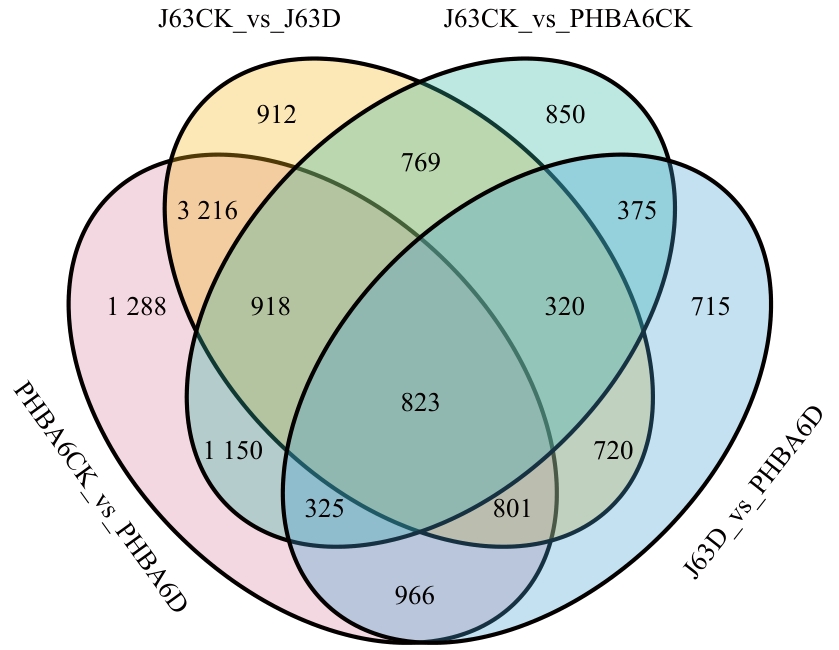
图1 不同处理下PHBA6与吉63雄穗中差异表达基因数CK:对照;D:胁迫
Fig. 1 Differentially expressed genes in tassels of PHBA6 and J63 under different treatmentCK: Control. D: Stress
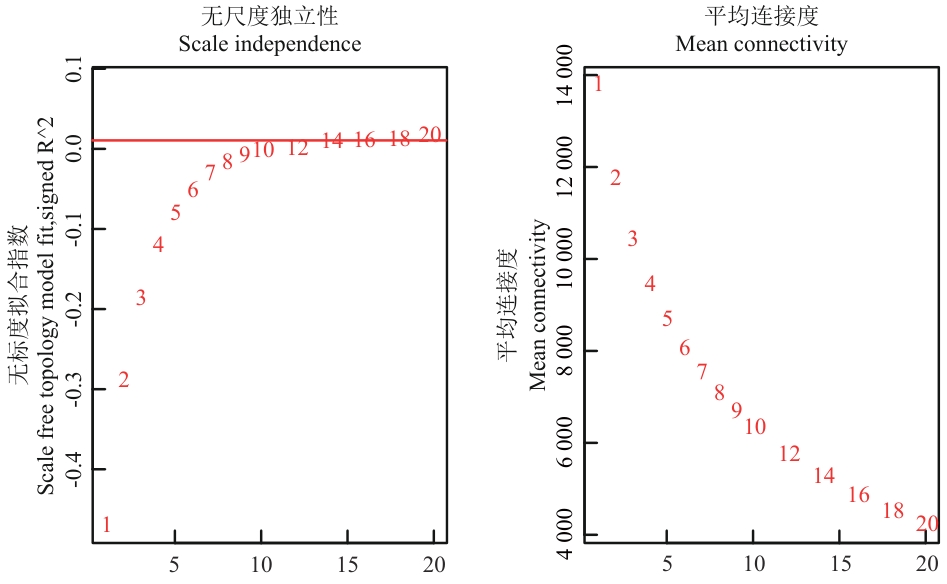
图2 基因共表达网络分析中软阈值的确定
Fig. 2 Determination of soft thresholds for gene co-expression networks
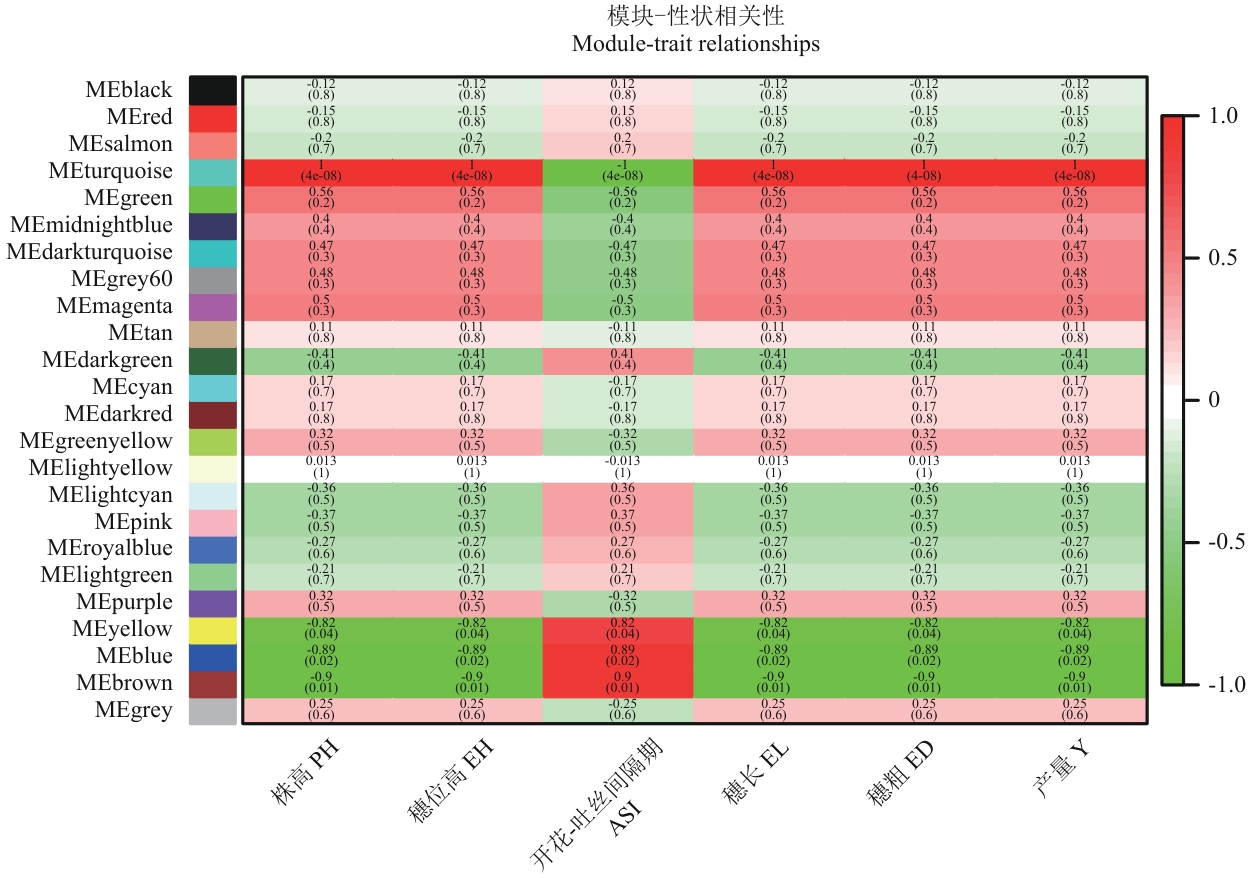
图3 基因共表达网络模块与性状的关联热图横轴表示不同的性状,纵轴表示每一个模块的特征向量。红色的格子代表性状与模块具有正相关性,绿色的格子代表性状与模块具有负相关性。PH:株高;EH:穗位高;ASI:开花吐丝间隔期;EL:穗长;ED:穗粗;Y:产量
Fig. 3 Correlation heatmap of gene co-expression network modules and traitsThe horizontal axis indicates different traits, and the vertical axis indicates the eigenvector of each module. Red grids indicate a positive correlation between traits and modules, while green grids indicate a negative correlation between traits and modules. PH: Plant height. EH: Ear height. ASI: Anthesis-silking interval. EL: Ear length ED: Ear diameter. Y: Yield
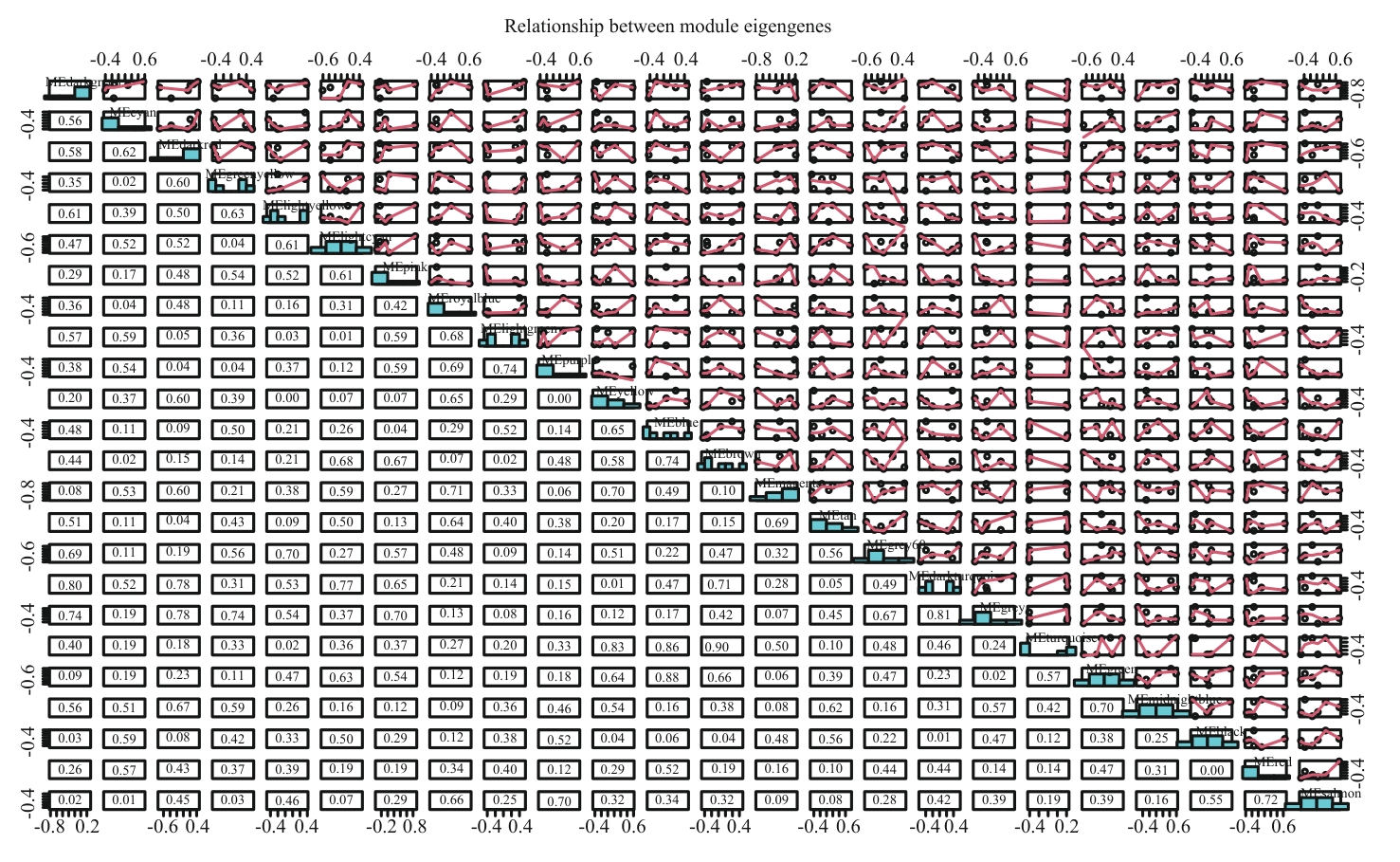
图4 基因共表达网络不同模块间ME的相关性
Fig. 4 Correlation of module eigengenes (ME) among different modules in the gene co-expression network
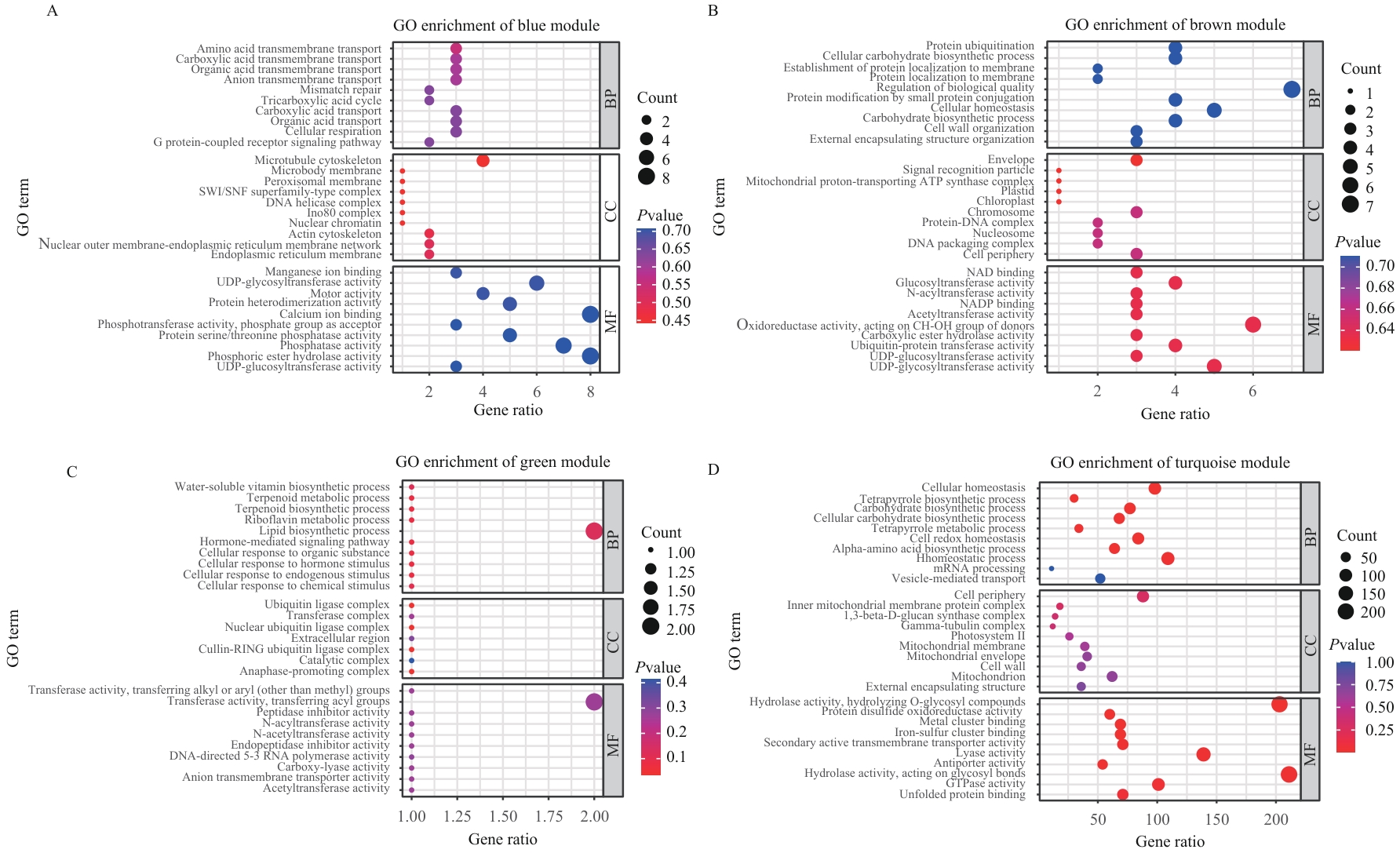
图5 候选模块中基因的GO富集A、B、C和D分别表示blue、brown、green和turquoise模块内基因的GO富集分析结果。颜色深浅表示显著性水平,红色越深表示P值越小(显著性越高),蓝色表示P值较大(显著性较低),下同。圆点大小表示富集基因的数量,圆越大,富集基因数目越多
Fig. 5 GO enrichment of genes in candidate modulesA, B, C, and D refers to the GO enrichment analysis results of genes in the blue, brown, green, and turquoise modules, respectively. The color intensity indicates the significance level: the darker the red, the smaller the P-value (higher significance), while blue indicates a larger P-value (lower significance), the same below. The sizes of the dots indicate the number of enriched genes; the larger the dot, the greater the number of enriched genes
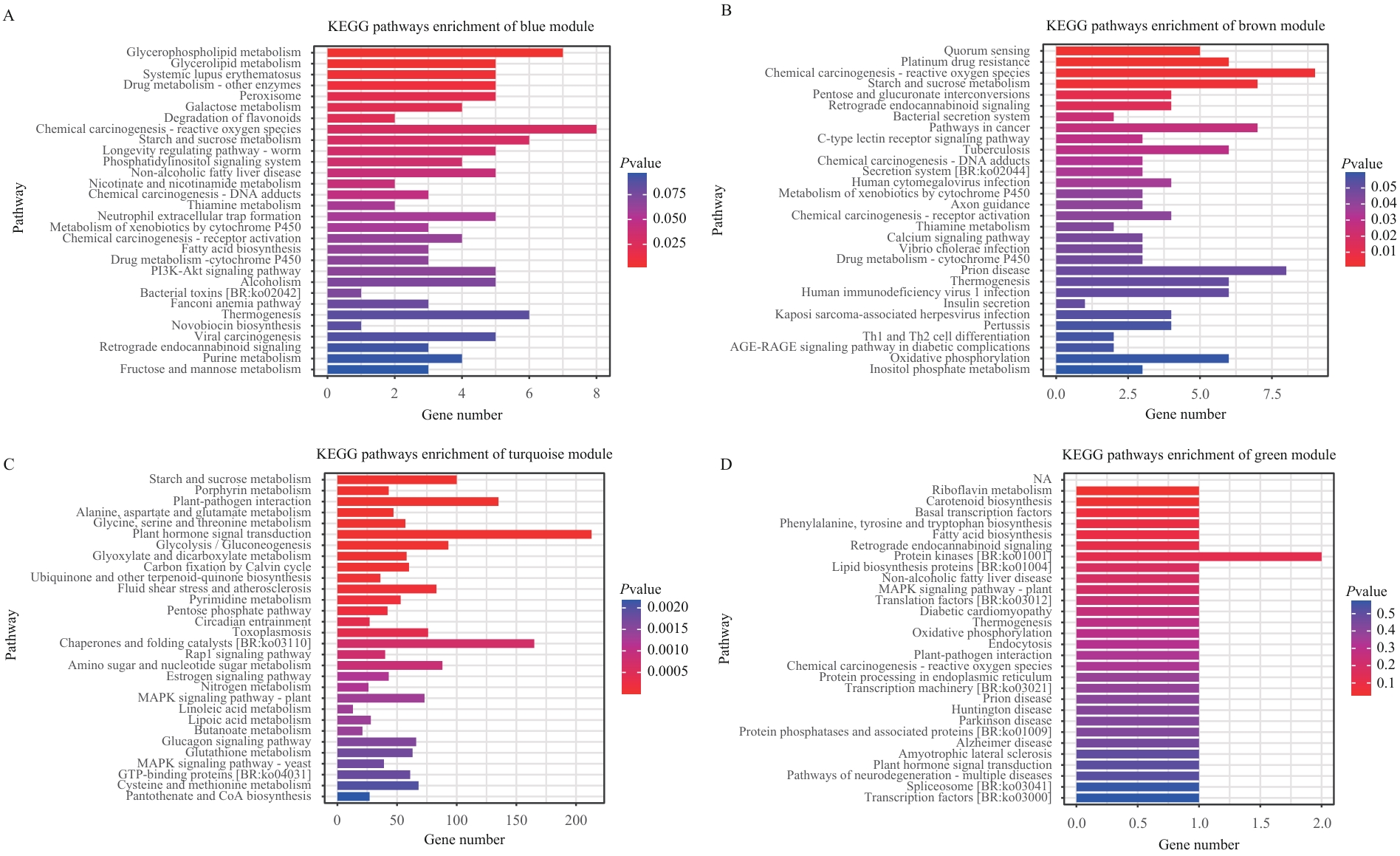
图6 候选模块中基因的KEGG富集A、B、C和D分别表示blue、brown、turquoise和green模块内基因的KEGG富集分析结果
Fig. 6 KEGG enrichment of genes in candidate modulesA, B, C, and D refers to the KEGG enrichment analysis results of genes in the blue, brown, turquoise, and green modules, respectively
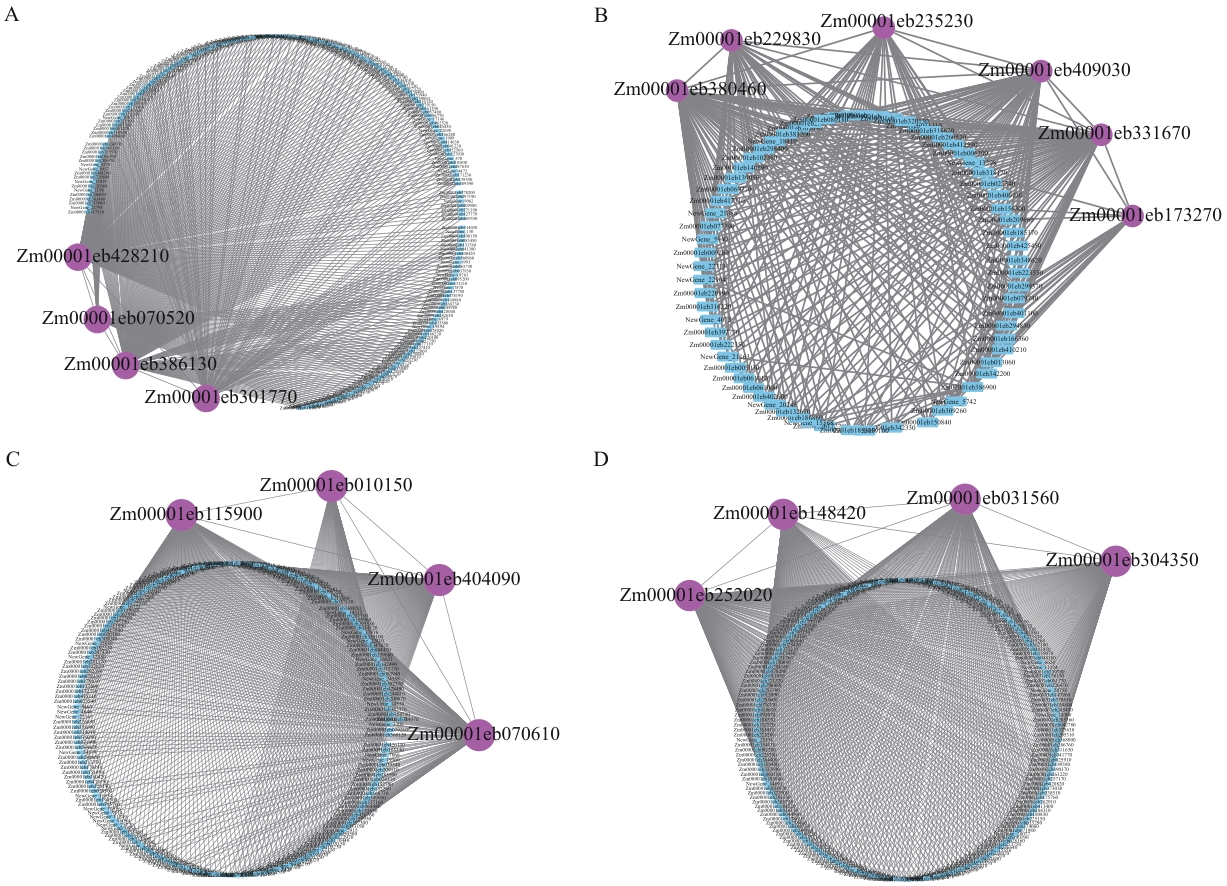
图7 候选模块中基因共表达网络及核心基因的挖掘A、B、C和D分别为brown、green、turquoise和blue模块;“粉红色圆”代表核心基因
Fig. 7 Mining of gene co-expression networks and hub genes in candidate modulesA, B, C, and D indicate the brown, green, turquoise, and blue modules respectively; the "pink circles" indicate the core genes
模块 Module | 核心基因 Hub gene | 拟南芥同源基因 Homologous gene in A. thaliana | 基因功能 Gene function |
|---|---|---|---|
| blue | Zm00001eb428210 | AT5G47060 | 假设蛋白(DUF581) Hypothetical protein (DUF581) |
| blue | Zm00001eb070520 | AT4G28815 | 碱性螺旋‒环‒螺旋(bHLH)DNA结合超家族蛋白 Basic helix-loop-helix (bHLH) DNA-binding superfamily protein |
| blue | Zm00001eb386130 | AT5G64790 | O-糖基水解酶家族17蛋白 O-Glycosyl hydrolases family 17 protein |
| blue | Zm00001eb301770 | X | 未知功能 Unknown |
| brown | Zm00001eb115900 | X | 未知功能 Unknown |
| brown | Zm00001eb010150 | AT1G14710 | 富含羟脯氨酸的糖蛋白家族蛋白 Hydroxyproline-rich glycoprotein family protein |
| brown | Zm00001eb404090 | X | 转导蛋白家族蛋白/WD-40重复序列家族蛋白 Transducin family protein/WD-40 repeat family protein |
| brown | Zm00001eb070610 | X | 未知功能 Unknown |
| green | Zm00001eb380460 | AT3G02380 | CONSTANS类似蛋白2 CONSTANS-like 2 |
| green | Zm00001eb229830 | AT3G61350 | SKP1相互作用伙伴4 SKP1 interacting partner 4 |
| green | Zm00001eb235230 | AT4G03030 | 半乳糖氧化酶/kelch重复超家族蛋白 Galactose oxidase/kelch repeat superfamily protein |
| green | Zm00001eb409030 | X | 未知功能 Unknown |
| green | Zm00001eb331670 | X | 未知功能 Unknown |
| green | Zm00001eb173270 | AT1G32730 | (1 of 1) PTHR35696:SF1-F6N18.11 |
| turquoise | Zm00001eb252020 | AT1G75330 | 鸟氨酸氨甲酰转移酶 Ornithine carbamoyltransferase |
| turquoise | Zm00001eb148420 | AT1G56410 | 热休克70 kD蛋白 Heat shock 70 kD protein-like |
| turquoise | Zm00001eb031560 | AT2G43010 | 编码一个与活性PhyB蛋白相互作用的核定位bHLH蛋白 Encodes a nuclear localized bHLH protein that interacts with active PhyB protein |
| turquoise | Zm00001eb304350 | X | 未知功能 Unknown |
表2 不同模块中核心基因的功能注释
Table 2 Functional annotation of hub genes in different modules
模块 Module | 核心基因 Hub gene | 拟南芥同源基因 Homologous gene in A. thaliana | 基因功能 Gene function |
|---|---|---|---|
| blue | Zm00001eb428210 | AT5G47060 | 假设蛋白(DUF581) Hypothetical protein (DUF581) |
| blue | Zm00001eb070520 | AT4G28815 | 碱性螺旋‒环‒螺旋(bHLH)DNA结合超家族蛋白 Basic helix-loop-helix (bHLH) DNA-binding superfamily protein |
| blue | Zm00001eb386130 | AT5G64790 | O-糖基水解酶家族17蛋白 O-Glycosyl hydrolases family 17 protein |
| blue | Zm00001eb301770 | X | 未知功能 Unknown |
| brown | Zm00001eb115900 | X | 未知功能 Unknown |
| brown | Zm00001eb010150 | AT1G14710 | 富含羟脯氨酸的糖蛋白家族蛋白 Hydroxyproline-rich glycoprotein family protein |
| brown | Zm00001eb404090 | X | 转导蛋白家族蛋白/WD-40重复序列家族蛋白 Transducin family protein/WD-40 repeat family protein |
| brown | Zm00001eb070610 | X | 未知功能 Unknown |
| green | Zm00001eb380460 | AT3G02380 | CONSTANS类似蛋白2 CONSTANS-like 2 |
| green | Zm00001eb229830 | AT3G61350 | SKP1相互作用伙伴4 SKP1 interacting partner 4 |
| green | Zm00001eb235230 | AT4G03030 | 半乳糖氧化酶/kelch重复超家族蛋白 Galactose oxidase/kelch repeat superfamily protein |
| green | Zm00001eb409030 | X | 未知功能 Unknown |
| green | Zm00001eb331670 | X | 未知功能 Unknown |
| green | Zm00001eb173270 | AT1G32730 | (1 of 1) PTHR35696:SF1-F6N18.11 |
| turquoise | Zm00001eb252020 | AT1G75330 | 鸟氨酸氨甲酰转移酶 Ornithine carbamoyltransferase |
| turquoise | Zm00001eb148420 | AT1G56410 | 热休克70 kD蛋白 Heat shock 70 kD protein-like |
| turquoise | Zm00001eb031560 | AT2G43010 | 编码一个与活性PhyB蛋白相互作用的核定位bHLH蛋白 Encodes a nuclear localized bHLH protein that interacts with active PhyB protein |
| turquoise | Zm00001eb304350 | X | 未知功能 Unknown |
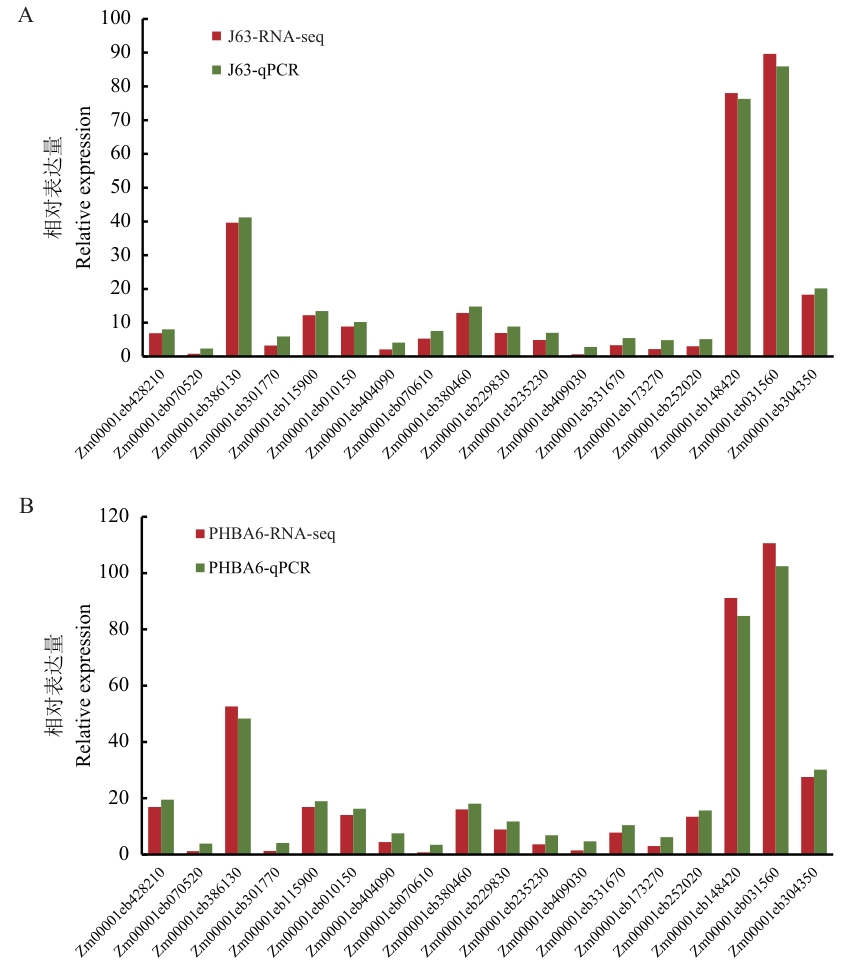
图8 核心基因的RT-qPCR与RNA-seq交互验证
Fig. 8 Cross-validation of hub genes by RT-qPCR and RNA-seq
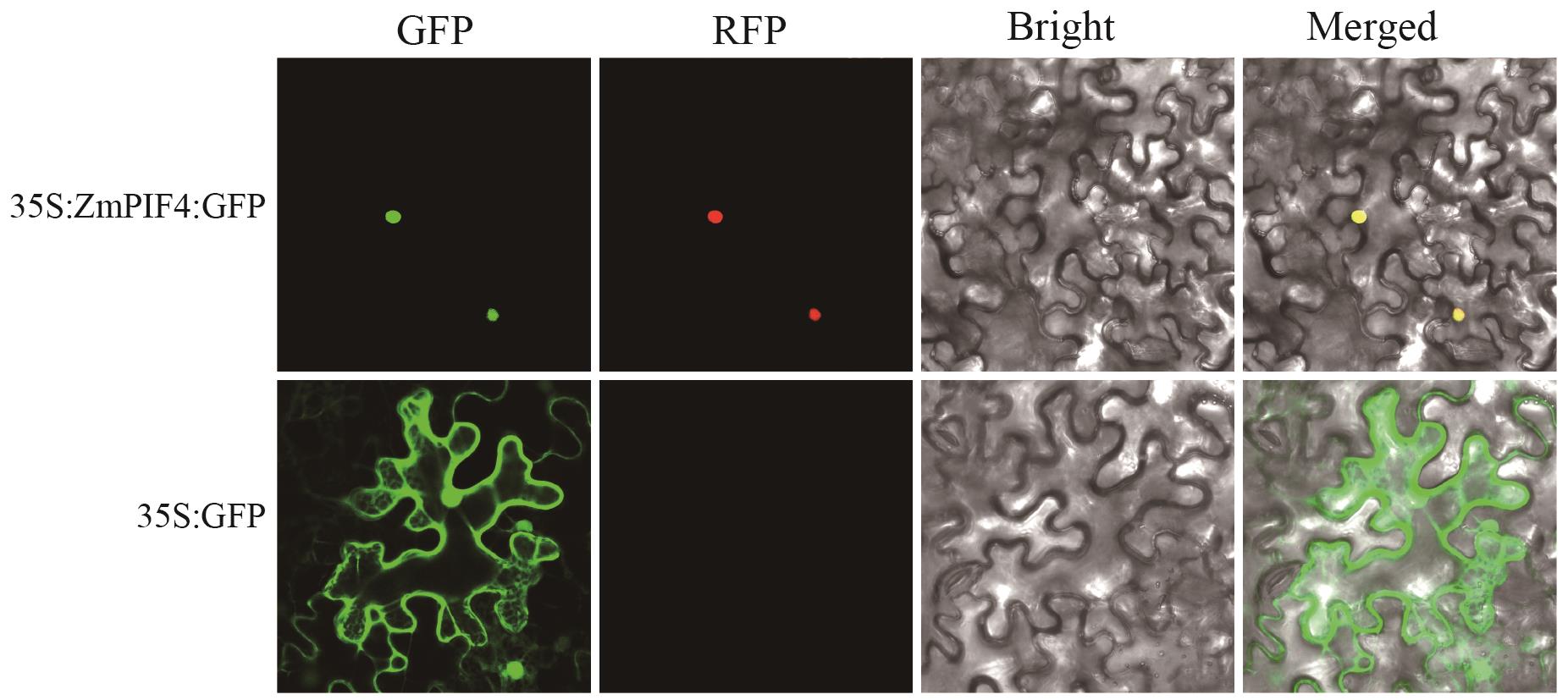
图9 玉米ZmPIF4蛋白的亚细胞定位
Fig. 9 Subcellular localization of the ZmPIF4 protein in Z. mays
| [1] | Qu JZ, Xu ST, Gou XN, et al. Time-resolved multiomics analysis of the genetic regulation of maize kernel moisture [J]. Crop J, 2023, 11(1): 247-257. |
| [2] | Yan YY, Duan FY, Li X, et al. Photosynthetic capacity and assimilate transport of the lower canopy influence maize yield under high planting density [J]. Plant Physiol, 2024, 195(4): 2652-2667. |
| [3] | Ning Q, Jian YN, Du YF, et al. An ethylene biosynthesis enzyme controls quantitative variation in maize ear length and kernel yield [J]. Nat Commun, 2021, 12: 5832. |
| [4] | 常晓春, 李建平, 郝晓燕, 等. 新疆玉米苗期耐旱性状全基因组关联分析 [J]. 现代农业科技, 2022(21): 24-27. |
| Chang XC, Li JP, Hao XY, et al. Genome-wide association analysis of drought tolerance traits at maize seedling stage in Xinjiang [J]. Mod Agric Sci Technol, 2022(21): 24-27. | |
| [5] | 窦婉毓, 颜双双, 孙仁华, 等. 基于21世纪以来我国作物产量、人口与政策分析未来秸秆还田的必然性 [J]. 中国农业大学学报, 2025, 30(12): 291-305. |
| Dou WY, Yan SS, Sun RH, et al. Inevitability of straw-returning to the field in the future: an analysis based on crop yield, population, and policy in China since the 21st century [J]. J China Agric Univ, 2025, 30(12): 291-305. | |
| [6] | Dong ZB, Xu ZN, Xu L, et al. Necrotic upper tips1 mimics heat and drought stress and encodes a protoxylem-specific transcription factor in maize [J]. Proc Natl Acad Sci U S A, 2020, 117(34): 20908-20919. |
| [7] | Wang YY, Sheng DC, Zhang P, et al. High temperature sensitivity of kernel formation in different short periods around silking in maize [J]. Environ Exp Bot, 2021, 183: 104343. |
| [8] | Zhou P, Enders TA, Myers ZA, et al. Prediction of conserved and variable heat and cold stress response in maize using cis-regulatory information [J]. Plant Cell, 2022, 34(1): 514-534. |
| [9] | Li ZX, Howell SH. Heat stress responses and thermotolerance in maize [J]. Int J Mol Sci, 2021, 22(2): 948. |
| [10] | Liang ZK, Myers ZA, Petrella D, et al. Mapping responsive genomic elements to heat stress in a maize diversity panel [J]. Genome Biol, 2022, 23: 234. |
| [11] | Zhao XC, Wei JP, He L, et al. Identification of fatty acid desaturases in maize and their differential responses to low and high temperature [J]. Genes, 2019, 10(6): 445. |
| [12] | Wang J, Chen L, Long Y, et al. A novel heat shock transcription factor (ZmHsf08) negatively regulates salt and drought stress responses in maize [J]. Int J Mol Sci, 2021, 22(21): 11922. |
| [13] | Li Z, Li ZR, Ji YL, et al. The heat shock factor 20-HSF4-cellulose synthase A2 module regulates heat stress tolerance in maize [J]. Plant Cell, 2024, 36(7): 2652-2667. |
| [14] | Li ZX, Tang J, Srivastava R, et al. The transcription factor bZIP60 links the unfolded protein response to the heat stress response in maize [J]. Plant Cell, 2020, 32(11): 3559-3575. |
| [15] | 武炳瑾. 热胁迫下调控小麦籽粒蛋白表达的因素 [D]. 杨凌: 西北农林科技大学, 2021. |
| Wu BJ. Factors regulating protein expression in wheat grains under heat stress [D]. Yangling: Northwest A & F University, 2021. | |
| [16] | Gu L, Jiang T, Zhang CX, et al. Maize HSFA2 and HSBP2 antagonistically modulate raffinose biosynthesis and heat tolerance in Arabidopsis [J]. Plant J, 2019, 100(1): 128-142. |
| [17] | Du Z, Zhou X, Ling Y, et al. agriGO: a GO analysis toolkit for the agricultural community [J]. Nucleic Acids Res, 2010, 38(): W64-W70. |
| [18] | Tian T, Liu Y, Yan HY, et al. agriGO v2.0: a GO analysis toolkit for the agricultural community, 2017 update [J]. Nucleic Acids Res, 2017, 45(W1): W122-W129. |
| [19] | Shannon P, Markiel A, Ozier O, et al. Cytoscape: a software environment for integrated models of biomolecular interaction networks [J]. Genome Res, 2003, 13(11): 2498-2504. |
| [20] | Erenstein O, Jaleta M, Sonder K, et al. Global maize production, consumption and trade: trends and R&D implications [J]. Food Sec, 2022, 14(5): 1295-1319. |
| [21] | Waqas MA, Wang XK, Zafar SA, et al. Thermal stresses in maize: effects and management strategies [J]. Plants, 2021, 10(2): 293. |
| [22] | 闫恒宇, 李朝霞, 李玉斌. 高温对玉米生长的影响及中国耐高温玉米筛选研究进展 [J]. 植物学报, 2024, 59(6): 1007-1023. |
| Yan HY, Li ZX, Li YB. Research progress on heat stress impact on maize growth and heat-tolerant maize screening in China [J]. Bull Bot, 2024, 59(6): 1007-1023. | |
| [23] | 霍治国, 张海燕, 李春晖, 等. 中国玉米高温热害研究进展 [J]. 应用气象学报, 2023, 34(1): 1-14. |
| Huo ZG, Zhang HY, Li CH, et al. Review on high temperature heat damage of maize in China [J]. J Appl Meteor Sci, 2023, 34(1): 1-14. | |
| [24] | 闫振华, 刘东尧, 贾绪存, 等. 花期高温干旱对玉米雄穗发育、生理特性和产量影响 [J]. 中国农业科学, 2021, 54(17): 3592-3608. |
| Yan ZH, Liu DY, Jia XC, et al. Maize tassel development, physiological traits and yield under heat and drought stress during flowering stage [J]. Sci Agric Sin, 2021, 54(17): 3592-3608. | |
| [25] | Zhao W, Langfelder P, Fuller T, et al. Weighted gene coexpression network analysis: state of the art [J]. J Biopharm Stat, 2010, 20(2): 281-300. |
| [26] | 秦天元, 孙超, 毕真真, 等. 基于WGCNA的马铃薯根系抗旱相关共表达模块鉴定和核心基因发掘 [J]. 作物学报, 2020, 46(7): 1033--1051. |
| Qin TY, Sun C, Bi ZZ, et al. Identification of drought-related co-expression modules and hub genes in potato roots based on WGCNA [J]. Acta Agron Sin, 2020, 46(7): 1033-1051. | |
| [27] | 郑晨璐, 王倩颖, 陆丹迎, 等. 高温胁迫下景宁木兰淀粉与蔗糖代谢途径转录分析 [J]. 浙江农林大学学报, 2023, 40(1): 55-63. |
| Zheng CL, Wang QY, Lu DY, et al. Transcriptional analysis of starch and sucrose metabolism pathways in Magnolia sinostellata under heat stress [J]. J Zhejiang A&F Univ, 2023, 40(1): 55-63. | |
| [28] | Magwanga RO, Lu P, Kirungu JN, et al. Knockdown of cytochrome P450 genes Gh_D07G1197 and Gh_A13G2057 on chromosomes D07 and A13 reveals their putative role in enhancing drought and salt stress tolerance in Gossypium hirsutum [J]. Genes, 2019, 10(3): 226. |
| [29] | Kan Y, Mu XR, Zhang H, et al. TT2 controls rice thermotolerance through SCT1-dependent alteration of wax biosynthesis [J]. Nat Plants, 2022, 8(1): 53-67. |
| [30] | Kim M, Schulz V, Brings L, et al. mTERF18 and ATAD3 are required for mitochondrial nucleoid structure and their disruption confers heat tolerance in Arabidopsis thaliana [J]. New Phytol, 2021, 232(5): 2026-2042. |
| [31] | Sharma N, Chaudhary C, Khurana P. Wheat Myo-inositol phosphate synthase influences plant growth and stress responses via ethylene mediated signaling [J]. Sci Rep, 2020, 10: 10766. |
| [32] | Kong GZ, Li H, Zheng JT, et al. PgMYB96 enhances Physalis grisea high temperature tolerance by activating trithorax-like factor WD REPEAT CONTAINING5b [J]. J Exp Bot, 2025, 76(12): 3527-3542. |
| [1] | 阎晓光, 杜艳伟, 马志远, 王彬, 王国梁, 胡丹珠. 玉米ZmDIR基因家族的全基因组鉴定与表达模式分析[J]. 生物技术通报, 2026, 42(7): 126-137. |
| [2] | 李博宇, 蹇春晨, 侯佳俊, 钱明岩, 杨文钦, 章圣龙, 藏传刚, 马福开, 郑龙, 关宏. 复合菌剂QY12-A4对玉米秸秆的降解及其产物中抗氧化木质素的分离与纯化[J]. 生物技术通报, 2026, 42(7): 292-303. |
| [3] | 万瑞恒, 李晓艳, 李莹莹, 郭扬, 刘应红, 张军杰, 胡育峰, 李炀平, 黄玉碧, 刘汉梅. 基于YOLOv10的玉米籽粒淀粉粒识别与粒径分析系统的开发[J]. 生物技术通报, 2026, 42(6): 208-217. |
| [4] | 彭善麟, 廖卓诚, 王涛, 刘志宇, 刘海忆, 王婷婷, 杨琴, 王哲, 邰欢欢. 不同玉米茎腐病抗性品种根际微生物群落多样性及功能差异[J]. 生物技术通报, 2026, 42(5): 76-88. |
| [5] | 杨婷, 杨宗桃, 艾静, 王禹童, 李燕烨, 邓军, 刘家勇, 赵勇, 张跃彬. 不同基因型甘蔗表型特征及根部转录组学分析[J]. 生物技术通报, 2026, 42(4): 190-201. |
| [6] | 王亚乐, 李雪君, 孙计平, 孙焕. 烟草豫浓香201对低温胁迫的生理响应及转录组分析[J]. 生物技术通报, 2026, 42(2): 228-238. |
| [7] | 王晶, 刘卓艳, 张晓磊, 刘宝海, 关海涛, 温洪涛. 基于LAMP-CRISPR/Cas12a技术快速检测转基因玉米DBN9501转化体特异性[J]. 生物技术通报, 2026, 42(2): 149-157. |
| [8] | 张冬岭, 张寅生, 王建军, 叶飞宇, 卢子涵, 马晨晨, 柳华峰, 胡德升, 邓亚洲, 曹丽茹. 玉米HSFs转录因子家族在干旱胁迫下的表达特性及功能[J]. 生物技术通报, 2026, 42(2): 178-187. |
| [9] | 陈文燕, 周瑞, 吴慧昊, 李耀东, 杨婕, 臧荣鑫, 徐红伟. 基于复合菌的玉米芯发酵工艺构建与优化[J]. 生物技术通报, 2026, 42(10): 37-46. |
| [10] | 胡璐, 王凯, 徐婧仪, 叶丽慧, 王永飞, 王丽华, 李杰勤. 玉米和高粱遗传转化技术研究进展[J]. 生物技术通报, 2025, 41(9): 32-43. |
| [11] | 张越, 毕钰, 慕雪男, 郑子薇, 王志刚, 徐伟慧. 小麦赤霉病拮抗菌JB7的生防特性[J]. 生物技术通报, 2025, 41(7): 261-271. |
| [12] | 刘彤彤, 李肖慧, 杨骏龙, 陈旺, 玉猛, 王超凡, 王凤茹, 客绍英. ZmSTART1调控玉米维管束建成的功能研究[J]. 生物技术通报, 2025, 41(4): 115-122. |
| [13] | 李文兰, 侯辛未, 李燕, 赵瑞君, 孟昭东, 岳润清. 转基因抗虫耐除草剂玉米LD05纯杂合植株的鉴定及抗性检测[J]. 生物技术通报, 2025, 41(4): 123-133. |
| [14] | 王涛, 胡社伟, 张宇, 邓文文, 尚春缘, 王婉艺. 玉米籽粒淀粉生物合成及调控因素研究进展[J]. 生物技术通报, 2025, 41(3): 1-13. |
| [15] | 任鑫茹, 赵宏璐, 李雅静, 刘荣军, 曾凡力, 王钦宏, 王震. 混菌低温发酵对玉米秸秆黄贮饲料品质的影响[J]. 生物技术通报, 2025, 41(3): 330-342. |
| 阅读次数 | ||||||
|
全文 |
|
|||||
|
摘要 |
|
|||||
