







生物技术通报 ›› 2026, Vol. 42 ›› Issue (7): 193-203.doi: 10.13560/j.cnki.biotech.bull.1985.2025-1191
• 研究报告 • 上一篇
董亚茹, 修妤, 赵东晓, 朱红, 朱琳, 刘惠芬( )
)
收稿日期:2025-11-04
出版日期:2026-07-26
发布日期:2026-07-20
通讯作者:
刘惠芬liuhuifen77@163.com基金资助:
DONG Ya-ru, XIU Yu, ZHAO Dong-xiao, ZHU Hong, ZHU Lin, LIU Hui-fen()
Received:2025-11-04
Published:2026-07-26
Online:2026-07-20
摘要:
目的 鉴定桑树MnGRAS基因家族成员,解析其盐胁迫响应表达规律与功能特征,为桑树耐盐遗传改良提供理论支撑。 方法 基于桑树盐胁迫转录组数据筛选MnGRAS基因;通过生物信息学分析其理化性质、系统发育分类、基因结构特征及启动子顺式作用元件;结合转录组与RT-qPCR验证基因表达模式;构建MnGRAS22过表达/抑制表达体系,通过生理生化指标测定明确其耐盐功能。 结果 成功鉴定出40个MnGRAS基因,归为10个亚家族,所有成员均含典型GRAS结构域;启动子区富集生长发育及非生物胁迫响应相关顺式作用元件。盐胁迫条件下,92.5%的基因可检测到表达信号,仅少数基因(MnGRAS11/27/34)在各胁迫时间点均无表达。9个候选基因中,66.7%的基因在叶片中持续上调表达,在根和茎中多呈动态表达特征;其中MnGRAS22在叶片和根系中的表达量分别为对照的88倍和36倍。过表达MnGRAS22可激活氧化酶基因(SOD、POD)表达,显著提高植株超氧化物歧化酶(superoxide dismutase, SOD)、过氧化物酶(peroxidase, POD)、过氧化氢酶(catalase, CAT)活性,促进脯氨酸(proline, Pro)积累,降低丙二醛(malondialdehyde, MDA)、超氧阴离子(superoxide anion radical, O2•-)和过氧化氢(hydrogen peroxide, H₂O₂)含量。 结论 桑树中鉴定出40个MnGRAS基因,MnGRAS22在盐胁迫下于叶片和根系中高表达;该基因过表达可通过增强抗氧化能力、调节渗透平衡、减轻膜损伤,显著提升植株耐盐性。
董亚茹, 修妤, 赵东晓, 朱红, 朱琳, 刘惠芬. 基于转录组的桑树GRAS基因家族鉴定及MnGRAS22盐胁迫响应分析[J]. 生物技术通报, 2026, 42(7): 193-203.
DONG Ya-ru, XIU Yu, ZHAO Dong-xiao, ZHU Hong, ZHU Lin, LIU Hui-fen. Transcriptome-wide Identification of the GRAS Gene Family in Mulberry and Analysis of MnGRAS22 in Response to Salt Stress[J]. Biotechnology Bulletin, 2026, 42(7): 193-203.
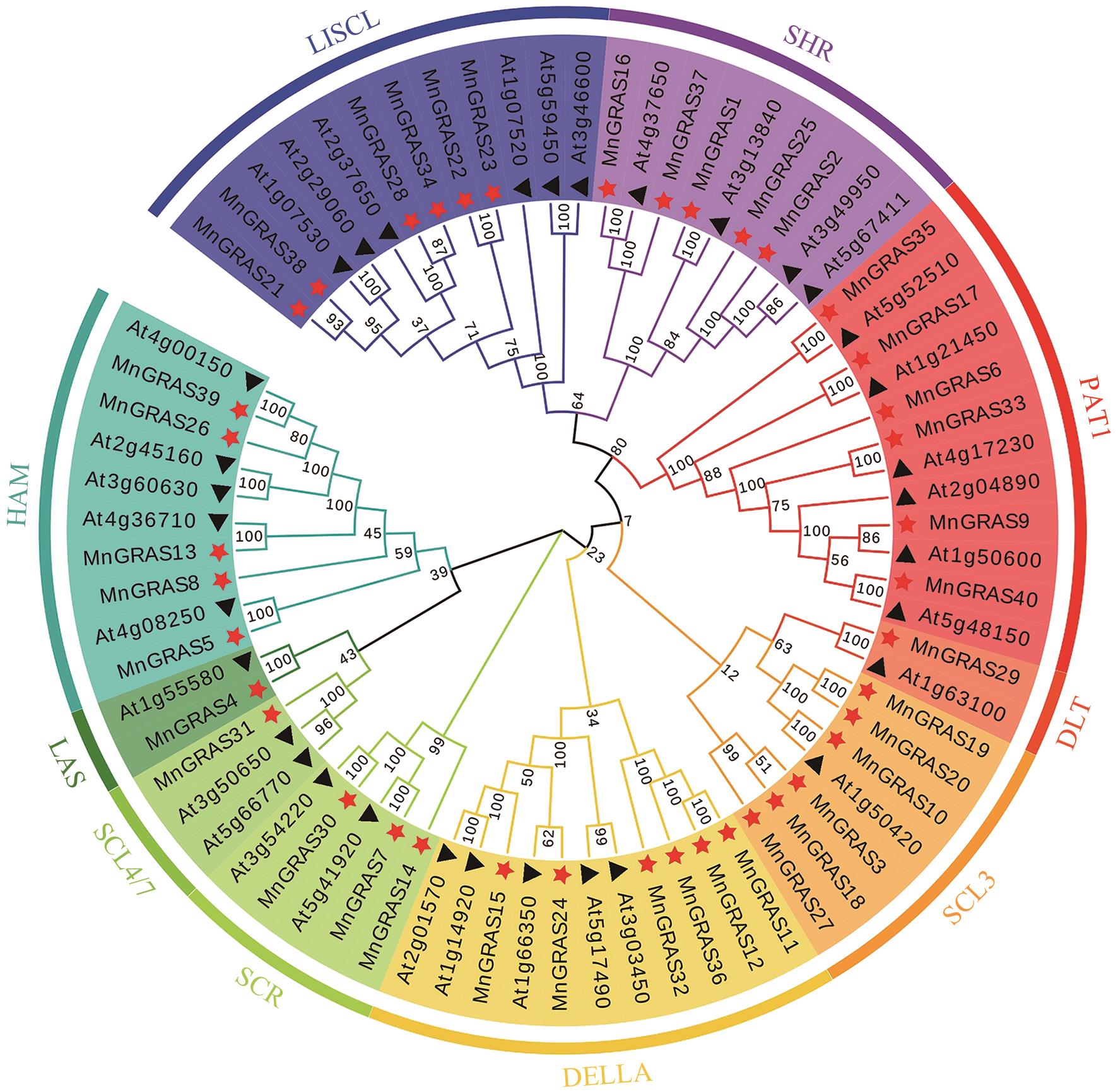
图1 桑树和拟南芥GRAS家族成员的系统进化分析红色五角星和黑色三角分别表示桑树和拟南芥GRAS
Fig. 1 Phylogenetic analysis of GRAS family members from mulberry and ArabidopsisThe red stars indicates the GRAS of mulberry and black triangle indicates Arabidopsis, respectively
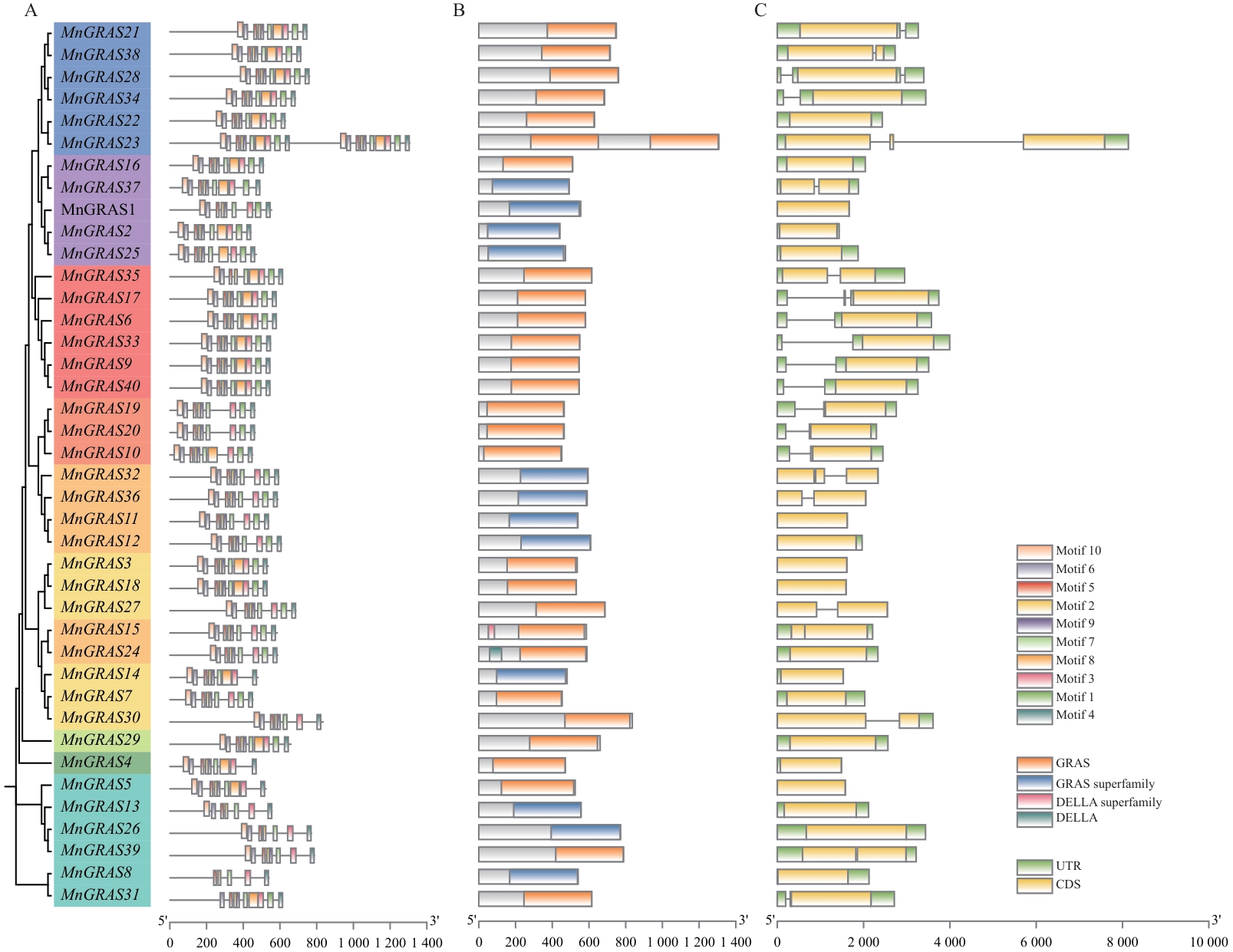
图2 桑树MnGRAS基因家族保守基序(A)、结构域(B)及基因结构(C)分析
Fig. 2 Conserved motif (A), domains (B), and gene structure (C) analysis of MnGRAS gene family in mulberry
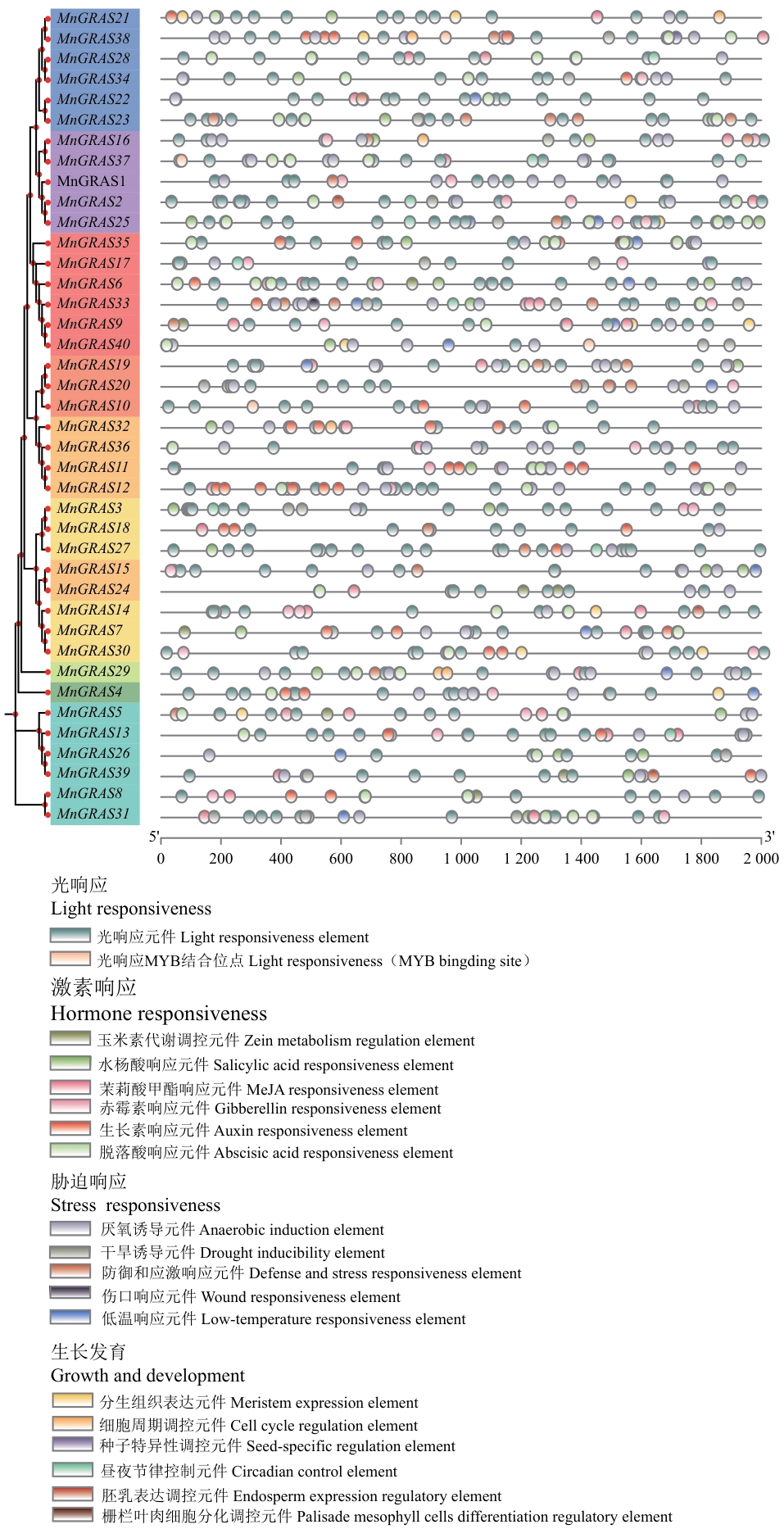
图3 桑树GRAS基因启动子顺式作用元件分布
Fig. 3 Distribution of cis-acting elements of GRAS gene promoter in mulberry
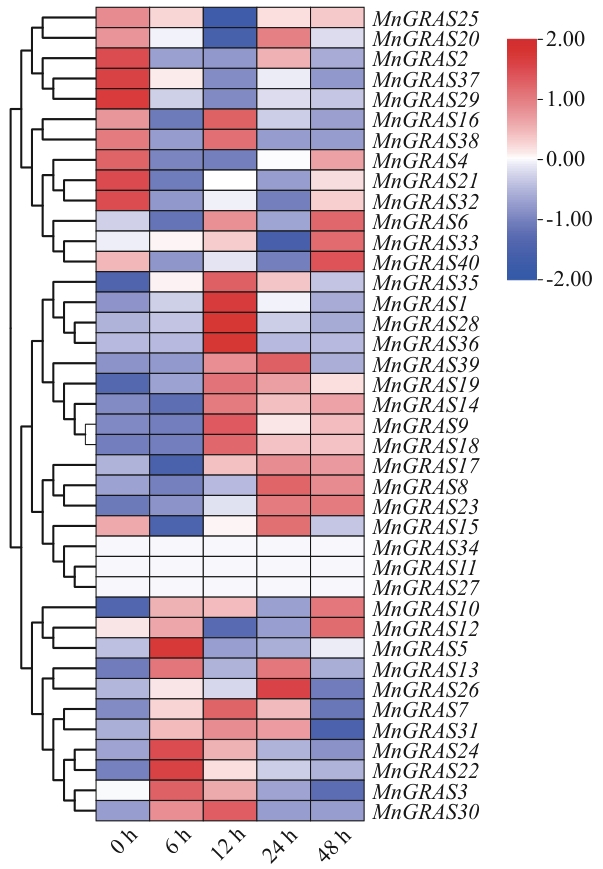
图4 桑树GRAS响应盐胁迫的表达模式热图为200 mmol/L NaCl处理下桑树叶片中GRAS基因的表达水平。红色代表高表达,蓝色代表低表达
Fig. 4 Expression patterns of GRAS in mulberry in response to salt stressHeatmap showing expressions of GRAS genes in mulberry leaves under 200 mmol/L NaCl treatment. Red indicates high expression, and blue indicates low expression
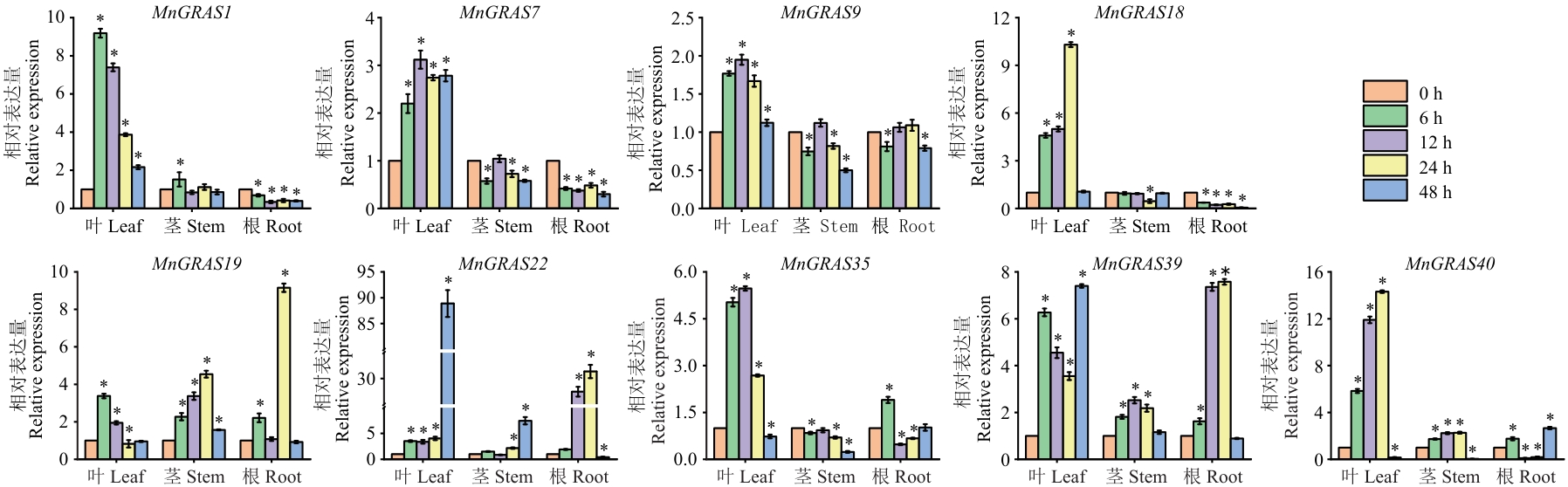
图5 盐胁迫下桑树GRAS基因组织特异性表达分析*表示组内处理组与对照组在P<0.05水平上差异显著。下同
Fig. 5 Tissue-specific expression analysis of GRAS genes in mulberry under salt stress* indicates significant difference at the P<0.05 level between the treatment group and the control group within the same group. The same below
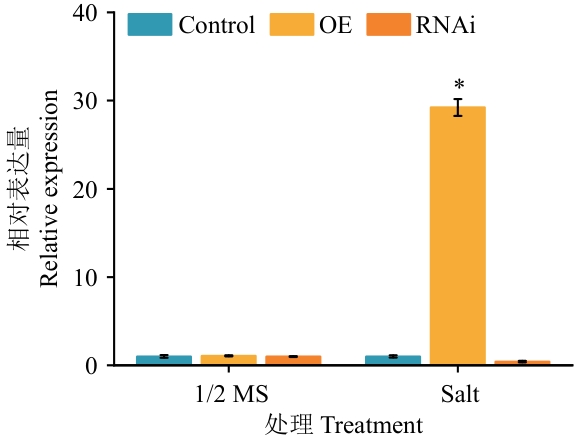
图6 MnGRAS22瞬时转化桑树植株的RT-qPCR检测
Fig. 6 RT-qPCR detection of mulberry plants transiently transformed with MnGRAS22
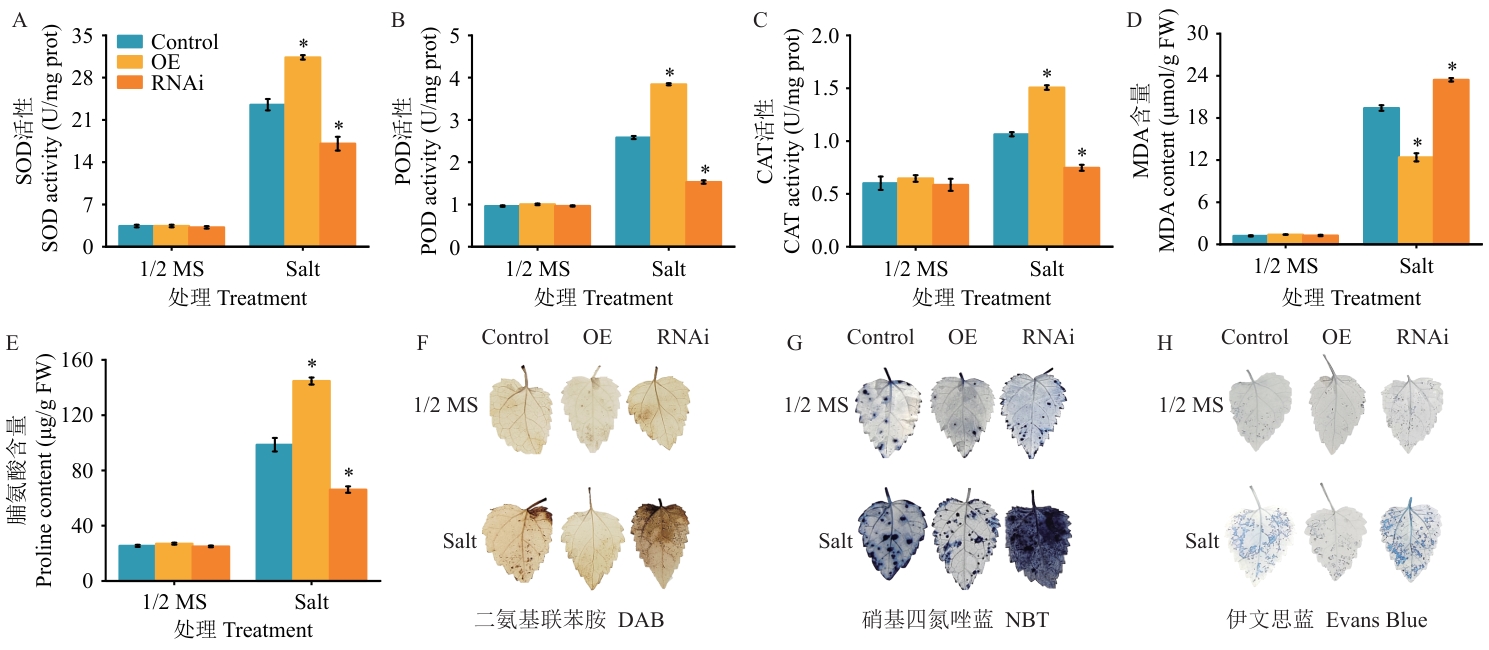
图7 MnGRAS22基因耐盐性分析A:SOD活性;B:POD活性;C:CAT活性;D:MDA含量;E:脯氨酸含量;F:DAB组织化学染色;G:NBT组织化学染色;H:Evans Blue组织化学染色
Fig. 7 Salt-tolerance analysis of MnGRAS22 geneA: SOD activity; B: POD activity; C: CAT activity; D: MDA content; E: Proline content; F: DAB histochemical staining; G: NBT histochemical staining; H: Evans blue histochemical staining
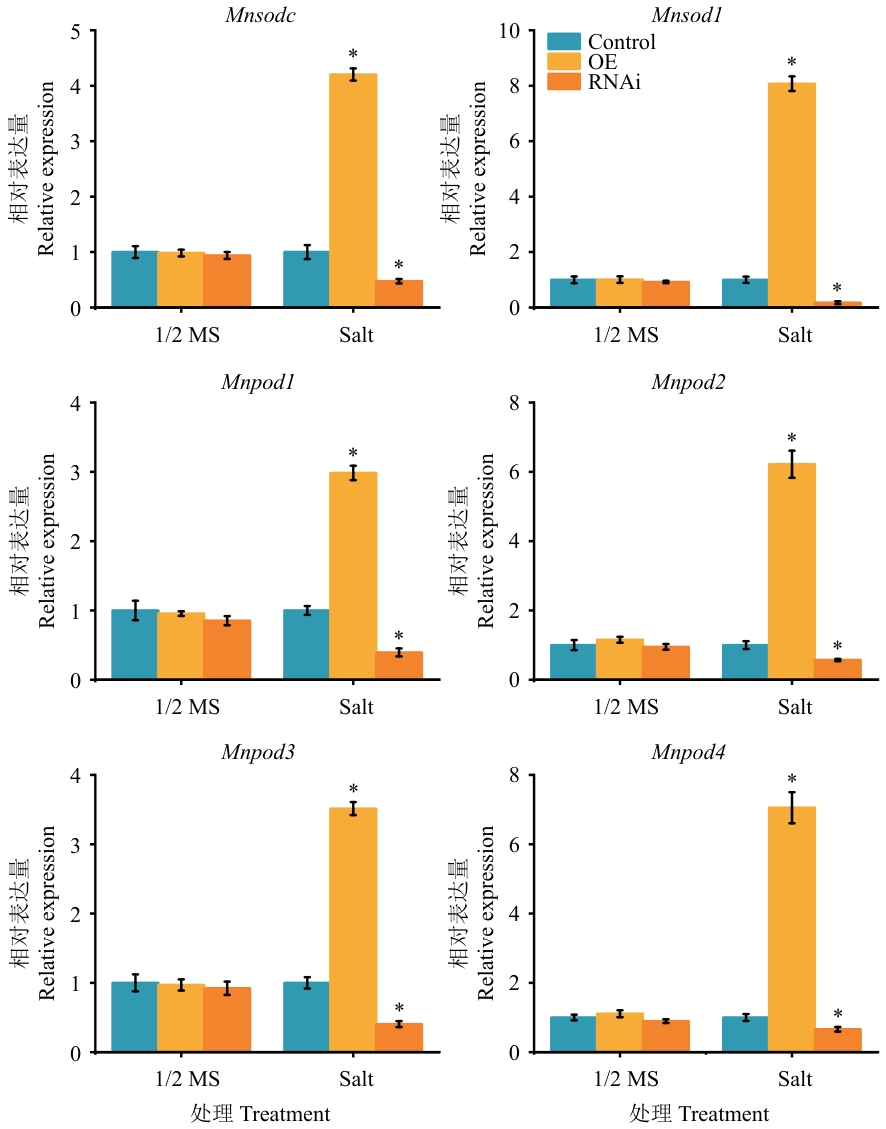
图8 抗氧化酶基因表达分析
Fig. 8 Expression analysis of antioxidant enzyme genes
| [1] | Chen G, Li D, Yao P, et al. Metabolic and transcriptional analysis reveals flavonoid involvement in the drought stress response of mulberry leaves [J]. Int J Mol Sci, 2024, 25(13): 7417. |
| [2] | Pysh LD, Wysocka-Diller JW, Camilleri C, et al. The GRAS gene family in Arabidopsis: sequence characterization and basic expression analysis of the SCARECROW-LIKE genes [J]. Plant J, 1999, 18(1): 111-119. |
| [3] | Hirsch S, Kim J, Muñoz A, et al. GRAS proteins form a DNA binding complex to induce gene expression during nodulation signaling in Medicago truncatula [J]. Plant Cell, 2009, 21(2): 545-557. |
| [4] | Zhang H, Mi LM, Xu L, et al. Genome-wide identification, characterization, interaction network and expression profile of GRAS gene family in sweet orange (Citrus sinensis) [J]. Sci Rep, 2019, 9: 2156. |
| [5] | Li SP, Zhao YH, Zhao Z, et al. Crystal structure of the GRAS domain of SCARECROW-LIKE7 in Oryza sativa [J]. Plant Cell, 2016, 28(5): 1025-1034. |
| [6] | Sun XL, Jones WT, Harvey D, et al. N-terminal domains of DELLA proteins are intrinsically unstructured in the absence of interaction with GID1/gibberellic acid receptors [J]. J Biol Chem, 2010, 285(15): 11557-11571. |
| [7] | Gao MJ, Parkin I, Lydiate D, et al. An auxin-responsive SCARECROW-like transcriptional activator interacts with histone deacetylase [J]. Plant Mol Biol, 2004, 55(3): 417-431. |
| [8] | Wang Q, Yang YB, Yu YH, et al. Genome-wide characterization of the GRAS gene family in Cyclocarya paliurus and its involvement in heterodichogamy [J]. Agronomy, 2024, 14(10): 2397. |
| [9] | He ZH, Tian ZZ, Zhang Q, et al. Genome-wide identification, expression and salt stress tolerance analysis of the GRAS transcription factor family in Betula platyphylla [J]. Front Plant Sci, 2022, 13: 1022076. |
| [10] | Gao L, Shi AK, Wang M, et al. Genome-wide identification and expression profiling of the GRAS gene family in Taxus cuspidate [J]. Genes, 2025, 16(11): 1345. |
| [11] | 毛可欣, 王海荣, 安淼, 等. 中华猕猴桃GRAS基因家族鉴定及低温胁迫表达分析 [J]. 生物技术通报, 2023, 39(11): 297-307. |
| Mao KX, Wang HR, An M, et al. Identification of GRAS gene family and expression analysis under low temperature stress in Actinidia chinensis [J]. Biotechnol Bull, 2023, 39(11): 297-307. | |
| [12] | Wu R, Liu WH, Liu KQ, et al. Genome-wide identification and expression of the GRAS gene family in oat (Avena sativa L.) [J]. Agronomy, 2023, 13(7): 1807. |
| [13] | Guan YY, Wang KG, Zhao JJ, et al. Genome-wide identification of TaeGRASs responsive to biotic stresses and functional analysis of TaeSCL6 in wheat resistance to powdery mildew [J]. BMC Genomics, 2024, 25(1): 1149. |
| [14] | Greb T, Clarenz O, Schafer E, et al. Molecular analysis of the LATERAL SUPPRESSOR gene in Arabidopsis reveals a conserved control mechanism for axillary meristem formation [J]. Genes Dev, 2003, 17(9): 1175-1187. |
| [15] | Liu YD, Wen L, Shi Y, et al. Stress-responsive tomato gene SlGRAS4 function in drought stress and abscisic acid signaling [J]. Plant Sci, 2021, 304: 110804. |
| [16] | 刁邓超, 李云丽, 孟祥宇, 等. 小麦TaGRAS34-5A的克隆及耐热功能研究 [J]. 中国农业科学, 2025, 58(4): 617-634. |
| Diao DC, Li YL, Meng XY, et al. Cloning and heat tolerance function of wheat TaGRAS34-5A gene [J]. Sci Agric Sin, 2025, 58(4): 617-634. | |
| [17] | Lin JT, Wu JH, Zhang D, et al. The GRAS gene family and its roles in pineapple (Ananas comosus L.) developmental regulation and cold tolerance [J]. BMC Plant Biol, 2024, 24(1): 1204. |
| [18] | Huang JY, Ren HF, Cheng F, et al. Comprehensive genome-wide characterization of the GRAS gene family and their role in salt stress tolerance in Punica granatum L. [J]. Horticulturae, 2025, 11(5): 504. |
| [19] | Ma HS, Liang D, Shuai P, et al. The salt- and drought-inducible poplar GRAS protein SCL7 confers salt and drought tolerance in Arabidopsis thaliana [J]. J Exp Bot, 2010, 61(14): 4011-4019. |
| [20] | She M, Zheng DY, Zhang SP, et al. Functional analysis of maize GRAS transcription factor gene ZmGRAS72 in response to drought and salt stresses [J]. Agric Commun, 2024, 2(3): 100054. |
| [21] | Ni LJ, Wang ZQ, Liu XD, et al. Genome-wide study of the GRAS gene family in Hibiscus hamabo Sieb. et Zucc and analysis of HhGRAS14-induced drought and salt stress tolerance in Arabidopsis [J]. Plant Sci, 2022, 319: 111260. |
| [22] | Li WR, Yu JC, Wang RH, et al. Overexpression of SmGRAS5 enhances tolerance to abiotic stresses in Salvia miltiorrhiza [J]. Plant Physiol Biochem, 2025, 221: 109669. |
| [23] | Ma A, Wang TJ, Wang HR, et al. The GRAS transcription factor OsGRAS2 negatively impacts salt tolerance in rice [J]. Plant Cell Rep, 2024, 44(1): 17. |
| [24] | Khan Y, Xiong Z, Zhang H, et al. Expression and roles of GRAS gene family in plant growth, signal transduction, biotic and abiotic stress resistance and symbiosis formation—a review [J]. Plant Biol, 2022, 24(3): 404-416. |
| [25] | Dong XM, Han BC, Yin XY, et al. Genome-wide identification of the GRAS transcription factor family in autotetraploid cultivated alfalfa (Medicago sativa L.) and expression analysis under drought stress [J]. Ind Crops Prod, 2023, 194: 116379. |
| [26] | Hao XL, Gong YY, Chen SX, et al. Genome-wide identification of GRAS transcription factors and their functional analysis in salt stress response in sugar beet [J]. Int J Mol Sci, 2024, 25(13): 7132. |
| [27] | Sun XL, Xue B, Jones WT, et al. A functionally required unfoldome from the plant Kingdom: intrinsically disordered N-terminal domains of GRAS proteins are involved in molecular recognition during plant development [J]. Plant Mol Biol, 2011, 77(3): 205-223. |
| [28] | Lamesch P, Berardini TZ, Li DH, et al. The Arabidopsis Information Resource (TAIR): improved gene annotation and new tools [J]. Nucleic Acids Res, 2012, 40(Database issue): D1202-D1210. |
| [29] | Letunic I, Khedkar S, Bork P. SMART: recent updates, new developments and status in 2020 [J]. Nucleic Acids Res, 2021, 49(D1): D458-D460. |
| [30] | Chen CJ, Wu Y, Li JW, et al. TBtools-II: a “one for all, all for one” bioinformatics platform for biological big-data mining [J]. Mol Plant, 2023, 16(11): 1733-1742. |
| [31] | Chou KC, Shen HB. Plant-mPLoc: a top-down strategy to augment the power for predicting plant protein subcellular localization [J]. PLoS One, 2010, 5(6): e11335. |
| [32] | Kumar S, Stecher G, Tamura K. MEGA7: molecular evolutionary genetics analysis version 7.0 for bigger datasets [J]. Mol Biol Evol, 2016, 33(7): 1870-1874. |
| [33] | He ZL, Zhang HK, Gao SH, et al. Evolview v2: an online visualization and management tool for customized and annotated phylogenetic trees [J]. Nucleic Acids Res, 2016, 44(W1): W236-W241. |
| [34] | Wang JY, Chitsaz F, Derbyshire MK, et al. The conserved domain database in 2023 [J]. Nucleic Acids Res, 2023, 51(D1): D384-D388. |
| [35] | Lescot M, Déhais P, Thijs G, et al. PlantCARE, a database of plant cis-acting regulatory elements and a portal to tools for in silico analysis of promoter sequences [J]. Nucleic Acids Res, 2002, 30(1): 325-327. |
| [36] | 董亚茹, 李茹霞, 赵东晓, 等. 7个桑树AP2/ERF转录因子的生物信息学及表达分析 [J]. 山东农业科学, 2022, 54(1): 7-13. |
| Dong YR, Li RX, Zhao DX, et al. Bioinformatics and expression analyses of 7 mulberry AP2/ERF transcription factors [J]. Shandong Agric Sci, 2022, 54(1): 7-13. | |
| [37] | Ji XY, Zheng L, Liu YJ, et al. A transient transformation system for the functional characterization of genes involved in stress response [J]. Plant Mol Biol Report, 2014, 32(3): 732-739. |
| [38] | 陈建勋, 王晓峰. 植物生理学实验指导 [M]. 广州: 华南理工大学出版社, 2002. |
| Chen JX, Wang XF. Experimental instruction of plant physiology [M]. Guangzhou: South China University of Technology Press, 2002. | |
| [39] | Allen P, Bennett K, Heritage B. SPSS Statistics Version 22: A Practical Guide [M]. 3rd ed. Sydney: Cengage Learning Australia Pty Limited, 2014. |
| [40] | Corporation OriginLab. Origin 2024 [CP]. Northampton: OriginLab Corporation, 2023. |
| [41] | Inc Adobe. Adobe Illustrator 29.8 [CP]. San Jose: Adobe Inc., 2025. |
| [42] | Sun Y, Yuan T. Genome-wide analysis of GRAS gene family and functional identification of a putative development and maintenance of axillary meristematic tissue gene PlGRAS22 in Paeonia ludlowii [J]. Int J Biol Macromol, 2025, 297: 139879. |
| [43] | 孔青洋, 张晓龙, 李娜, 等. 单叶蔷薇GRAS转录因子家族鉴定及表达分析 [J]. 生物技术通报, 2025, 41(1): 210-220. |
| Kong QY, Zhang XL, Li N, et al. Identification and expression analysis of GRAS transcription factor family in Rosa persica [J]. Biotechnol Bull, 2025, 41(1): 210-220. | |
| [44] | Chen Y, Zhu PP, Wu SY, et al. Identification and expression analysis of GRAS transcription factors in the wild relative of sweet potato Ipomoea trifida [J]. BMC Genomics, 2019, 20(1): 911. |
| [45] | Chen JW, Yan Q, Li JW, et al. The GRAS gene family and its roles in seed development in litchi (Litchi chinensis Sonn) [J]. BMC Plant Biol, 2021, 21(1): 423. |
| [46] | Ming RH, Fang T, Ling W, et al. The GRAS transcription factor PtrPAT1 of Poncirus trifoliata functions in cold tolerance and modulates glycine betaine content by regulating the BADH-like gene [J]. Hortic Res, 2024, 12(1): uhae296. |
| [47] | 刘丽, 武琦, 高婷, 等. 太行菊GRAS基因家族鉴定及其在盐胁迫下的表达分析 [J]. 山西农业大学学报: 自然科学版, 2025, 45(6): 1-11. |
| Liu L, Wu Q, Gao T, et al. Identification of the GRAS gene family in Opisthopappus taihangensis and its analysis expression under salt stress [J]. J Shanxi Agric Univ Nat Sci Ed, 2025, 45(6): 1-11. | |
| [48] | Weng YH, Chen XY, Hao ZD, et al. Genome-wide analysis of the GRAS gene family in Liriodendron chinense reveals the putative function in abiotic stress and plant development [J]. Front Plant Sci, 2023, 14: 1211853. |
| [49] | Zentella R, Zhang ZL, Park M, et al. Global analysis of della direct targets in early gibberellin signaling in Arabidopsis [J]. Plant Cell, 2007, 19(10): 3037-3057. |
| [50] | Tong N, Li D, Zhang ST, et al. Genome-wide identification and expression analysis of the GRAS family under low-temperature stress in bananas [J]. Front Plant Sci, 2023, 14: 1216070. |
| [51] | Li L, Tian ZZ, Zhao ZZ, et al. The GRAS transcription factor BpGRAS34 functions as a positive regulator of salt stress response in Betula platyphylla [J]. Plant Sci, 2025, 358: 112575. |
| [1] | 陈义焰, 张冬儿, 张涛, 刘育灏, 唐杰, 盛夏冰, 胡远艺, 艾治勇, 李应将, 刘小林. 水稻OsSULTR2;2基因功能及调控苗期耐盐性分析[J]. 生物技术通报, 2026, 42(7): 116-125. |
| [2] | 王鸿睿, 赵怡如, 饶书培, 陈金焕. 黑果枸杞 LrCYP78A5 基因在干旱与盐胁迫响应中的功能研究[J]. 生物技术通报, 2026, 42(7): 182-192. |
| [3] | 李万, 武亚倩, 吴芳, 赵永平. 马铃薯StDREB4基因响应盐和干旱胁迫的功能研究[J]. 生物技术通报, 2026, 42(6): 53-63. |
| [4] | 孟洪玉, 刘亚楠, 武峻新, 申琼. 南瓜NAC转录因子基因家族鉴定及生物信息学分析[J]. 生物技术通报, 2026, 42(6): 237-249. |
| [5] | 王家彬, 胡玥, 陈嘉杰, 王蒙, 何秀云, 李之勇, 李健, 王美娜. 紫纹兜兰不同部位的代谢组和转录组联合分析[J]. 生物技术通报, 2026, 42(6): 279-293. |
| [6] | 顾恒, 郑栋, 宰舟颖, 陈贡伟, 岳远征, 王良桂, 杨秀莲. 桂花OfSVB1响应盐胁迫的功能研究[J]. 生物技术通报, 2026, 42(5): 332-339. |
| [7] | 梁慧琪, 陈益存, 汪阳东, 赵耘霄, 高暝. 山苍子PAT1基因亚家族鉴定及其在嫁接愈合过程中的表达分析[J]. 生物技术通报, 2026, 42(5): 302-311. |
| [8] | 董亚茹, 聂玉霞, 朱红, 王照红, 刘惠芬, 郭光. 过表达桑树MnERF2增强拟南芥抗旱性[J]. 生物技术通报, 2026, 42(4): 182-189. |
| [9] | 刘青媛, 吴洪启, 陈秀娥, 陈剑, 姜远泽, 何燕子, 喻奇伟, 刘仁祥. 转录因子NtMYB96a调控烟草耐旱性的功能研究[J]. 生物技术通报, 2026, 42(4): 239-250. |
| [10] | 徐玉娇, 孙玉帅, 刘道奇, 张丽, 张志昌, 姚玉新. VvHSP18.2过表达调节葡萄盐碱抗性的功能分析[J]. 生物技术通报, 2026, 42(4): 161-169. |
| [11] | 杨婷, 杨宗桃, 艾静, 王禹童, 李燕烨, 邓军, 刘家勇, 赵勇, 张跃彬. 不同基因型甘蔗表型特征及根部转录组学分析[J]. 生物技术通报, 2026, 42(4): 190-201. |
| [12] | 殷亚龙, 张明洋, 王洁敏, 苗雪雪, 陈劲, 王伟平. 水稻非生物胁迫协同耐受机制研究进展[J]. 生物技术通报, 2026, 42(4): 26-37. |
| [13] | 王玉昆, 原远, 王斌, 朱云娜, 任晓强, 任飞, 叶红. 转录组和脂质代谢组联合分析不同紫苏α-亚麻酸合成调控差异[J]. 生物技术通报, 2026, 42(4): 129-140. |
| [14] | 王潇奕, 李金焱, 邢醒, 朱鸿亮. 基于乙烯响应筛选调控番茄成熟且影响呼吸的基因及其功能分析[J]. 生物技术通报, 2026, 42(3): 275-282. |
| [15] | 董亚茹, 朱红, 王照红, 赵东晓, 刘惠芬. 桑树MnDREB6E的克隆及耐盐抗旱性分析[J]. 生物技术通报, 2026, 42(2): 306-316. |
| 阅读次数 | ||||||
|
全文 |
|
|||||
|
摘要 |
|
|||||
