







生物技术通报 ›› 2026, Vol. 42 ›› Issue (9): 186-195.doi: 10.13560/j.cnki.biotech.bull.1985.2025-1259
• 植物发育生物学专题 • 上一篇
郑淑雅, 苏玉婷, 何玉美, 赵盼, 周心怡, 刘冉, 刘平丽, 郭惠红( )
)
收稿日期:2025-11-20
出版日期:2026-09-26
发布日期:2026-09-16
通讯作者:
郭惠红guohh@bjfu.edu.cn基金资助:
ZHENG Shu-ya, SU Yu-ting, HE Yu-mei, ZHAO Pan, ZHOU Xin-yi, LIU Ran, LIU Ping-li, GUO Hui-hong()
Received:2025-11-20
Published:2026-09-26
Online:2026-09-16
摘要:
目的 R2R3-MYB转录因子在植物的生长发育过程中具有广泛的调节作用,探究‘84K’杨(Populus alba × P. glandulosa 84K)R2R3-MYB成员PagRAX2_16G的生理功能,为揭示‘84K’杨树次生木质部形成的分子机制提供科学理论依据。 方法 以‘84K’杨为试材,采用同源克隆方法获得PagRAX2_16G及其启动子,并进行序列分析;使用RT-qPCR和基因特异启动子驱动GUS报告基因的检测方法分析PagRAX2_16G的表达模式;构建pBI121-35S::PagRAX2_16G过表达载体、转化‘84K’杨,经PCR和GUS检测获得过表达PagRAX2_16G阳性植株;以‘84K’杨野生型为对照,测量并统计PagRAX2_16G过表达植株的株高、茎粗、根长、根粗等外部形态特征,并使用石蜡切片技术观察茎和根的内部组织结构。 结果 PagRAX2_16G编码区全长999 bp,编码332个氨基酸;PagRAX2_16G启动子序列长度为1 648 bp,含转录起始核心元件TATA-box等启动子基本元件。RT-qPCR结果表明,PagRAX2_16G在次生茎、老根、成熟叶中的表达水平显著高于其在初生茎、幼根、幼叶中的表达水平,且在老根中表达量最高。GUS染色结果表明,PagRAX2_16G主要在器官的维管组织中表达;在具有次生生长的茎和根中,PagRAX2_16G在形成层及其邻近衍生的维管细胞中表达。经表型分析,与‘84K’杨野生型相比,PagRAX2_16G过表达株系的株高、茎粗、根长、根粗均显著增加,且茎和根中的次生木质部宽度与层数、形成层层数、导管和纤维细胞面积均显著增加。 结论 PagRAX2_16G正向调节‘84K’杨形成层向次生木质部的分化和木质部细胞的扩张,在根、茎次生木质部形成过程中发挥重要的调节作用。
郑淑雅, 苏玉婷, 何玉美, 赵盼, 周心怡, 刘冉, 刘平丽, 郭惠红. 杨树PagRAX2_16G及其启动子的克隆与功能分析[J]. 生物技术通报, 2026, 42(9): 186-195.
ZHENG Shu-ya, SU Yu-ting, HE Yu-mei, ZHAO Pan, ZHOU Xin-yi, LIU Ran, LIU Ping-li, GUO Hui-hong. Cloning and Functional Analysis of Gene PagRAX2_16G and Its Promoter from Poplar[J]. Biotechnology Bulletin, 2026, 42(9): 186-195.
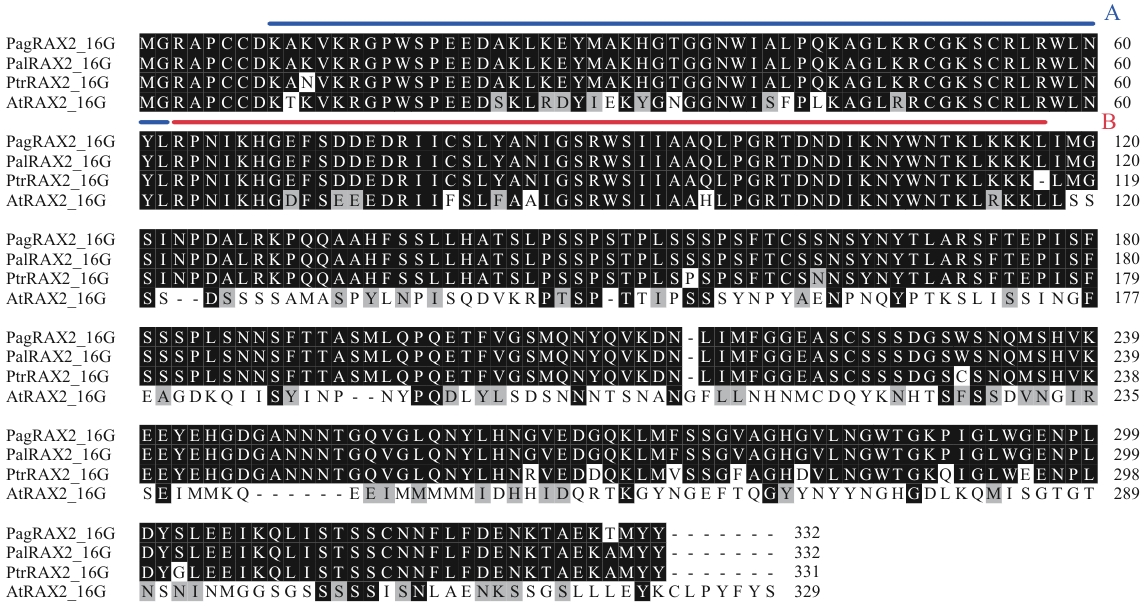
图1 PagRAX2_16G蛋白序列的多重比对A和B代表保守结构域;Pag:‘84K’杨;Pal:银白杨;Ptr:毛果杨;At:拟南芥
Fig. 1 Multiple alignments of PagRAX2_16G protein sequencesA and B indicate conserved domains. Pag: Populus alba × P. glandulosa; Pal: P. alba; Ptr: P. trichocarpa; At: Arabidopsis thaliana
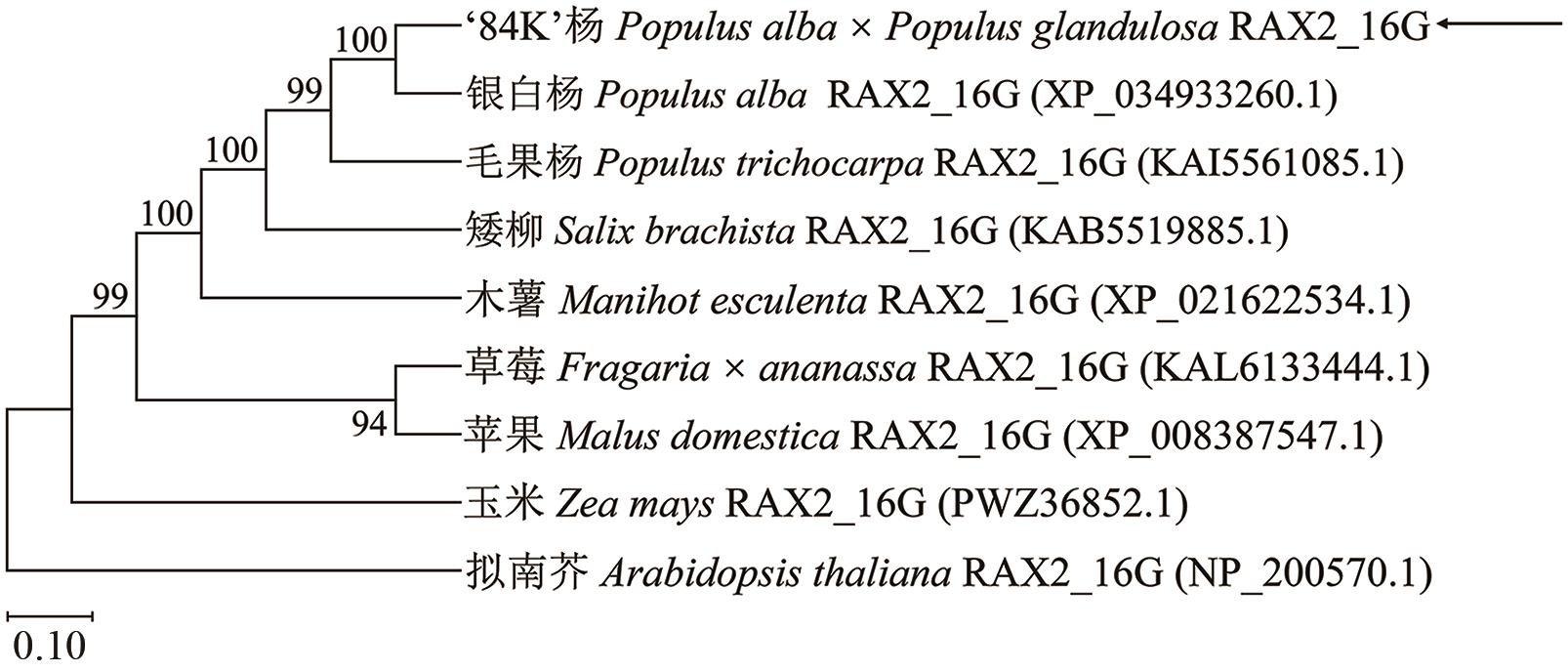
图2 ‘84K’杨PagRAX2_16G与其他物种RAX2_16G蛋白系统发育树分析
Fig. 2 Phylogenetic tree analysis of PagRAX2_16G in '84K' poplar and RAX2_16G proteins from other plant species
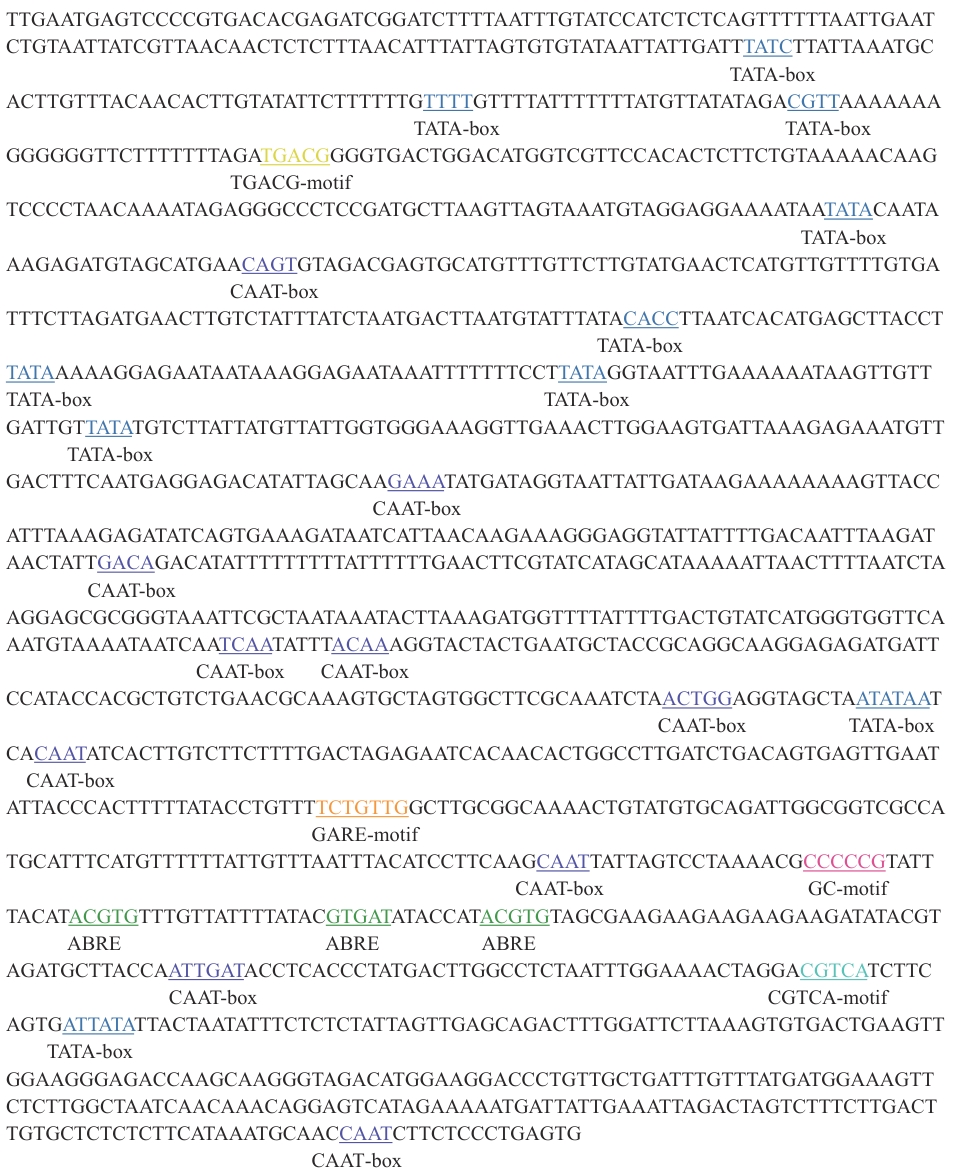
图3 PagRAX2_16G的启动子序列及顺式作用元件分析TATA-box:转录起始核心元件;CAAT-box:增强子元件;TGACG-motif和CGTCA-motif:茉莉酸甲酯响应顺式作用元件;GARE-motif:赤霉素响应元件;GC-motif:厌氧特异性诱导相关增强子样元件;ABRE:脱落酸响应顺式作用元件
Fig. 3 Promoter sequence and cis-acting elements analysis of PagRAX2_16GTATA-box: Core components of transcription initiation. CAAT-box: Enhancer elements. TGACG-motif and CGTCA-motif: Cis-acting element of methyl jasmonate response. GARE-motif: Gibberellin response element. GC-motif: Anaerobic-specific inducible enhancer-like element. ABRE: Cis-acting element of abscisic acid response
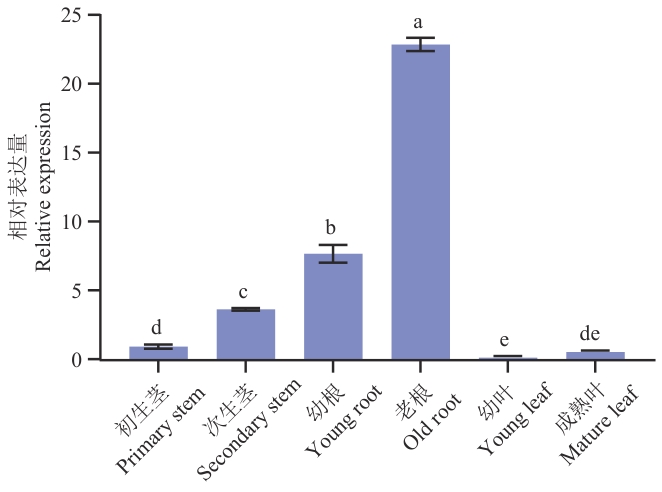
图4 ‘84K’杨PagRAX2_16G的表达模式分析不同小写字母表示显著性差异(P<0.05)。下同
Fig. 4 Expression pattern analysis of PagRAX2_16G in '84K' poplarDifferent lowercase letters indicate significant differences (P<0.05). The same as below
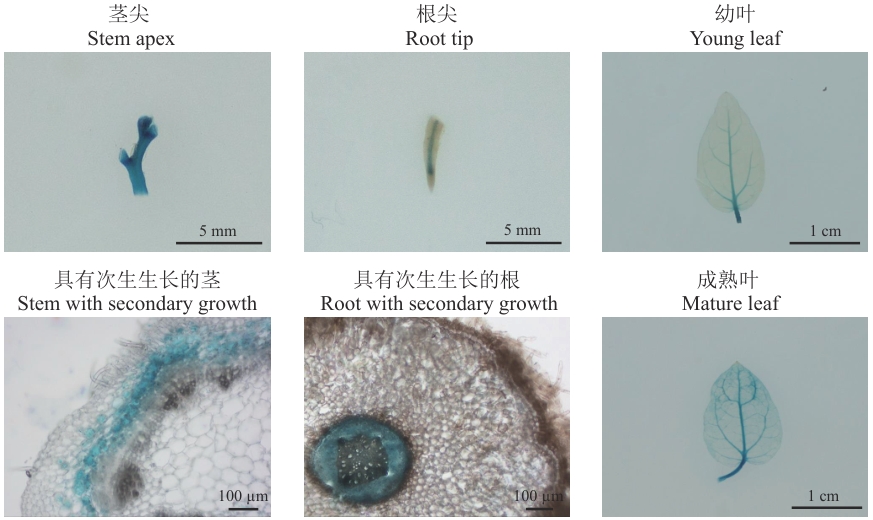
图5 proPagRAX2_16G的GUS染色结果
Fig. 5 GUS staining result of proPagRAX2_16G
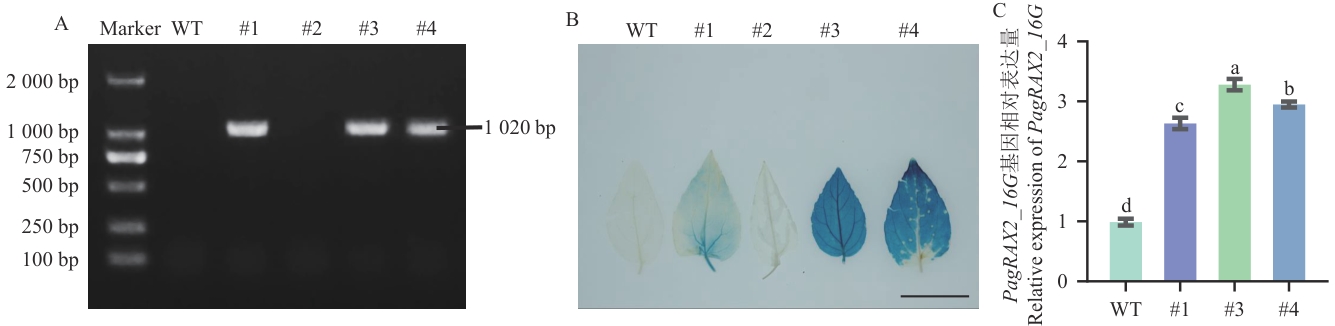
图6 PagRAX2_16G转基因杨树的PCR和GUS检测及RT-qPCR分析A:PagRAX2_16G转基因杨树的PCR检测;B:PagRAX2_16G转基因杨树的GUS检测(Bar=1 cm);C:PagRAX2_16G转基因杨树的RT-qPCR分析。WT:野生型植株,阴性对照;#2:假阳性植株;#1、#3、#4:转基因阳性植株。下同
Fig. 6 PCR detection, GUS assay and RT-qPCR analysis of PagRAX2_16G transgenic poplarA: PCR detection of PagRAX2_16G transgenic plants. B: GUS assay of PagRAX2_16G transgenic plants (Bar = 1 cm). C: RT-qPCR analysis of PagRAX2_16G transgenic plants. WT: Wild-type plants, negative control. #2: False positive plant. #1, #3, #4: PagRAX2_16G transgenic positive plants. The same below

图7 过表达PagRAX2_16G植株茎与叶的外部形态分析A:‘84K’杨野生型和PagRAX2_16G转基因植株茎与叶的外部形态(Bar=10 cm);B‒F:茎与叶的外部形态分析
Fig. 7 Analysis of the external morphology of stems and leaves in plants overexpressing PagRAX2_16GA: External morphology of the stems and leaves between wild-type ‘84K’ poplar and PagRAX2_16G-overexpressed ‘84K’ poplars (Bar = 10 cm). B‒F: Analysis of the external morphology of stems and leaves
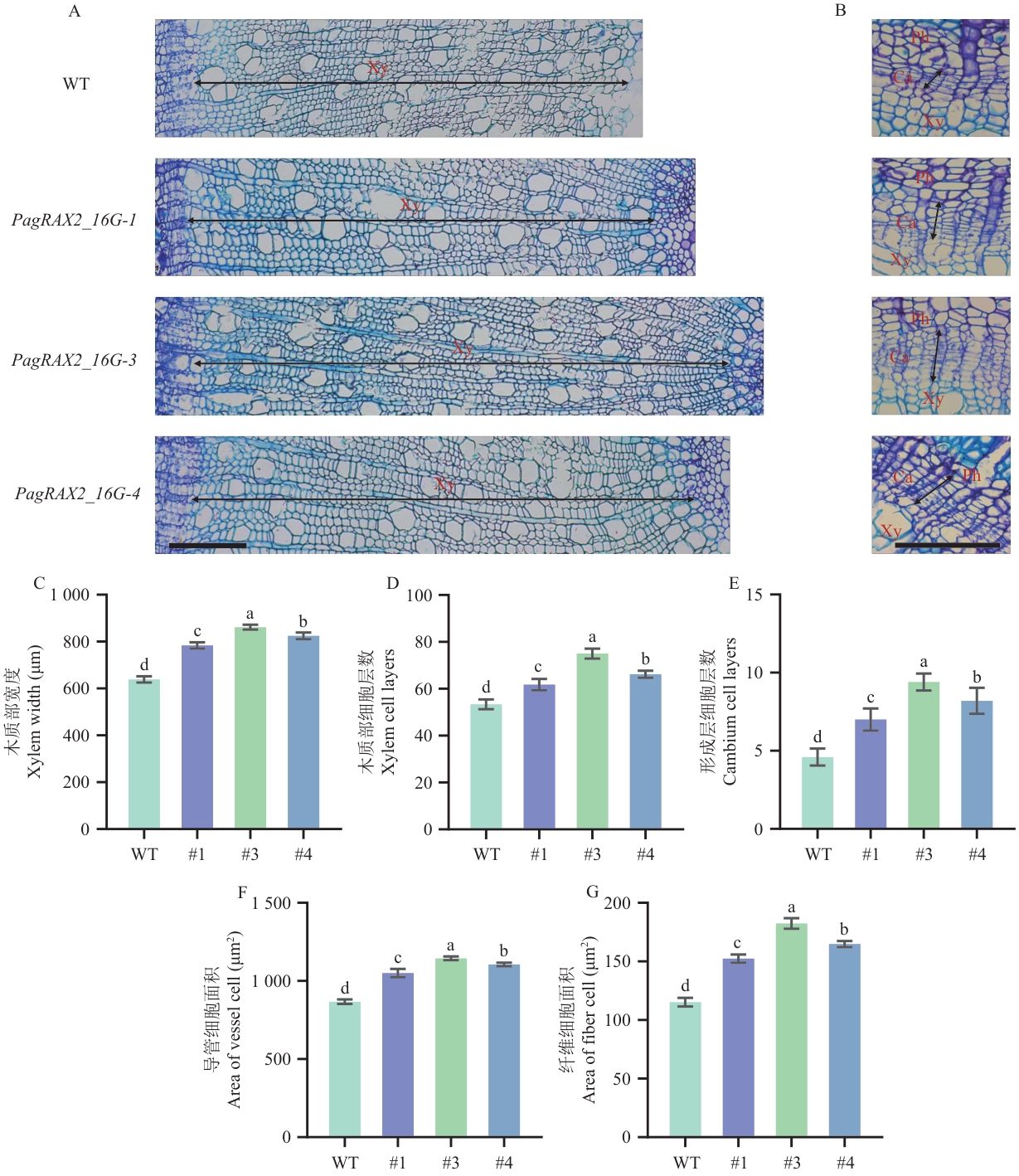
图8 过表达PagRAX2_16G植株茎的内部结构分析A:‘84K’杨野生型和过表达PagRAX2_16G植株茎第20节间的横切面(Bar=100 µm);B:‘84K’杨野生型和过表达PagRAX2_16G‘84K’杨植株茎第20节间的形成层区域(Bar=100 µm);Ph:韧皮部;Xy:木质部;Ca:形成层;C‒G:茎的内部结构分析
Fig. 8 Analysis of internal structure in the stems of plants overexpressing PagRAX2_16GA: Cross-sections of the 20th internodes of stems from wild-type and PagRAX2_16G-overexpressed ‘84K’ poplars (Bar = 100 µm). B: Cambium region of the 20th internodes in stems of wild-type ‘84K’ poplar and PagRAX2_16G-overexpressed ‘84K’ poplars (Bar = 100 µm). Ph: Phloem. Xy: Xylem. Ca: Cambium. C‒G: Analysis of the internal structure of stems

图9 过表达PagRAX2_16G植株根系的外部形态分析A:‘84K’杨野生型和PagRAX2_16G转基因植株根系的外部形态(Bar=10 cm);B‒F:根系的外部形态分析
Fig. 9 Analysis of the external morphology of roots in plants overexpressing PagRAX2_16GA: External morphology of the roots between wild-type ‘84K’ poplar and PagRAX2_16G-transgenic poplar (Bar = 10 cm). B‒F: Analysis of the external morphology of roots
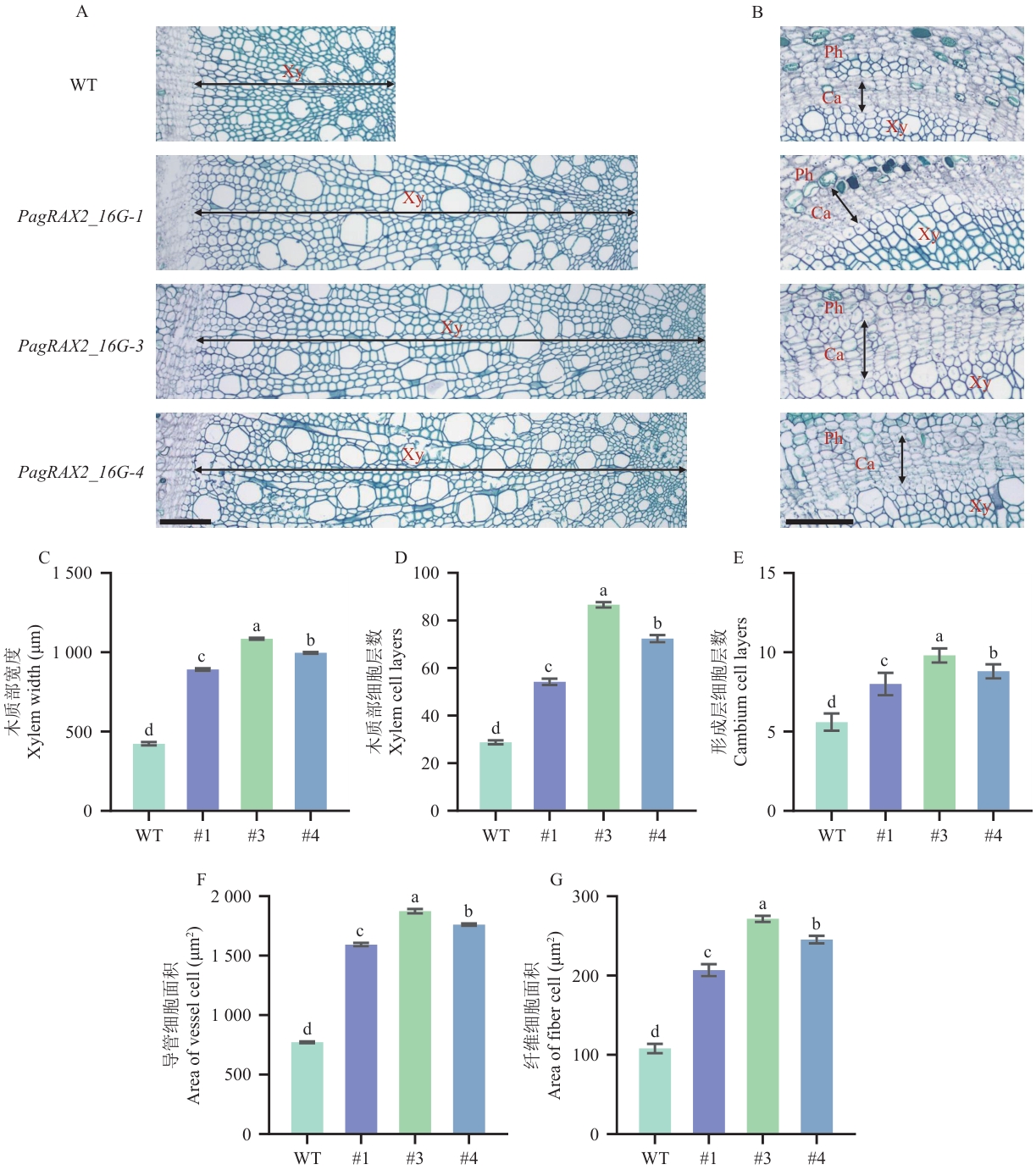
图10 过表达PagRAX2_16G植株根系的内部结构分析A:‘84K’杨野生型和过表达PagRAX2_16G植株根基部的横切面(Bar=100 µm);B:‘84K’杨野生型和过表达PagRAX2_16G ‘84K’杨植株根基部的形成层区域(Bar=100 µm);C‒G:根系的内部结构分析
Fig. 10 Analysis of internal structure in the roots of plants overexpressing PagRAX2_16GA: Cross-sections of the root crown from wild-type ‘84K’ poplar and PagRAX2_16G-overexpressed ‘84K’ poplar (Bar = 100 µm). B: Cambium region of the root crown of wild-type ‘84K’ poplar and ‘84K’ poplar overexpressing PagRAX2_16G (Bar = 100 µm). C‒G: Analysis of the internal structure of roots
| [1] | Zhang ZL, Liu ZY, Wu H, et al. Genome-wide identification and characterization of MYB gene family and analysis of its sex-biased expression pattern in Spinacia oleracea L [J]. Int J Mol Sci, 2024, 25(2): 795. |
| [2] | Dubos C, Stracke R, Grotewold E, et al. MYB transcription factors in Arabidopsis [J]. Trends Plant Sci, 2010, 15(10): 573-581. |
| [3] | Jiang CK, Rao GY. Insights into the diversification and evolution of R2R3-MYB transcription factors in plants [J]. Plant Physiol, 2020, 183(2): 637-655. |
| [4] | Jia TQ, Zhang KD, Li F, et al. The AtMYB2 inhibits the formation of axillary meristem in Arabidopsis by repressing RAX1 gene under environmental stresses [J]. Plant Cell Rep, 2020, 39(12): 1755-1765. |
| [5] | Liu Z, Luan YS, Li JB, et al. Expression of a tomato MYB gene in transgenic tobacco increases resistance to Fusarium oxysporum and Botrytis cinerea [J]. Eur J Plant Pathol, 2016, 144(3): 607-617. |
| [6] | Jin RX, Muhammad T, Jia CP, et al. Overexpression of R2R3-MYB type transcription factor SpMYB1 enhances cold and drought tolerance in tomato [J]. Plant Physiol Biochem, 2025, 229: 110326. |
| [7] | Guo HY, Wang YC, Wang LQ, et al. Expression of the MYB transcription factor gene BplMYB46 affects abiotic stress tolerance and secondary cell wall deposition in Betula platyphylla [J]. Plant Biotechnol J, 2017, 15(1): 107-121. |
| [8] | Wu Y, Wen J, Xia YP, et al. Evolution and functional diversification of R2R3-MYB transcription factors in plants [J]. Hortic Res, 2022, 9: uhac058. |
| [9] | Yin MM, Wei CH, Du HM, et al. Comprehensive analysis of R2R3-MYB transcription factors reveals OsMYB1 as a key regulator of anthocyanin biosynthesis in rice [J]. Plant Sci, 2025, 360: 112732. |
| [10] | Wang XX, Wang JC, Liu ZY, et al. The R2R3 MYB gene TaMYB305 positively regulates anther and pollen development in thermo-sensitive male-sterility wheat with Aegilops kotschyi cytoplasm [J]. Planta, 2024, 259(3): 64. |
| [11] | Jiang LY, Yue ML, Liu YQ, et al. A novel R2R3-MYB transcription factor FaMYB5 positively regulates anthocyanin and proanthocyanidin biosynthesis in cultivated strawberries (Fragaria × ananassa) [J]. Plant Biotechnol J, 2023, 21(6): 1140-1158. |
| [12] | Saxena S, Pal L, Naik J, et al. The R2R3-MYB-SG7 transcription factor CaMYB39 orchestrates surface phenylpropanoid metabolism and pathogen resistance in chickpea [J]. New Phytol, 2023, 238(2): 798-816. |
| [13] | Chen KQ, Tang XG, Song MR, et al. Functional identification of MdMYB5 involved in secondary cell wall formation in apple [J]. Fruit Res, 2021, 1(1): 1-10. |
| [14] | Wang BY, Chen S, Zhu Z, et al. PeMYB26, an R2R3-MYB transcription factor, positively regulates lignin deposition in Moso bamboo [J]. Plant Growth Regul, 2024, 104(3): 1521-1533. |
| [15] | Tang YH, Lu LL, Sheng ZP, et al. An R2R3-MYB network modulates stem strength by regulating lignin biosynthesis and secondary cell wall thickening in herbaceous peony [J]. Plant J, 2023, 113(6): 1237-1258. |
| [16] | Zhao P, Yu QL, He YM, et al. PagHAM4a-PagSCL21 and PagHAM4b-PagTCP20 modules positively regulate cambial activity and its differentiation into secondary xylem in poplar [J]. J Exp Bot, 2024, 75(22): 7174-7189. |
| [17] | Wang HL, Zhao P, He YM, et al. Transcriptome and miRNAs profiles reveal regulatory network and key regulators of secondary xylem formation in “84K” poplar [J]. Int J Mol Sci, 2023, 24(22): 16438. |
| [18] | 苏玉婷, 王慧林, 赵盼, 等. 杨树PagNAC47及其启动子克隆与功能分析 [J]. 园艺学报, 2025, 52(7): 1828-1842. |
| Su YT, Wang HL, Zhao P, et al. Cloning and functional analysis of PagNAC47 gene and its promoter from poplar [J]. Acta Hortic Sin, 2025, 52(7): 1828-1842. | |
| [19] | Pratyusha DS, Sarada DVL. MYB transcription factors-master regulators of phenylpropanoid biosynthesis and diverse developmental and stress responses [J]. Plant Cell Rep, 2022, 41(12): 2245-2260. |
| [20] | Sun PF, Wang HL, Zhao P, et al. The regulation of xylem development by transcription factors and their upstream microRNAs [J]. Int J Mol Sci, 2022, 23(17): 10134. |
| [21] | de Oliveira PN, Matias F, Galeano E, et al. Overexpression of TgMYB2 from the teak MYB gene family impacts biomass accumulation and secondary cell wall in tobacco plants [J]. Plant Mol Biol, 2025, 115(4): 92. |
| [22] | Hu XL, Zhang LS, Wilson I, et al. The R2R3-MYB transcription factor family in Taxus chinensis: identification, characterization, expression profiling and posttranscriptional regulation analysis [J]. PeerJ, 2020, 8: e8473. |
| [23] | Chai GH, Wang ZG, Tang XF, et al. R2R3-MYB gene pairs in Populus: evolution and contribution to secondary wall formation and flowering time [J]. J Exp Bot, 2014, 65(15): 4255-4269. |
| [24] | Huang JF, Guo YJ, Sun QW, et al. Genome-wide identification of R2R3-MYB transcription factors regulating secondary cell wall thickening in cotton fiber development [J]. Plant Cell Physiol, 2019, 60(3): 687-701. |
| [25] | Zhong RQ, Lee C, Zhou JL, et al. A battery of transcription factors involved in the regulation of secondary cell wall biosynthesis in Arabidopsis [J]. Plant Cell, 2008, 20(10): 2763-2782. |
| [26] | Zhuang HB, Chong SL, Priyanka B, et al. Full-length transcriptomic identification of R2R3-MYB family genes related to secondary cell wall development in Cunninghamia lanceolata (Chinese fir) [J]. BMC Plant Biol, 2021, 21(1): 581. |
| [27] | Sun YM, Ren S, Ye SL, et al. Identification and functional characterization of PtoMYB055 involved in the regulation of the lignin biosynthesis pathway in Populus tomentosa [J]. Int J Mol Sci, 2020, 21(14): 4857. |
| [28] | Li CF, Ma XD, Yu H, et al. Ectopic expression of PtoMYB74 in poplar and Arabidopsis promotes secondary cell wall formation [J]. Front Plant Sci, 2018, 9: 1262. |
| [29] | Xu CZ, Fu XK, Liu R, et al. PtoMYB170 positively regulates lignin deposition during wood formation in poplar and confers drought tolerance in transgenic Arabidopsis [J]. Tree Physiol, 2017, 37(12): 1713-1726. |
| [30] | Tang F, Jiao B, Zhang M, et al. PtoMYB031, the R2R3 MYB transcription factor involved in secondary cell wall biosynthesis in poplar [J]. Front Plant Sci, 2024, 14: 1341245. |
| [31] | Zhao P, Zhou XY, Yu QL, et al. PagMIR166c targets PagECH2 to regulate cambial differentiation into secondary xylem, cell expansion, and lignin deposition via different auxin signaling pathways in poplar stems [J]. New Phytol, 2025, 248(1): 321-338. |
| [1] | 张静, 李圆圆, 王燕, 江雅洁, 杨寒冰, 柴文臣, 霍辰思, 罗丹, 阎世江. 青花菜BoFLC3的克隆与开花调控机制研究[J]. 生物技术通报, 2026, 42(9): 169-177. |
| [2] | 李淑婷, 王影, 丁家豪, 胡荣芳, 李琛, 宋亚楠, 薛金爱. 油莎豆FAT家族全基因组鉴定及CeFATA的功能分析[J]. 生物技术通报, 2026, 42(8): 162-172. |
| [3] | 冉丹丹, 邰森林, 欧小宏, 周涛, 徐娇. 天麻尿苷二磷酸糖基转移酶基因家族鉴定与分析[J]. 生物技术通报, 2026, 42(7): 163-172. |
| [4] | 赵静玮, 常娜, 金宵溦, 张立全. 黄花苜蓿MfWRKY22的克隆及抗逆性功能分析[J]. 生物技术通报, 2026, 42(7): 236-245. |
| [5] | 熊仕发, 陈益存, 吴立文, 施翔, 张盛剿, 彭方有, 陈涛梅, 汪阳东. 白栎TCP基因家族的鉴定及功能分析[J]. 生物技术通报, 2026, 42(6): 258-266. |
| [6] | 安飞飞, 罗秀芹, 蔡杰, 薛晶晶, 朱文丽. 木薯MeMYB106基因克隆及其在叶片花青素合成中的功能[J]. 生物技术通报, 2026, 42(6): 13-21. |
| [7] | 张艾岑, 闫会, 马居奎, 张允刚, 李强. 甘薯DNA甲基转移酶和去甲基化酶基因家族的全基因组鉴定与表达分析[J]. 生物技术通报, 2026, 42(6): 1-12. |
| [8] | 李旭龙, 徐世强, 张龙, 李静宇, 何伟贤, 陈立凯, 王继华. 巴戟天萜烯合成酶基因家族鉴定、进化及表达模式分析[J]. 生物技术通报, 2026, 42(6): 314-325. |
| [9] | 梁慧琪, 陈益存, 汪阳东, 赵耘霄, 高暝. 山苍子PAT1基因亚家族鉴定及其在嫁接愈合过程中的表达分析[J]. 生物技术通报, 2026, 42(5): 302-311. |
| [10] | 倪飞飞, 陈益存, 高暝, 张盛剿, 彭方有, 陈涛梅, 赵耘霄, 汪阳东. 山苍子TCP基因鉴定及其调控萜类合成的研究[J]. 生物技术通报, 2026, 42(4): 227-238. |
| [11] | 冯成蒿, 党雨乐, 王志泽, 聂蔚丹, 杨中敏, 杜崇. 基于RNA-seq筛选番茄防御南方根结线虫病的差异基因与RPP13的表达特征分析[J]. 生物技术通报, 2026, 42(4): 141-152. |
| [12] | 孙婷, 张艳, 刘玉珊, 冯媛媛, 秦恒山, 张军, 何小岗, 张景荣. 黄秋葵AeF3H基因的克隆与功能分析[J]. 生物技术通报, 2026, 42(4): 153-160. |
| [13] | 徐泽, 周陈平, 邝瑞彬, 吴夏明, 杨敏, 刘传和, 贺涵, 魏岳荣. 番木瓜PG基因家族鉴定及其在果实软化中的功能[J]. 生物技术通报, 2026, 42(3): 349-361. |
| [14] | 张冬岭, 张寅生, 王建军, 叶飞宇, 卢子涵, 马晨晨, 柳华峰, 胡德升, 邓亚洲, 曹丽茹. 玉米HSFs转录因子家族在干旱胁迫下的表达特性及功能[J]. 生物技术通报, 2026, 42(2): 178-187. |
| [15] | 农韦优, 赵昌祖, 钱禛锋, 丁倩, 王誉洁, 陈疏影, 何丽莲, 李富生. 蔗茅EfBBX基因家族鉴定及冷胁迫下表达模式分析[J]. 生物技术通报, 2026, 42(2): 267-277. |
| 阅读次数 | ||||||
|
全文 |
|
|||||
|
摘要 |
|
|||||
