







生物技术通报 ›› 2026, Vol. 42 ›› Issue (8): 197-206.doi: 10.13560/j.cnki.biotech.bull.1985.2025-1234
• 研究报告 • 上一篇
郑晓雨1,2, 汪忆雪1,2, 赵晓敏1, 吴君章3, 任洁馨3, 钱亚新1,2, 肖志亮1, 刘正文1, 潘晓薇3( ), 李依婷1()
收稿日期:2025-11-15
出版日期:2026-08-26
发布日期:2026-08-17
通讯作者:
李依婷liyiting@caas.cn基金资助:
ZHENG Xiao-yu1,2, WANG Yi-xue1,2, ZHAO Xiao-min1, WU Jun-zhang3, REN Jie-xin3, QIAN Ya-xin1,2, XIAO Zhi-liang1, LIU Zheng-wen1, PAN Xiao-wei3(), LI Yi-ting1()
Received:2025-11-15
Published:2026-08-26
Online:2026-08-17
摘要:
目的 萜类化合物在植物生长发育及逆境防御中发挥重要作用。旨在解析烟草倍半萜合成酶基因NtEAS(Nicotiana tabacum5-epi-aristolochene synthase)的生物学功能,为揭示萜类物质介导的抗病防御机制、推动烟草抗病育种提供理论依据。 方法 利用生物信息学方法分析NtEAS蛋白的特性、保守结构域、顺式作用元件及系统发育关系;利用RT-qPCR检测NtEAS在不同组织及病原菌胁迫下的表达模式;通过亚细胞定位技术明确NtEAS蛋白在烟草细胞中的亚细胞分布;通过原核表达系统体外表达并纯化NtEAS蛋白,鉴定NtEAS催化产物;采用菌丝生长速率法和滤纸片扩散法评估NtEAS催化产物对烟草青枯病菌和黑胫病菌的体外抑制活性,分析NtEAS在烟草黑胫病和青枯病抗性防御中的生物学功能。 结果 烟草倍半萜合成酶基因NtEAS开放阅读框全长1 647 bp,编码548个氨基酸,其编码蛋白定位于细胞核与细胞质,含有典型的萜类合成酶保守结构域“DDXXD”和“NST/DTE”。NtEAS主要在烟草根中高表达,且强烈响应烟草青枯病菌和黑胫病菌诱导。NtEAS能够以法尼基焦磷酸为底物催化生成倍半萜类化合物马兜铃烯,其催化产物对青枯病菌和黑胫病菌均具有显著的抑制活性,且这种抑制作用与其浓度呈正相关。 结论 NtEAS基因及其催化产物可能同时参与烟草对青枯病和黑胫病的化学免疫防御过程。
郑晓雨, 汪忆雪, 赵晓敏, 吴君章, 任洁馨, 钱亚新, 肖志亮, 刘正文, 潘晓薇, 李依婷. 烟草倍半萜合成酶基因NtEAS的体外功能鉴定[J]. 生物技术通报, 2026, 42(8): 197-206.
ZHENG Xiao-yu, WANG Yi-xue, ZHAO Xiao-min, WU Jun-zhang, REN Jie-xin, QIAN Ya-xin, XIAO Zhi-liang, LIU Zheng-wen, PAN Xiao-wei, LI Yi-ting. In vitro Functional Identification of Tobacco Sesquiterpene Synthase Gene NtEAS[J]. Biotechnology Bulletin, 2026, 42(8): 197-206.
| 引物 Primer | 引物序列 Primer sequence (5′‒3′) |
|---|---|
| NtEAS-qF | TCTGCCACGGAGCAAGATTT |
| NtEAS-qR | TCTGTAGAGACGGGAGTGGG |
| Actin-qF | CAAGGAAATCACCGCTTTGG |
| Actin-qR | AAGGGATGCGAGGATGGA |
表1 NtEAS的RT-qPCR引物
Table 1 RT-qPCR primers for NtEAS
| 引物 Primer | 引物序列 Primer sequence (5′‒3′) |
|---|---|
| NtEAS-qF | TCTGCCACGGAGCAAGATTT |
| NtEAS-qR | TCTGTAGAGACGGGAGTGGG |
| Actin-qF | CAAGGAAATCACCGCTTTGG |
| Actin-qR | AAGGGATGCGAGGATGGA |
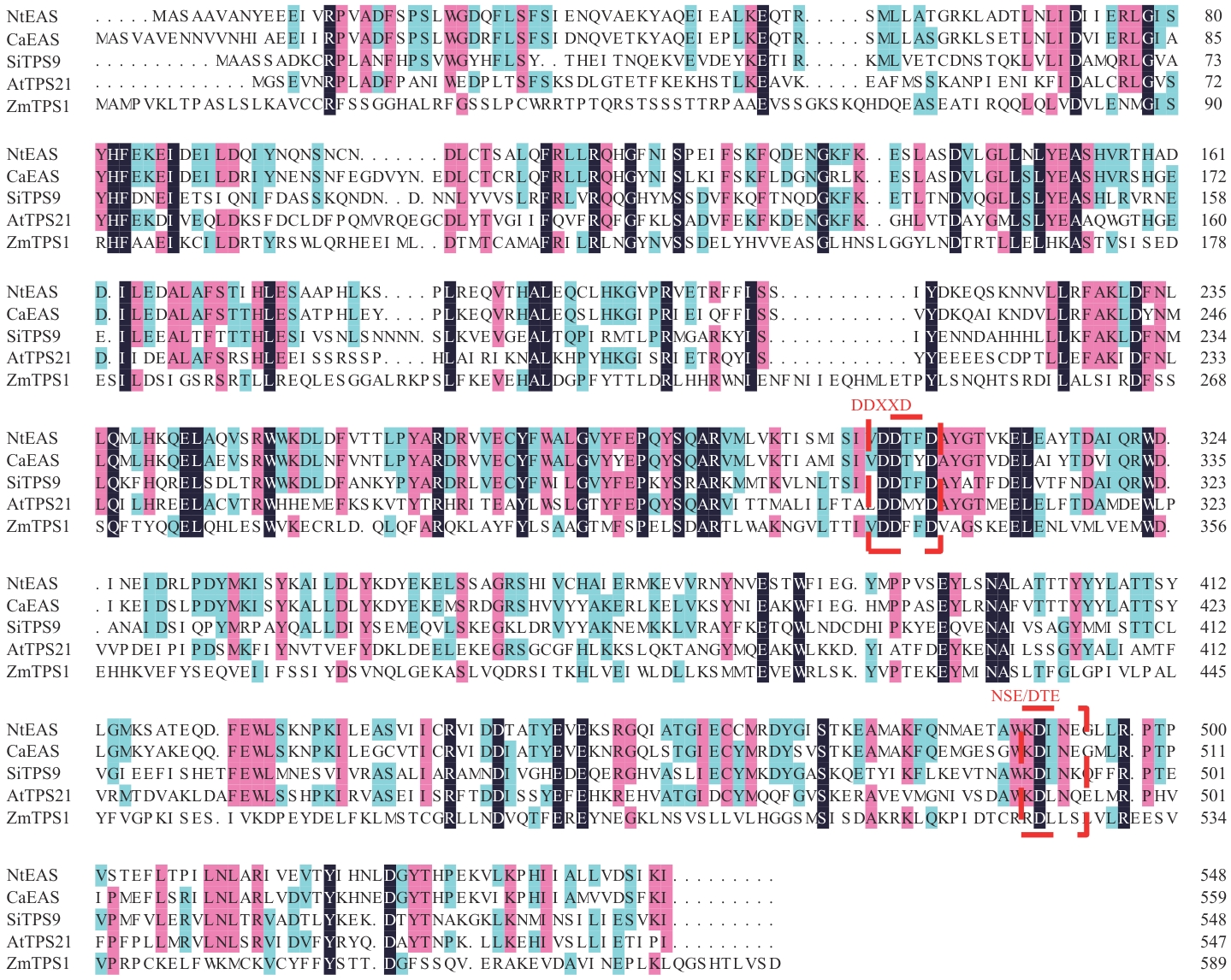
图1 NtEAS蛋白的保守结构域分析方框标注的为萜烯合酶的保守结构域“DDXXD”和“NST/DTE”。CaEAS:甜椒马兜铃烯合酶;SiTPS9:番茄β-榄香烯合成酶;AtTPS21:拟南芥石竹烯合酶;ZmTPS1:玉米(E)-β-法尼烯合成酶
Fig. 1 Conserved domain analysis of NtEAS proteinsConserved domains of terpene synthase “DDXXD” and “NST/DTE” are marked in the box. CaEAS: Aristolochene synthase of bell pepper (Capsicum annuum L.); SiTPS9: Tomato (Solanum lycopersicum L.) β-elemene synthase; AtTPS21: Arabidopsis caryophyllene synthase; ZmTPS1: corn (E)-β-farnesene synthase
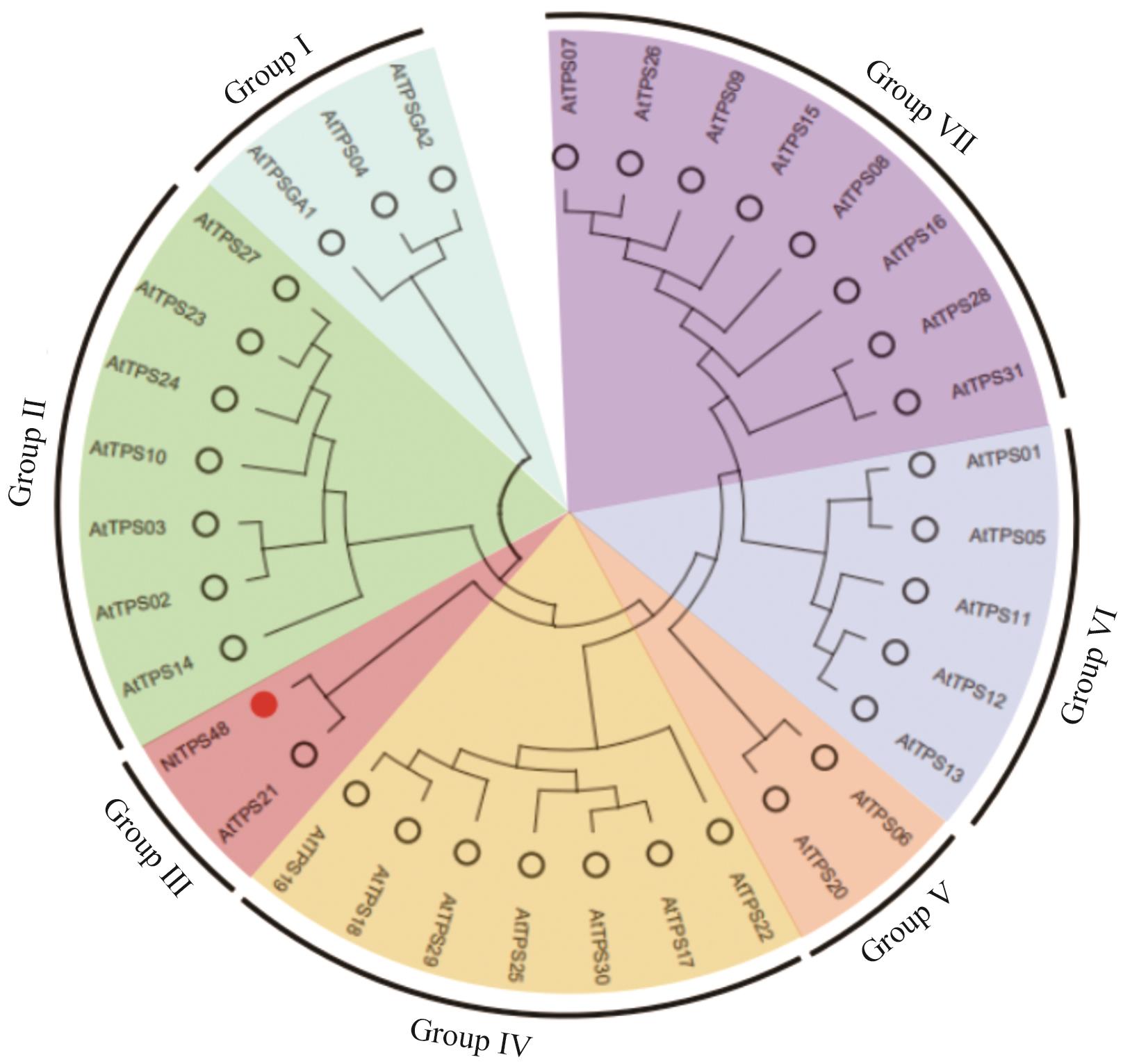
图2 NtEAS与拟南芥萜类合成酶家族的系统进化分析
Fig. 2 Phylogenetic analysis of NtEAS and Arabidopsis terpene synthase family
元件 Element | 序列 Sequence (5'‒3') | 功能(响应信号/通路) Function (response signal/pathway) | 可能结合的转录因子 Possible binding transcription factors | 位置 Position |
|---|---|---|---|---|
| W-box | (T)TGAC(C/T) | 响应病原体侵染,参与水杨酸(SA)或茉莉酸(JA)信号通路 | WRKY转录因子家族 | -363 ‒ -367、-605 ‒ -609、-739 ‒ -743、-828 ‒ -832 |
| GCC-box | GCCGCC | 响应乙烯(ET)信号,参与防御基因激活 | ERF/AP2转录因子家族 | -1 784 ‒ -1 789 |
| JERE | CGTCA/TGACG | 响应茉莉酸(JA)信号,激活防御相关基因表达 | MYC、JAM等JA信号通路转录因子 | -311 ‒ -315、-740 ‒ -744 |
| P-box | CCTTTTG | 参与苯丙烷类代谢途径(如植保素合成) | MYB转录因子 | -855 ‒ -861 |
表2 NtEAS基因启动子中抗病相关顺式作用元件分析
Table 2 Analysis of NtEAS gene promoter cis-acting elements related to disease resistance
元件 Element | 序列 Sequence (5'‒3') | 功能(响应信号/通路) Function (response signal/pathway) | 可能结合的转录因子 Possible binding transcription factors | 位置 Position |
|---|---|---|---|---|
| W-box | (T)TGAC(C/T) | 响应病原体侵染,参与水杨酸(SA)或茉莉酸(JA)信号通路 | WRKY转录因子家族 | -363 ‒ -367、-605 ‒ -609、-739 ‒ -743、-828 ‒ -832 |
| GCC-box | GCCGCC | 响应乙烯(ET)信号,参与防御基因激活 | ERF/AP2转录因子家族 | -1 784 ‒ -1 789 |
| JERE | CGTCA/TGACG | 响应茉莉酸(JA)信号,激活防御相关基因表达 | MYC、JAM等JA信号通路转录因子 | -311 ‒ -315、-740 ‒ -744 |
| P-box | CCTTTTG | 参与苯丙烷类代谢途径(如植保素合成) | MYB转录因子 | -855 ‒ -861 |
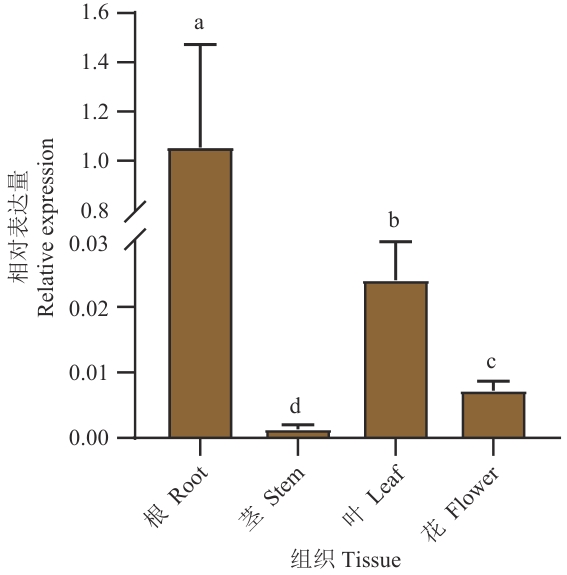
图3 NtEAS组织表达模式不同小写字母表示处理间在P<0.05水平上差异显著。下同
Fig. 3 Tissue expression pattern of NtEASDifferent lowercase letters indicate significant differences at the level of P<0.05. The same below
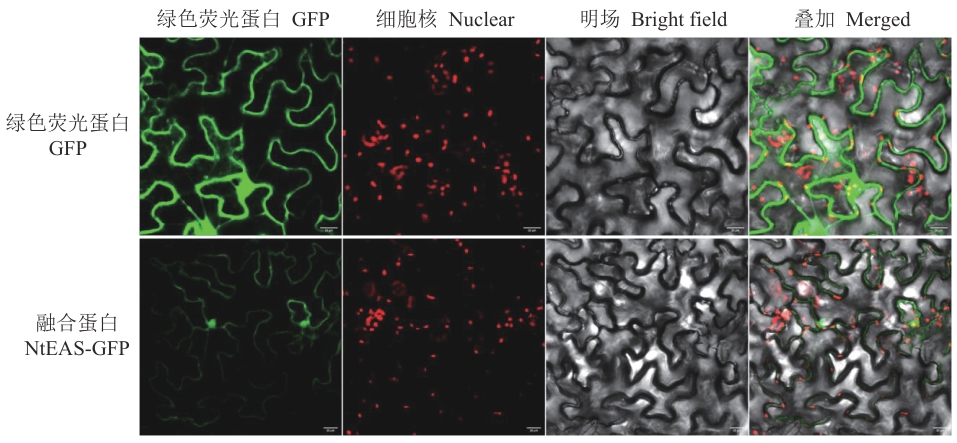
图4 NtEAS的亚细胞定位
Fig. 4 Subcellular location of NtEAS
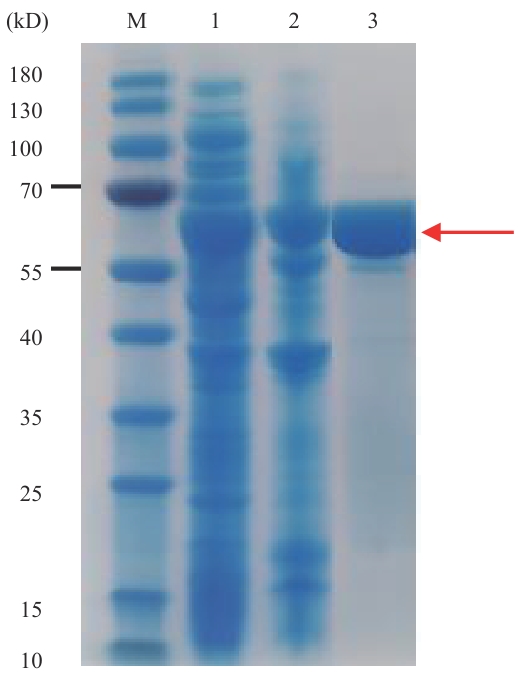
图5 NtEAS的原核表达M:Marker;1‒2:NtEAS粗酶的上清(1)及沉淀(2);3:纯化后的NtEAS蛋白。红色箭头指示为NtEAS蛋白
Fig. 5 Prokaryotic expression of NtEASM: Marker; 1‒2: supernatant (1) and precipitation (2) of NtEAS crude enzyme; 3: purified NtEAS protein. The red arrow indicates the NtEAS protein
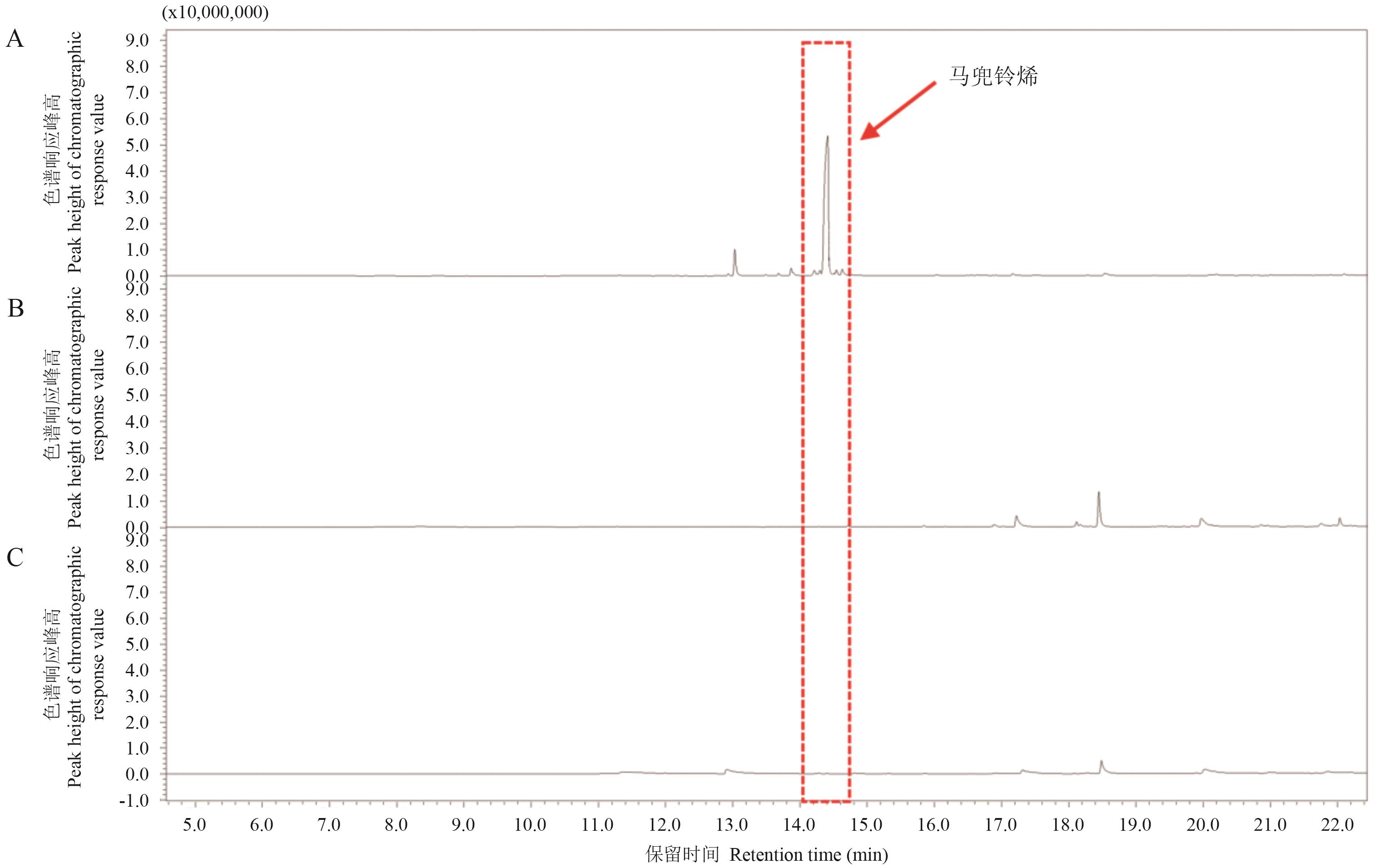
图6 NtEAS的酶学功能鉴定A:纯化的NtEAS与FPP底物体外酶催化反应的GC-MS图;B和C:无底物(B)和无酶(C)反应体系的GC-MS图
Fig. 6 Enzymatic function identification of NtEASA: GC-MS diagram of the catalytic reaction between purified NtEAS and FPP substrate enzymes; B and C: GC-MS diagrams of substrate-free (B) and enzyme-free (C) reaction systems

图7 纯化的NtEAS催化FPP反应产物的GC-MS分子碎片质谱图
Fig. 7 GC-MS molecular fragment mass spectra of purified NtEAS-catalyzed FPP reaction products
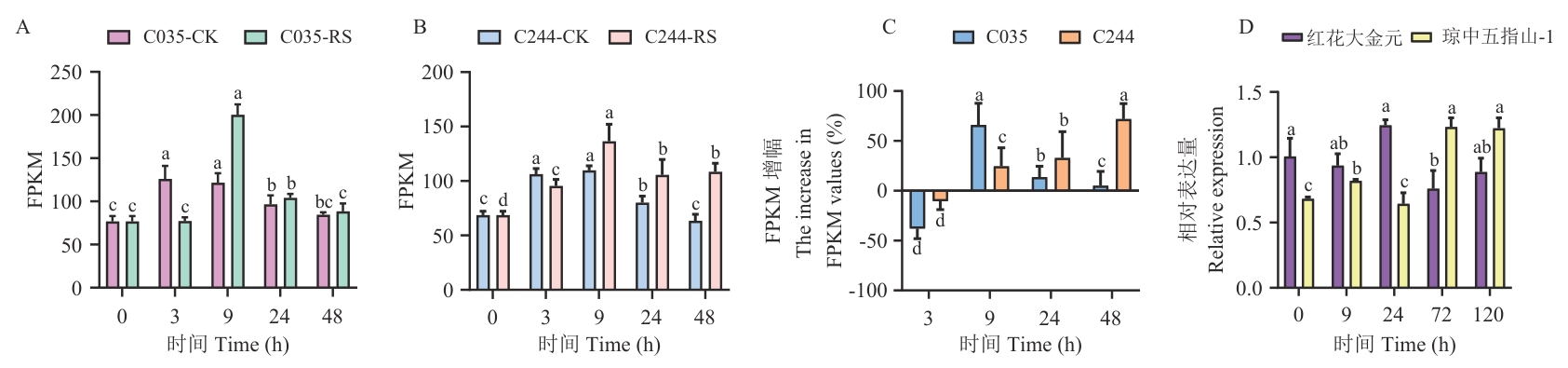
图8 NtEAS响应青枯病菌胁迫的表达分析A:接种(RS)和不接种(CK)青枯病菌的感病种质C035中,NtEAS基因的FPKM值;B:接种(RS)和不接种(CK)青枯病菌的抗病种质C244中,NtEAS基因的FPKM值;C:在感病种质C035和抗病种质C244中,NtEAS基因FPKM增幅对比;D:接种青枯病菌后,感病种质红花大金元与抗病种质琼中五指山一号根中NtEAS的相对表达量
Fig. 8 Expression analysis of NtEAS in response to bacterial wilt stressA: FPKM values of NtEAS gene in C035 in the susceptible germplasm of inoculated (RS) and non-inoculated (CK) granville wilt; B: FPKM value of NtEAS gene in disease resistant germplasm C244 of inoculated (RS) and non-inoculated (CK) granville wilt; C: comparison of FPKM amplification of NtEAS gene in susceptible germplasm C035 and disease-resistant germplasm C244; D: the relative expression of NtEAS in the roots of the susceptible germplasm safflower Dajinyuan and the disease-resistant germplasm Qiongzhong Wuzhishan No. 1 after inoculation granville wilt
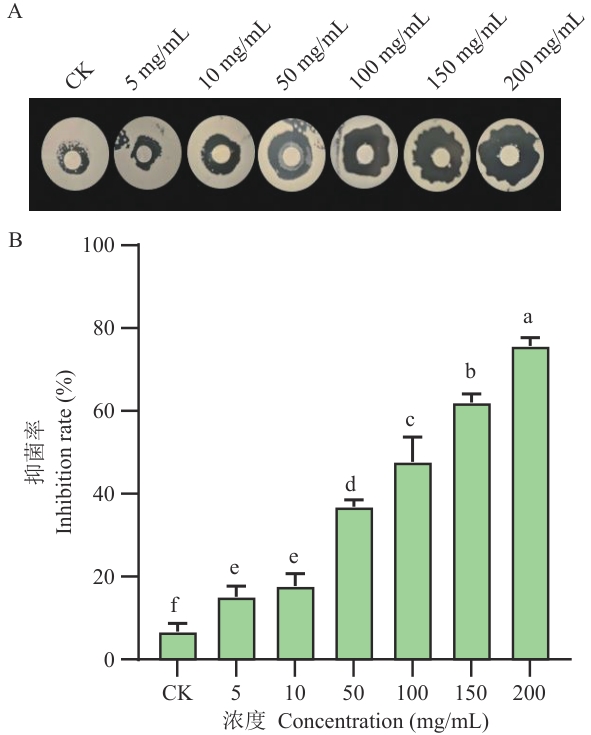
图9 NtEAS催化产物对青枯病菌的抑菌效果分析
Fig. 9 Analysis of the antibacterial effect of NtEAS catalytic products on bacterial wilt
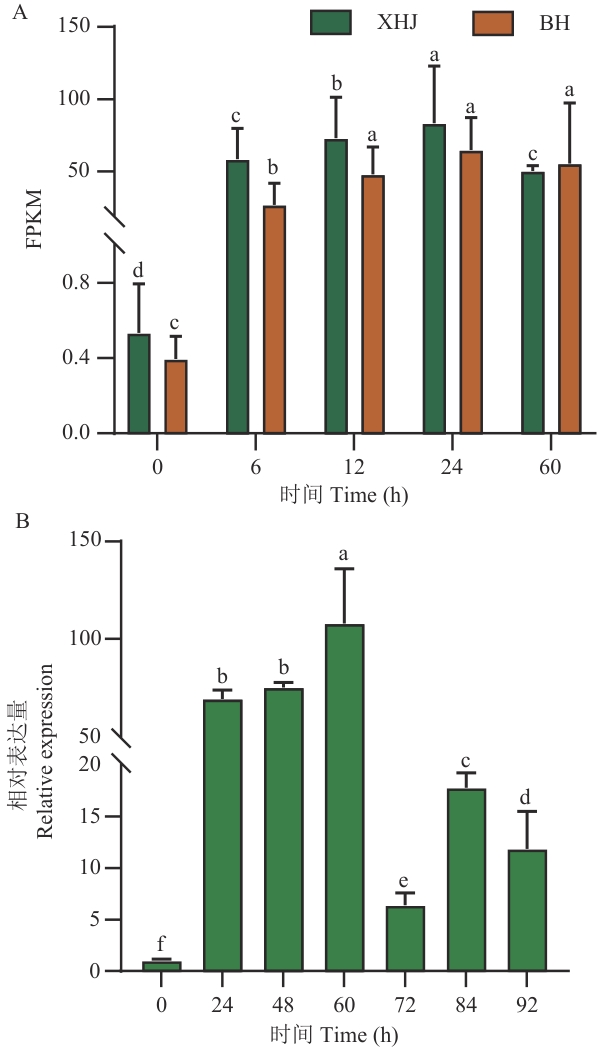
图10 NtEAS响应黑胫病菌胁迫的表达模式A:感病种质小黄金1025(XHJ)与抗病种质Beinhart 1000-1(BH)接种黑胫病菌后,NtEAS在转录组中的FPKM值;B:接种黑胫病菌后,中抗种质K326根中NtEAS的相对表达量
Fig. 10 Expression pattern of NtEAS in response to black shank pathogen stressA: FPKM values of NtEAS in the transcriptome after inoculation with disease-resistant germplasmLittle Gold 1025 (XHJ) and disease-resistant germplasm Beinhart 1000-1 (BH). B: Relative expression of NtEAS in the roots of medium-resistant germplasm K326 after inoculation with black shank
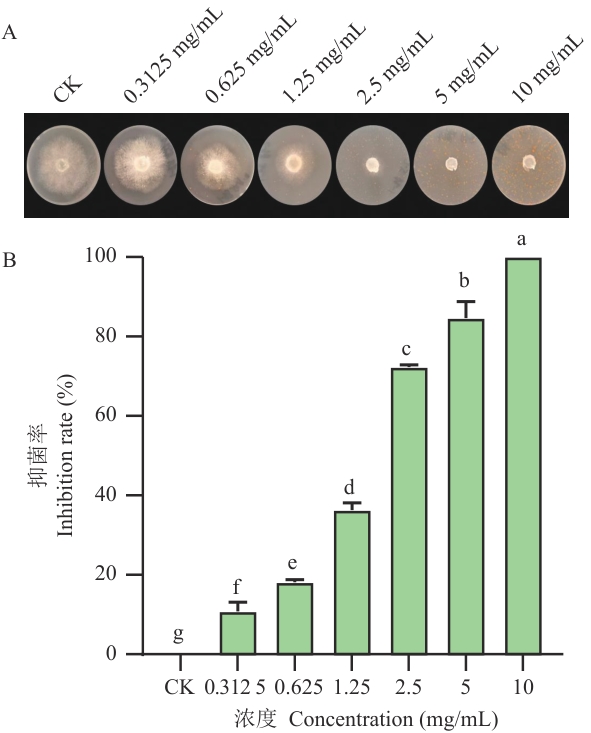
图11 NtEAS催化产物对黑胫病菌的抑菌效果分析
Fig. 11 Analysis of the antibacterial effect of NtEAS catalytic products on black shank pathogen
| [1] | 潘忠梅, 谭燕, 肖慈平, 等. 不同栽培措施及不同品种对烟草青枯病和黑胫病的影响 [J]. 安徽农学通报, 2024, 30(15): 93-96. |
| Pan ZM, Tan Y, Xiao CP, et al. Effects of different cultivation measures and varieties on tobacco bacterial wilt and black shank [J]. Anhui Agric Sci Bull, 2024, 30(15): 93-96. | |
| [2] | Ma QH, Zhu HH, Han JQ. Wheat ROP proteins modulate defense response through lignin metabolism [J]. Plant Sci, 2017, 262: 32-38. |
| [3] | Tang QJ, Liu TB, Teng K, et al. Microbial interactions and metabolisms in response to bacterial wilt and black shank pathogens in the tobacco rhizosphere [J]. Front Plant Sci, 2023, 14: 1200136. |
| [4] | Wen DX, Guo QQ, Zhao W, et al. Effect and mechanism of NaHS on tobacco bacterial wilt caused by Ralstonia solanacearum [J]. Sci Rep, 2023, 13: 2462. |
| [5] | Sun MM, Li L, Wang CD, et al. Naringenin confers defence against Phytophthora nicotianae through antimicrobial activity and induction of pathogen resistance in tobacco [J]. Mol Plant Pathol, 2022, 23(12): 1737-1750. |
| [6] | Singh G, Agrawal H, Bednarek P. Specialized metabolites as versatile tools in shaping plant-microbe associations [J]. Mol Plant, 2023, 16(1): 122-144. |
| [7] | Yu JW, Tu XZ, Huang AC. Functions and biosynthesis of plant signaling metabolites mediating plant-microbe interactions [J]. Nat Prod Rep, 2022, 39(7): 1393-1422. |
| [8] | Bednarek P, Osbourn A. Plant-microbe interactions: chemical diversity in plant defense [J]. Science, 2009, 324(5928): 746-748. |
| [9] | Huang MS, Sanchez-Moreiras AM, Abel C, et al. The major volatile organic compound emitted from Arabidopsis thaliana flowers, the sesquiterpene (E)-β-caryophyllene, is a defense against a bacterial pathogen [J]. New Phytol, 2012, 193(4): 997-1008. |
| [10] | Chen X, Liu FJ, Liu L, et al. Characterization and evolution of gene clusters for terpenoid phytoalexin biosynthesis in tobacco [J]. Planta, 2019, 250(5): 1687-1702. |
| [11] | Ammar AH, Lebrihi A, Mathieu F, et al. Chemical composition and in vitro antimicrobial and antioxidant activities of Citrus aurantium L. flowers essential oil (neroli oil) [J]. Pak J Biol Sci, 2012, 15(21): 1034-1040. |
| [12] | Fajdek-Bieda A, Pawlińska J, Wróblewska A, et al. Evaluation of the antimicrobial activity of geraniol and selected geraniol transformation products against gram-positive bacteria [J]. Molecules, 2024, 29(5): 950. |
| [13] | Moo CL, Yang SK, Osman MA, et al. Antibacterial activity and mode of action of β-caryophyllene on Bacillus cereus [J]. Pol J Microbiol, 2020, 69(1): 49-54. |
| [14] | 杨晴, 刘少华, 杨长青, 等. 烟草倍半萜合酶基因NtTPS21的克隆及功能鉴定 [J]. 中国烟草科学, 2022, 43(3): 39-46. |
| Yang Q, Liu SH, Yang CQ, et al. Cloning and functional characterization of sesquiterpene synthase gene NtTPS21 in tobacco [J]. Chin Tob Sci, 2022, 43(3): 39-46. | |
| [15] | Liu ZW, Xiao ZL, Geng RM, et al. Transcriptome analysis and genome-wide gene family identification enhance insights into bacterial wilt resistance in tobacco [J]. Agronomy, 2024, 14(2): 250. |
| [16] | Meng H, Sun MM, Jiang ZP, et al. Comparative transcriptome analysis reveals resistant and susceptible genes in tobacco cultivars in response to infection by Phytophthora nicotianae [J]. Sci Rep, 2021, 11: 809. |
| [17] | 余纽, 柳帆, 杨锦昌. 油楠SgTPS7的克隆及其在萜类生物合成和非生物胁迫中的功能 [J]. 生物技术通报, 2024, 40(8): 164-173. |
| Yu N, Liu F, Yang JC. Cloning of SgTPS7 in Sindora glabra and its function in terpene synthesis and abiotic stress [J]. Biotechnol Bull, 2024, 40(8): 164-173. | |
| [18] | Chen B, Mao JJ, Xu KW, et al. Mining coral-derived terpene synthases and mechanistic studies of the coral biflorane synthase [J]. Sci Adv, 2025, 11(9): eadv0805. |
| [19] | Starks CM, Back K, Chappell J, et al. Structural basis for cyclic terpene biosynthesis by tobacco 5-epi-aristolochene synthase [J]. Science, 1997, 277(5333): 1815-1820. |
| [20] | O’Maille PE, Chappell J, Noel JP. Biosynthetic potential of sesquiterpene synthases: Alternative products of tobacco 5-epi-aristolochene synthase [J]. Arch Biochem Biophys, 2006, 448(1-2): 73-82. |
| [21] | Zhang CS, Feng C, Zheng YF, et al. Root exudates metabolic profiling suggests distinct defense mechanisms between resistant and susceptible tobacco cultivars against black shank disease [J]. Front Plant Sci, 2020, 11: 559775. |
| [22] | Liu QP, Liu Y, Tang YM, et al. Overexpression of NtWRKY50 increases resistance to Ralstonia solanacearum and alters salicylic acid and jasmonic acid production in tobacco [J]. Front Plant Sci, 2017, 8: 1710. |
| [23] | Kim H, Kim J, Choi DS, et al. Molecular basis for the interference of the Arabidopsis WRKY54-mediated immune response by two sequence-unrelated bacterial effectors [J]. Plant J, 2024, 118(3): 839-855. |
| [24] | Huang JF, Shen L, Yang S, et al. CaASR1 promotes salicylic acid- but represses jasmonic acid-dependent signaling to enhance the resistance of Capsicum annuum to bacterial wilt by modulating CabZIP63 [J]. J Exp Bot, 2020, 71(20): 6538-6554. |
| [25] | Shi FY, Wang XX, Wei MJ, et al. Transcriptome analysis provides new insights into the resistance of pepper to Phytophthora capsici infection [J]. BMC Genom, 2025, 26: 311. |
| [26] | Luo ZY, Jia Y, Guo TM, et al. Tomato MYB transcription factor family gene SlMYB108 is involved in Trichoderma harzianum-induced resistance to root-knot nematodes in Solanum lycopersicum L. [J]. Plant Physiol Biochem, 2025, 225: 110028. |
| [27] | Hu Y, Li YY, Yang XQ, et al. Effects of integrated biocontrol on bacterial wilt and rhizosphere bacterial community of tobacco [J]. Sci Rep, 2021, 11: 2653. |
| [28] | Jing CL, Gou JY, Han XB, et al. In vitro and in vivo activities of eugenol against tobacco black shank caused by Phytophthora nicotianae [J]. Pestic Biochem Physiol, 2017, 142: 148-154. |
| [29] | Cao DJ, Liu C, Zhang WH, et al. Characterization of the DUF868 gene family in Nicotiana and functional analysis of NtDUF868-E5 involved in pigment metabolism [J]. Plant Physiol Biochem, 2024, 208: 108493. |
| [30] | Liu XJ, Zhang ST, Jiang QP, et al. Using community analysis to explore bacterial indicators for disease suppression of tobacco bacterial wilt [J]. Sci Rep, 2016, 6: 36773. |
| [31] | Yu BJ, Li JL, Moussa MG, et al. Molybdenum inhibited the growth of Phytophthora nicotiana and improved the resistance of Nicotiana tabacum L. against tobacco black shank [J]. Pestic Biochem Physiol, 2024, 199: 105803. |
| [32] | Xia H, Jiang CQ, Riaz M, et al. Root exudates mediate tobacco microbial community remodeling and resistance to bacterial wilt disease [J]. Pest Manag Sci, 2025, 81(12): 8269-8282. |
| [1] | 翟莹, 高双, 计俊杰, 于海伟, 赵艳, 马天意, 张梅娟, 李珊珊. 工业大麻转录因子CsMYB12抗旱功能的研究[J]. 生物技术通报, 2026, 42(6): 294-303. |
| [2] | 顾恒, 郑栋, 宰舟颖, 陈贡伟, 岳远征, 王良桂, 杨秀莲. 桂花OfSVB1响应盐胁迫的功能研究[J]. 生物技术通报, 2026, 42(5): 332-339. |
| [3] | 胡阔均, 黄晓辉, 黄谊, 张宇宇, 邓征宇, 郭军, 曾银, 尹华群, 周向平, 孟德龙. 大球盖菇基质对烟草青枯病和土壤微生物功能的影响[J]. 生物技术通报, 2026, 42(5): 124-133. |
| [4] | 朱志炎, 宋芷薇, 何珊, 张德清, 何勇, 田志宏. 烟草靶斑病拮抗菌的鉴定及其防治特性[J]. 生物技术通报, 2026, 42(4): 310-320. |
| [5] | 彭朝凤, 夏琳, 刘瑞霞, 闫新可, 牧杨威, 刘梦茹, 杨军, 武明珠. 基于VIGS和CRISPR/Cas9技术的烟草NtPPO5基因功能分析[J]. 生物技术通报, 2026, 42(4): 251-262. |
| [6] | 刘青媛, 吴洪启, 陈秀娥, 陈剑, 姜远泽, 何燕子, 喻奇伟, 刘仁祥. 转录因子NtMYB96a调控烟草耐旱性的功能研究[J]. 生物技术通报, 2026, 42(4): 239-250. |
| [7] | 刘梦茹, 夏琳, 刘瑞霞, 闫新可, 杨军, 张菁华, 武明珠. 烟草多酚氧化酶NtPPO1-2基因克隆及功能分析[J]. 生物技术通报, 2026, 42(2): 218-227. |
| [8] | 王亚乐, 李雪君, 孙计平, 孙焕. 烟草豫浓香201对低温胁迫的生理响应及转录组分析[J]. 生物技术通报, 2026, 42(2): 228-238. |
| [9] | 张驰昊, 刘晋囡, 董家乐, 晁跃辉. 紫花苜蓿酵母表达文库的构建及候选耐盐基因的筛选与鉴定[J]. 生物技术通报, 2026, 42(2): 239-249. |
| [10] | 张驰昊, 刘晋囡, 晁跃辉. 蒺藜苜蓿bZIP转录因子MtbZIP29的克隆及功能分析[J]. 生物技术通报, 2026, 42(1): 241-250. |
| [11] | 翟莹, 计俊杰, 陈炯辛, 于海伟, 李珊珊, 赵艳, 马天意. 异源过表达大豆GmNF-YB24提高转基因烟草抗旱性[J]. 生物技术通报, 2025, 41(8): 137-145. |
| [12] | 董栩焜, 车永梅, 王明硕, 罗政刚, 管恩森, 赵方贵, 叶青, 刘新. 纳米硅和蜡样芽胞杆菌SS1共处理对烟草生长的影响[J]. 生物技术通报, 2025, 41(7): 292-298. |
| [13] | 黄旭升, 周雅莉, 柴旭东, 闻婧, 王计平, 贾小云, 李润植. 紫苏质体型PfLPAT1B基因的克隆及其在油脂合成中的功能分析[J]. 生物技术通报, 2025, 41(7): 226-236. |
| [14] | 卢勇杰, 夏海乾, 李永铃, 张文建, 余婧, 赵会纳, 王兵, 许本波, 雷波. 烟草AP2/ERF转录因子NtESR2的克隆及功能分析[J]. 生物技术通报, 2025, 41(4): 266-277. |
| [15] | 季盈彤, 高嘉宁, 钱孟英, 潘宁, 张筠, 崔红, 闫筱筱. NtMYC2调控烟草表皮毛发育的功能研究[J]. 生物技术通报, 2025, 41(4): 278-288. |
| 阅读次数 | ||||||
|
全文 |
|
|||||
|
摘要 |
|
|||||
