







• 研究报告 • 下一篇
余乾1, 陈婷婷1, 张清越2, 尤芮1, 朱福远1, 廖杨文科1( ), 李孝刚2
收稿日期:2026-04-18
出版日期:2026-08-28
通讯作者:
廖杨文科liaoyangwenke@njfu.edu.cn基金资助:
YU Qian1, CHEN Ting-ting1, ZHANG Qing-yue2, YOU Rui1, ZHU Fu-yuan1, LIAO Yang-wen-ke1(), LI Xiao-gang2
Received:2026-04-18
Published:2026-08-28
摘要:
目的 盐胁迫严重影响杨树生长发育,降低人工林生产力。解析PdaCHD-18g在调节杨树耐盐性上的功能,为杨树抗性品种遗传改良提供理论基础。 方法 运用生物信息学技术分析杨树物种的CHD-18g启动子,利用实时定量qPCR技术评价山新杨(Populus davidiana × P. bolleana Loucne)的PdaCHD-18g在盐处理后的基因表达水平,将PdaCHD-18g在烟草中瞬时过表达以及在84K杨(P. alba × P. glandulosa‘84K’)中过表达,通过分析化学和生理表型验证基因功能,并进一步采用16S rRNA基因测序技术,鉴定该基因过表达对根际微生物群落的影响。 结果 杨属物种的CHD-18g启动子含多个响应植物激素和非生物胁迫的顺式作用元件,来自山新杨的PdaCHD-18g表达受盐胁迫诱导上调。瞬时过表达PdaCHD-18g增加烟草叶片内源苯甲酸积累。在84K杨中过表达PdaCHD-18g提高杨树根系苯甲酸含量,缓解盐胁迫对杨树的伤害,促进盐胁迫下植株生长、增加叶绿素含量。过表达PdaCHD-18g还降低杨树根际细菌群落多样性,导致黄杆菌科(Flavobacteriaceae)、根瘤菌属复合群(Allorhizobium-Neorhizobium-Pararhizobium-Rhizobium)、氢噬菌属(Hydrogenophaga)和假单胞菌属(Pseudomonas)的特异性富集;其中假单胞菌属和氢噬菌属特定类群与杨树耐盐性高度相关。 结论 PdaCHD-18g参与杨树耐盐响应机制,过表达PdaCHD-18g促进植物积累酚酸,增强植株对盐胁迫的适应性,这可能与根际特异性富集的潜在有益细菌类群有关。
余乾, 陈婷婷, 张清越, 尤芮, 朱福远, 廖杨文科, 李孝刚. PdaCHD-18g介导的酚酸合成塑造根际细菌群落并提升杨树耐盐性[J]. 生物技术通报, doi: 10.13560/j.cnki.biotech.bull.1985.2026-0445.
YU Qian, CHEN Ting-ting, ZHANG Qing-yue, YOU Rui, ZHU Fu-yuan, LIAO Yang-wen-ke, LI Xiao-gang. PdaCHD-18g-mediated Phenolic Acid Biosynthesis Shapes Rhizosphere Bacterial Community and Enhances Salt Tolerance in Poplar[J]. Biotechnology Bulletin, doi: 10.13560/j.cnki.biotech.bull.1985.2026-0445.
基因 Gene | 基因编号 Gene ID | 用途 Usage | 引物编号 Primer ID | 序列 Sequence (5'-3') |
|---|---|---|---|---|
| CHD-18g | Podel.18G080700.1 | qPCR | Podel.18G080700-F | GGGCATTGTGGTTCGAGCTT |
| Podel.18G082300-R | TTAGGCCCAACCAGGTCAGC | |||
| 瞬时过表达 | FYP2075 | ggacagcccaagcttgtcgacATGGCTAAGCCTCACGTCACC | ||
| FYP2076 | gcccttgctcaccatggatccCATGCGTGACCTTGACCCTGAAG | |||
| 过表达 | FYP1711 | cgggccccccctcgaggcgcgccATGGCTAAGCCTCACGTCACC | ||
| FYP1712 | ggcggccgctctagaactagtCATGCGTGACCTTGACCCTGAAG | |||
| Actin | Podel.10G209300.1 | qPCR | Podel.10G209300-F | GCCCTTCCACATGCCATCCT |
| Podel.10G209300-R | TCCCGTTCAGCTGTGGTTGT |
表1 引物序列
Table 1 Primer sequences in this study
基因 Gene | 基因编号 Gene ID | 用途 Usage | 引物编号 Primer ID | 序列 Sequence (5'-3') |
|---|---|---|---|---|
| CHD-18g | Podel.18G080700.1 | qPCR | Podel.18G080700-F | GGGCATTGTGGTTCGAGCTT |
| Podel.18G082300-R | TTAGGCCCAACCAGGTCAGC | |||
| 瞬时过表达 | FYP2075 | ggacagcccaagcttgtcgacATGGCTAAGCCTCACGTCACC | ||
| FYP2076 | gcccttgctcaccatggatccCATGCGTGACCTTGACCCTGAAG | |||
| 过表达 | FYP1711 | cgggccccccctcgaggcgcgccATGGCTAAGCCTCACGTCACC | ||
| FYP1712 | ggcggccgctctagaactagtCATGCGTGACCTTGACCCTGAAG | |||
| Actin | Podel.10G209300.1 | qPCR | Podel.10G209300-F | GCCCTTCCACATGCCATCCT |
| Podel.10G209300-R | TCCCGTTCAGCTGTGGTTGT |
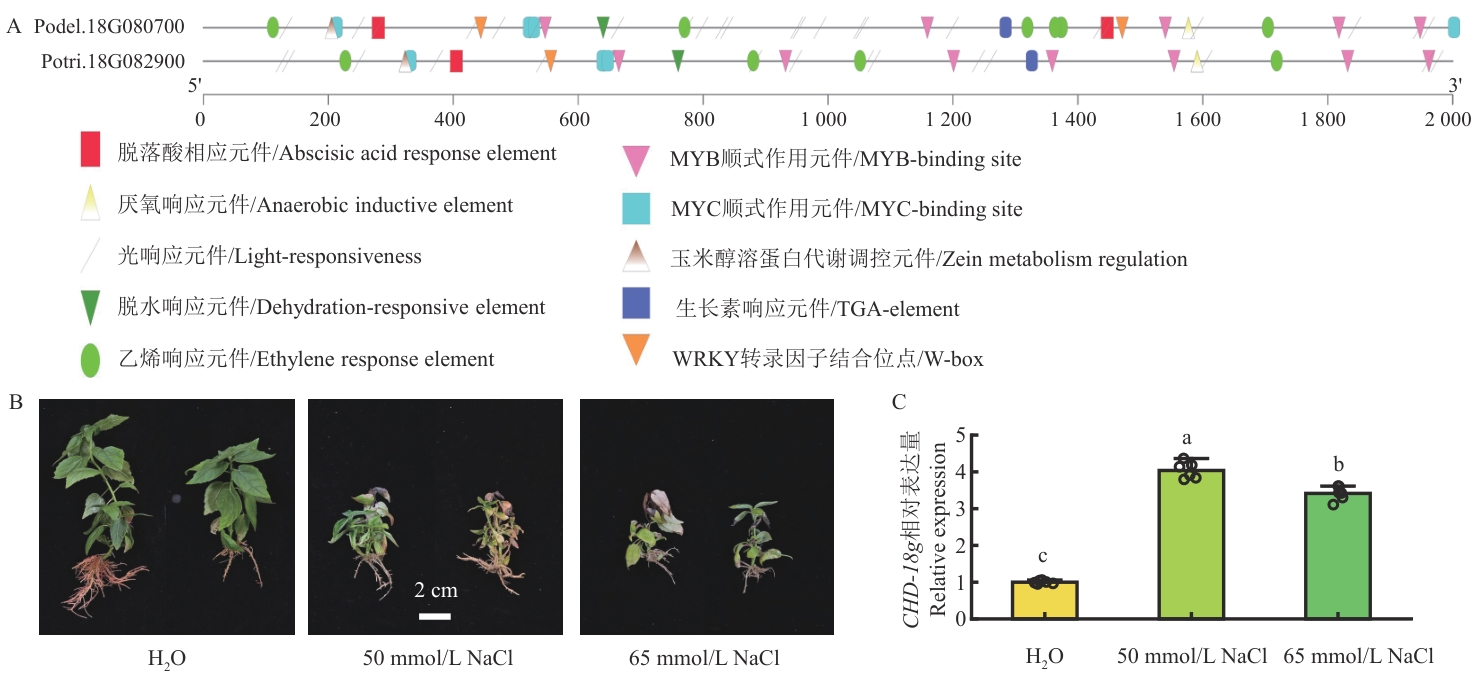
图1 PdaCHD-18g表达分析A:杨树物种启动子分析;B:不同水平盐处理下山新杨幼苗的表型;C:PdaCHD-18g盐胁迫响应分析。不同小写字母表示差异显著性(邓肯检验,P<0.05),下同
Fig. 1 Expression analysis of PdaCHD-18gA: Analysis of CHD-18g promoters in Populus species. B: Phenotypes of SXY poplar plantlets under different salt treatments. C: Response analysis of PdaCHD-18g under salt stress. Different lowercase letters indicate significant differences (Duncan’s test, P<0.05). The same below
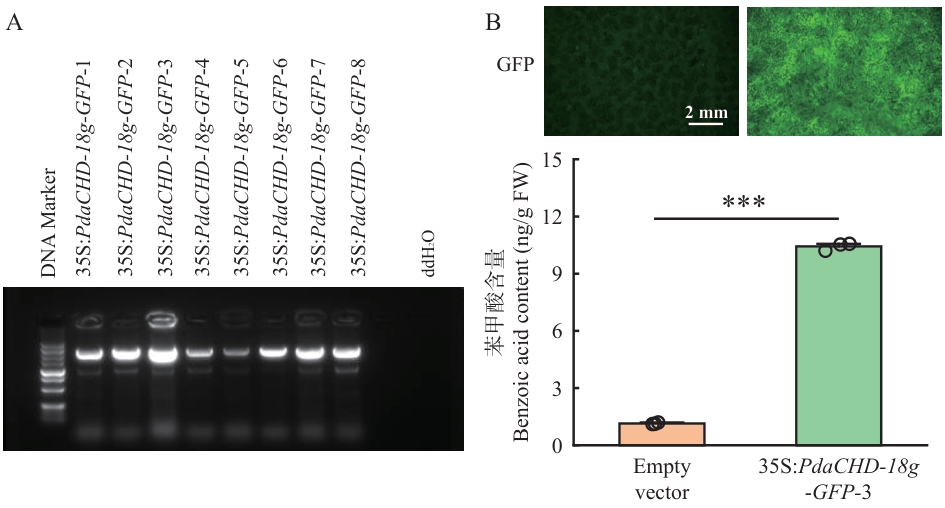
图2 PdaCHD-18g介导植物中苯甲酸合成A:PdaCHD-18g瞬时过表达载体的鉴定;B:PdaCHD-18g瞬时过表达烟叶荧光强度及苯甲酸含量(GFP,绿色荧光蛋白)。t检验,***P<0.001
Fig. 2 PdaCHD-18g mediates benzoic acid biosynthesis in plantsA: Identification of the transient overexpression vector of PdaCHD‑18g. B: Fluorescent intensity and benzoic acid content in tobacco leaves with transient overexpression of PdaCHD-18g. GFP: Green fluorescent protein. Student's t test, P***<0.001
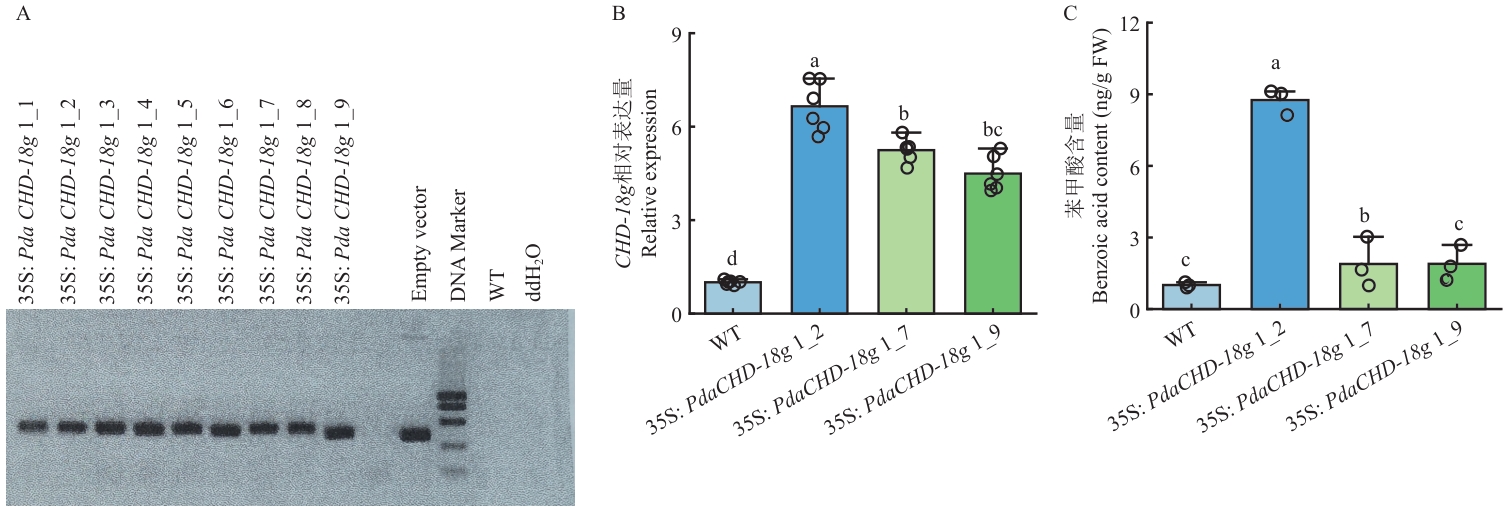
图3 过表达PdaCHD-18g增加杨树苯甲酸含量A:PdaCHD-18g过表达84K杨的DNA鉴定;B:PdaCHD-18g过表达84K杨根系CHD-18g基因表达水平;C:PdaCHD-18g过表达84K杨根系苯甲酸含量
Fig. 3 Overexpression of PdaCHD-18g increases benzoic acid content in poplarA: DNA identification of overexpressing PdaCHD-18g in 84K poplar. B: The expression of CHD-18g in the roots of 84K poplar overexpressing PdaCHD-18g. C: Root benzoic acid content of 84K poplar overexpressing PdaCHD-18g
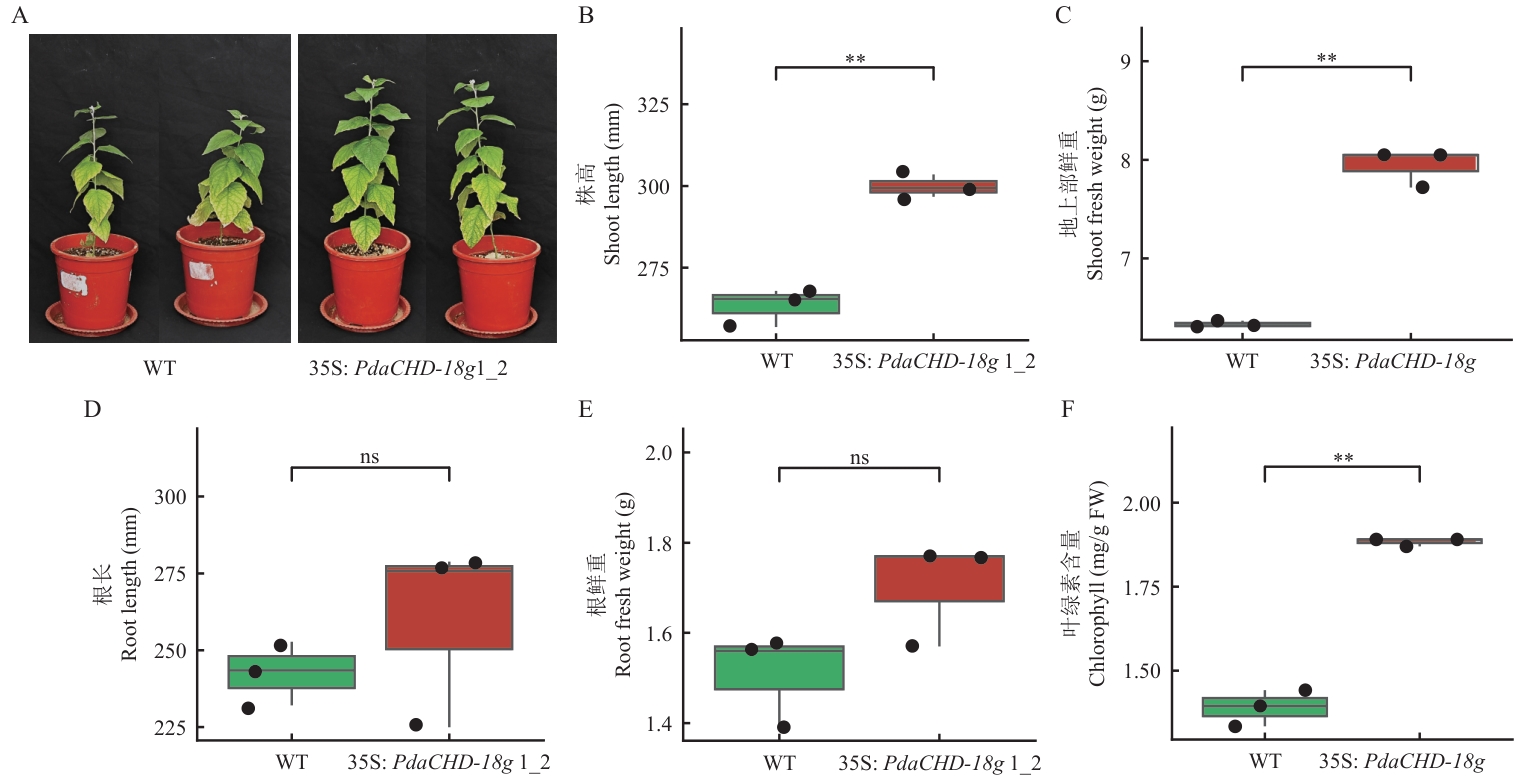
图4 PdaCHD-18g过表达杨树的耐盐表型、生物量及叶绿素含量A-F: 分别为转基因杨树耐盐胁迫表型、株高、地上部鲜重、根长、根鲜重及叶绿素含量。t检验;ns:差异不显著;*P<0.05;**P<0.01
Fig. 4 Phenotype, biomass and chlorophyll content of poplar overexpressing PdaCHD-18gA-F: Phenotype, shoot length, shoot fresh weight, root length, root fresh weight, and chlorophyll content of salt-tolerant transgenic poplar plants, respectively. Student's t-test, ns: no significance, *P< 0.05, **P<0.01
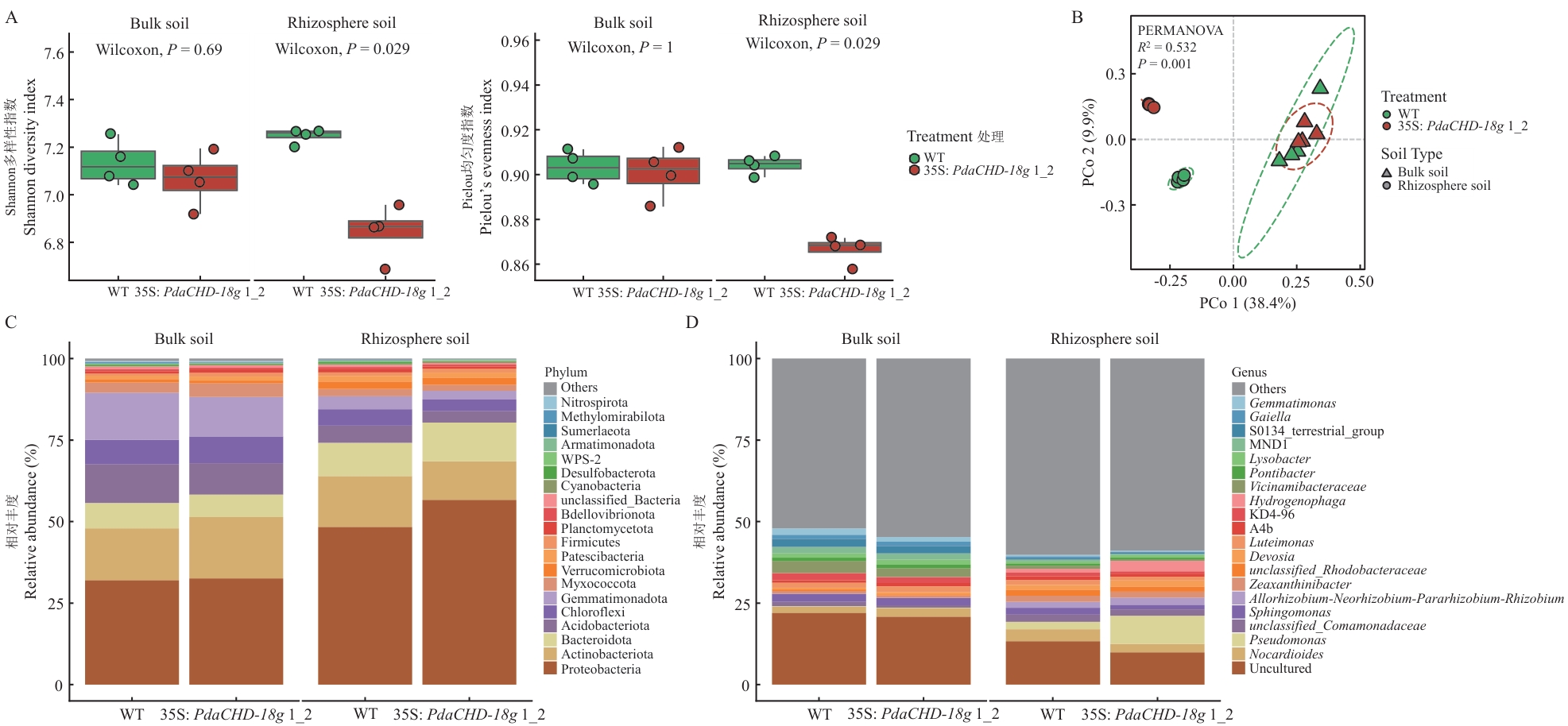
图5 根际细菌群落α多样性、β多样性及优势类群组成分析A:α多样性分析,包括Shannon多样性指数和Pielou均匀度指数(Wilcoxon秩和检验);B:基于Bray-Curtis相异系数的PCoA分析(PERMANOVA;R2=0.532,P=0.001);C:门水平的相对丰度柱状图;D:属水平的相对丰度柱状图(BS:非根际土; RS:根际土)
Fig. 5 Analysis of α-diversity, β-diversity and dominant group composition of bacterial communities in the poplar rhizosphereA: Alpha diversity analysis, including Shannon diversity index and Pielou’s evenness index (Wilcoxon rank-sum test). B: Principal coordinate analysis (PCoA) based on Bray-Curtis dissimilarity coefficient (PERMANOVA; R2=0.532,P=0.001). C: Bar chart of relative abundance at the phylum level. D: Bar chart of relative abundance at the genus level (BS: Bulk soil; RS: rhizosphere soil)
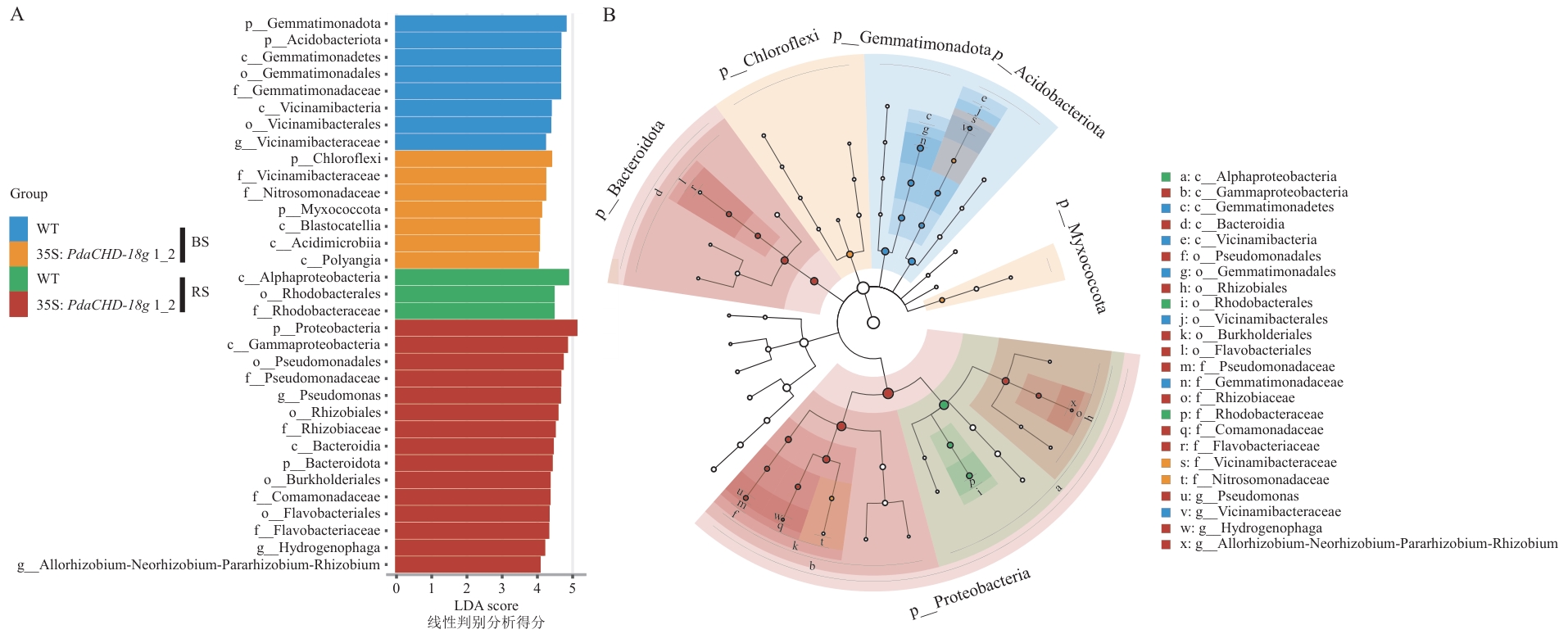
图6 基于LEfSe分析的差异富集类群鉴定A:LDA评分柱状图显示WT和35S: PdaCHD-18g 1_2株系在根际土和非根际土中显著富集的微生物类群(LEfSe分析;LDA>4);B:进化分支图展示各处理组生物标志物的系统发育关系
Fig. 6 Identification of differentially enriched taxa based on LEfSe analysisA: LDA score bar plot showing microbial taxa significantly enriched in the BS and RS of WT and the 35S: PdaCHD-18g 1_2 line (LEfSe analysis; LDA>4). B: Cladogram illustrating the phylogenetic relationships of biomarkers across different treatments
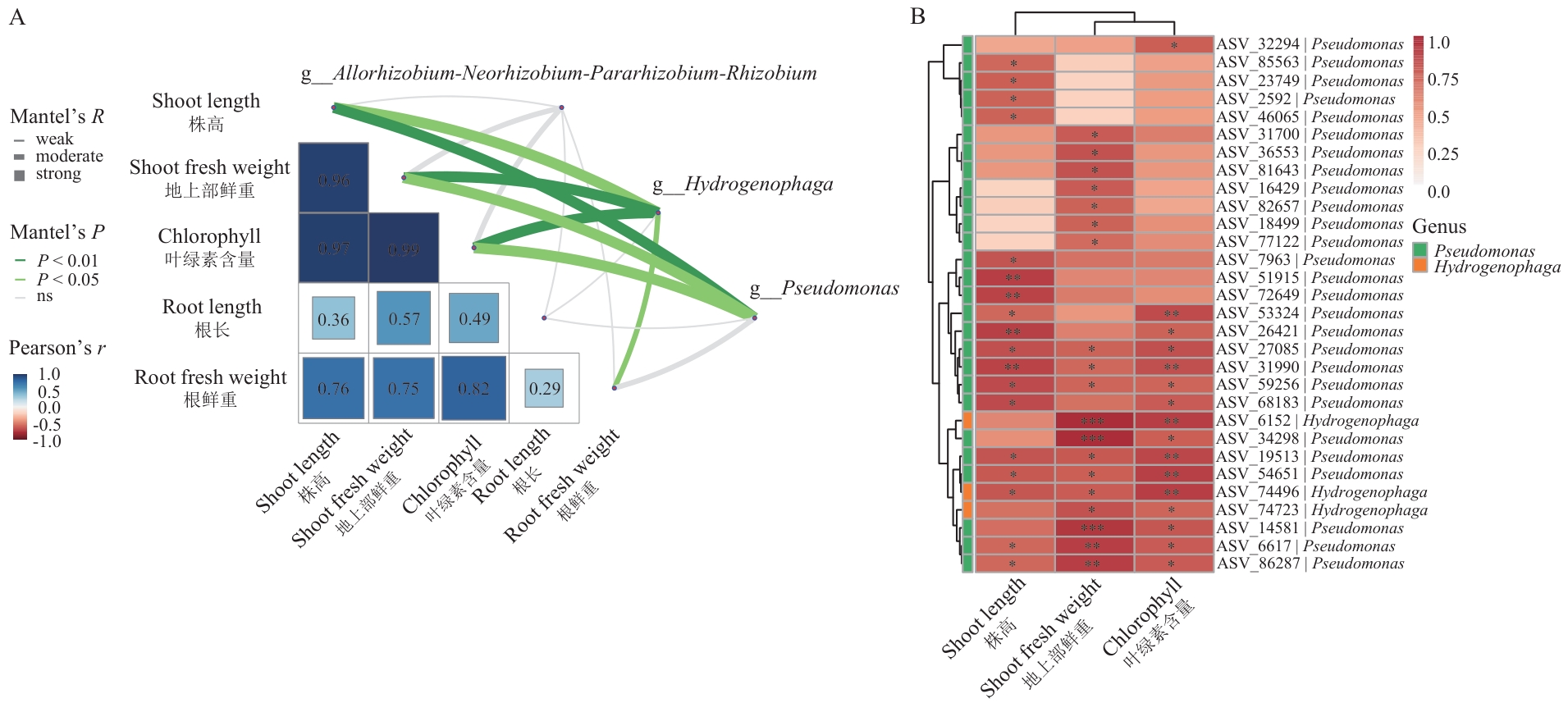
图7 过表达PdaCHD-18g重塑杨树根际微生物群落并富集有益细菌A:转基因植株根际生物标志物与杨树耐盐表型的相关性(Mantel检验与Pearson相关性分析;弱: Mantel’s R≤0.3;中等: 0.3< Mantel’s R≤0.6;强:Mantel’s R>0.6)。B:假单胞菌属和氢噬菌属关键ASVs与杨树耐盐性指标的相关性(Spearman秩相关分析,*P< 0.05, **P<0.01, ***P<0.001,仅显示P<0.05且ρ>0)
Fig. 7 Overexpression of PdaCHD-18g reshapes the poplar rhizosphere microbial community and enriches beneficial bacteriaA: Correlation between rhizosphere biomarkers and salt-tolerant phenotypes in transgenic poplar (Mantel test and Pearson correlation analysis; weak: Mantel’s R≤0.3, moderate: 0.3<Mantel’s R≤0.6; strong: Mantel’s R>0.6). B: Correlations between key ASVs of Pseudomonas and Hydrogenophaga and salt tolerance parameters in poplar (Spearman rank correlation analysis, *P<0.05, **P<0.01, ***P<0.001, with P<0.05 and ρ>0 shown in the figure)
| [1] | Sixto H. Response to sodium chloride in different species and clones of genus Populus L [J]. Forestry, 2005, 78(1): 93-104. |
| [2] | Cregger MA, Carper DL, Christel S, et al. Plant-microbe interactions: from genes to ecosystems using Populus as a model system [J]. Phytobiomes J, 2021, 5(1): 29-38. |
| [3] | Smith P, House JI, Bustamante M, et al. Global change pressures on soils from land use and management [J]. Glob Change Biol, 2016, 22(3): 1008-1028. |
| [4] | Ashraf M, Munns R. Evolution of approaches to increase the salt tolerance of crops [J]. Crit Rev Plant Sci, 2022, 41(2): 128-160. |
| [5] | Han S, Cheng Y, Wu GQ, et al. Enhancing salt tolerance in poplar seedlings through arbuscular mycorrhizal fungi symbiosis [J]. Plants, 2024, 13(2): 233. |
| [6] | Šamec D, Karalija E, Šola I, et al. The role of polyphenols in abiotic stress response: the influence of molecular structure [J]. Plants, 2021, 10(1): 118. |
| [7] | Kumar K, Debnath P, Singh S, et al. An overview of plant phenolics and their involvement in abiotic stress tolerance [J]. Stresses, 2023, 3(3): 570-585. |
| [8] | Senaratna T, Merritt D, Dixon K, et al. Benzoic acid may act as the functional group in salicylic acid and derivatives in the induction of multiple stress tolerance in plants [J]. Plant Growth Regul, 2003, 39(1): 77-81. |
| [9] | Khawula S, Gokul A, Niekerk LA, et al. Insights into the effects of hydroxycinnamic acid and its secondary metabolites as antioxidants for oxidative stress and plant growth under environmental stresses [J]. Curr Issues Mol Biol, 2024, 46(1): 81-95. |
| [10] | Nkomo M, Badiwe M, Niekerk LA, et al. P-coumaric acid differential alters the ion-omics profile of Chia shoots under salt stress [J]. Plants, 2024, 13(11): 1564. |
| [11] | La VH, Lee BR, Zhang Q, et al. Salicylic acid improves drought-stress tolerance by regulating the redox status and proline metabolism in Brassica rapa [J]. Hortic Environ Biotechnol, 2019, 60(1): 31-40. |
| [12] | Cingoz GS, Gurel E. Effects of salicylic acid on thermotolerance and cardenolide accumulation under high temperature stress in Digitalis trojana Ivanina [J]. Plant Physiol Biochem, 2016, 105: 145-149. |
| [13] | Rizaludin MS, Stopnisek N, Raaijmakers JM, et al. The chemistry of stress: understanding the ‘cry for help’ of plant roots [J]. Metabolites, 2021, 11(6): 357. |
| [14] | Ruiz-Lozano JM, Aroca R, Zamarreño ÁM, et al. Arbuscular mycorrhizal symbiosis induces strigolactone biosynthesis under drought and improves drought tolerance in lettuce and tomato [J]. Plant Cell Environ, 2016, 39(2): 441-452. |
| [15] | Rudrappa T, Czymmek KJ, Paré PW, et al. Root-secreted malic acid recruits beneficial soil bacteria[J]. Plant Physiol, 2008, 148(3): 1547-1556. |
| [16] | Xue TT, Fang YX, Li H, et al. The effects of exogenous benzoic acid on the physicochemical properties, enzyme activities and microbial community structures of Perilla frutescens inter-root soil [J]. Microorganisms, 2024, 12(6): 1190. |
| [17] | Zhou XG, Wu FZ. P-Coumaric acid influenced cucumber rhizosphere soil microbial communities and the growth of Fusarium oxysporum f. sp. cucumerinum Owen [J]. PLoS One, 2012, 7(10): e48288. |
| [18] | Veach AM, Morris R, Yip DZ, et al. Rhizosphere microbiomes diverge among Populus trichocarpa plant-host genotypes and chemotypes, but it depends on soil origin [J]. Microbiome, 2019, 7: 76. |
| [19] | Lebeis SL, Paredes SH, Lundberg DS, et al. Salicylic acid modulates colonization of the root microbiome by specific bacterial taxa [J]. Science, 2015, 349(6250): 860-864. |
| [20] | Liu R, Li RR, Li YJ, et al. Benzoic acid facilitates ANF in monocot crops by recruiting nitrogen-fixing Paraburkholderia [J]. ISME J, 2024, 18(1): wrae210. |
| [21] | Zhou ML, Song X, Yu QQ, et al. Metabolomics and transcriptome analysis of rapeseed under salt stress at germination stage [J]. Curr Issues Mol Biol, 2025, 47(7): 481. |
| [22] | Wang YK, Song SY, Zhang WX, et al. Deciphering phenylalanine-derived salicylic acid biosynthesis in plants [J]. Nature, 2025, 645(8079): 208-217. |
| [23] | Richmond TA, Bleecker AB. A defect in β-oxidation causes abnormal inflorescence development in Arabidopsis [J]. Plant Cell, 1999, 11(10): 1911-1923. |
| [24] | Xu L, Zhao HY, Ruan WY, et al. ABNORMAL INFLORESCENCE MERISTEM1 functions in salicylic acid biosynthesis to maintain proper reactive oxygen species levels for root meristem activity in rice [J]. Plant Cell, 2017, 29(3): 560-574. |
| [25] | Lackus ND, Schmidt A, Gershenzon J, et al. A peroxisomal β-oxidative pathway contributes to the formation of C6-C1 aromatic volatiles in poplar [J]. Plant Physiol, 2021, 186(2): 891-909. |
| [26] | Kotera Y, Komori H, Tasaki K, et al. The peroxisomal β-oxidative pathway and benzyl alcohol O-benzoyltransferase HSR201 cooperatively contribute to the biosynthesis of salicylic acid [J]. Plant Cell Physiol, 2023, 64(7): 758-770. |
| [27] | Liao YWK, Cao CY, Zhang QY, et al. Interaction between rhizobacterial community and host root determines poplar salt tolerance [J]. Land Degrad Dev, 2023, 34(14): 4415-4427. |
| [28] | 廖杨文科, 崔荣荣, 魏子涵, 等. 利用代谢组技术研究南林895杨响应盐胁迫的生理代谢机制 [J]. 核农学报, 2020, 34(9): 1951-1965. |
| Liao YWK, Cui RR, Wei ZH, et al. Metabolomics analysis reveals mechanisms of physiological metabolism in the adaption of salt-insensitive Nanlin 895 poplar to salt stress [J]. J Nucl Agric Sci, 2020, 34(9): 1951-1965. | |
| [29] | Chen MX, Hu TH, Xue Y, et al. Arabidopsis Acyl-Coenzyme-A-Binding Protein ACBP1 interacts with AREB1 and mediates salt and osmotic signaling in seed germination and seedling growth [J]. Environ Exp Bot, 2018, 156: 130-140. |
| [30] | Wang P, Zhou J, Sun WB, et al. Poplar CCR4-associated factor PtCAF1I is necessary for poplar development and defense response [J]. Int J Biol Macromol, 2023, 242: 125090. |
| [31] | Rognes T, Flouri T, Nichols B, et al. VSEARCH: a versatile open source tool for metagenomics [J]. PeerJ, 2016, 4: e2584. |
| [32] | Bokulich NA, Kaehler BD, Rideout JR, et al. Optimizing taxonomic classification of marker-gene amplicon sequences with QIIME 2’s q2-feature-classifier plugin [J]. Microbiome, 2018, 6: 90. |
| [33] | Shemi R, Wang R, Gheith EMS, et al. Effects of salicylic acid, zinc and Glycine betaine on morpho-physiological growth and yield of maize under drought stress [J]. Sci Rep, 2021, 11: 3195. |
| [34] | Jiang N, Liao SX, Wang RQ, et al. Functional analysis of PdbERF109 gene regulation of salt tolerance in Populus davidiana × P. bolleana [J]. Plants, 2025, 14(17): 2800. |
| [35] | Oppenheimer-Shaanan Y, Jakoby G, Starr ML, et al. A dynamic rhizosphere interplay between tree roots and soil bacteria under drought stress [J]. eLife, 2022, 11: e79679. |
| [36] | Chen QX, Song YJ, An YX, et al. Soil microorganisms: their role in enhancing crop nutrition and health [J]. Diversity, 2024, 16(12): 734. |
| [37] | Belimov AA, Zinovkina NY, Safronova VI, et al. Rhizobial ACC deaminase contributes to efficient symbiosis with pea (Pisum sativum L.) under single and combined cadmium and water deficit stress [J]. Environ Exp Bot, 2019, 167: 103859. |
| [38] | Ilangumaran G, Schwinghamer TD, Smith DL. Rhizobacteria from root nodules of an indigenous legume enhance salinity stress tolerance in soybean [J]. Front Sustain Food Syst, 2021, 4: 617978. |
| [39] | Khan AA, Alabbosh KF, Kashif, et al. Ion homeostasis, osmotic adjustment, and ROS detoxification underlie pea salinity tolerance induced by Pseudomonas putida RT12 [J]. Microbiol Res, 2025, 16(11): 227. |
| [40] | Sommer A, Wenig M, Knappe C, et al. A salicylic acid-associated plant-microbe interaction attracts beneficial Flavobacterium sp. to the Arabidopsis thaliana phyllosphere [J]. Physiol Plant, 2024, 176(4): e14483. |
| [41] | Blum U, Staman KL, Flint LJ, et al. Induction and/or selection of phenolic acid-utilizing bulk-soil and rhizosphere bacteria and their influence on phenolic acid phytotoxicity [J]. J Chem Ecol, 2000, 26(9): 2059-2078. |
| [42] | Schreiter S, Ding GC, Heuer H, et al. Effect of the soil type on the microbiome in the rhizosphere of field-grown lettuce [J]. Front Microbiol, 2014, 5: 144. |
| [43] | Nehela Y, Taha NA, Elzaawely AA, et al. Benzoic acid and its hydroxylated derivatives suppress early blight of tomato (Alternaria solani) via the induction of salicylic acid biosynthesis and enzymatic and nonenzymatic antioxidant defense machinery [J]. JoF, 2021, 7(8): 663. |
| [44] | Cho SM, Kang BR, Han SH, et al. 2R, 3R-butanediol, a bacterial volatile produced by Pseudomonas chlororaphis O6, is involved in induction of systemic tolerance to drought in Arabidopsis thaliana [J]. Mol Plant Microbe Interact, 2008, 21(8): 1067-1075. |
| [45] | Cappellari LD, Bogino PC, Nievas F, et al. Exploring the differential impact of salt stress on root colonization adaptation mechanisms in plant growth-promoting rhizobacteria [J]. Plants, 2023, 12(23): 4059. |
| [46] | Zboralski A, Filion M. Pseudomonas spp. can help plants face climate change [J]. Front Microbiol, 2023, 14: 1198131. |
| [47] | Flemming HC, Wingender J, Szewzyk U, et al. Biofilms: an emergent form of bacterial life [J]. Nat Rev Microbiol, 2016, 14(9): 563-575. |
| [48] | Ilangumaran G, Subramanian S, Smith DL. Soybean leaf proteomic profile influenced by rhizobacteria under optimal and salt stress conditions [J]. Front Plant Sci, 2022, 13: 809906. |
| [1] | 孙常胜, 尉万聪, 王一衡, 张桂霞, 兰青阔, 王永. 黄瓜耐盐种质筛选评价及分子机制研究进展[J]. 生物技术通报, 2026, 42(8): 35-46. |
| [2] | 王建波, 李诗雅, 邢鹤炫, 周瑞金, 李桂荣, 王玲. 海藻糖-6-磷酸合成酶基因VvTPS10在葡萄耐盐和生长发育中的功能分析[J]. 生物技术通报, 2026, 42(8): 188-196. |
| [3] | 陈义焰, 张冬儿, 张涛, 刘育灏, 唐杰, 盛夏冰, 胡远艺, 艾治勇, 李应将, 刘小林. 水稻OsSULTR2;2基因功能及调控苗期耐盐性分析[J]. 生物技术通报, 2026, 42(7): 116-125. |
| [4] | 董亚茹, 修妤, 赵东晓, 朱红, 朱琳, 刘惠芬. 基于转录组的桑树GRAS基因家族鉴定及MnGRAS22盐胁迫响应分析[J]. 生物技术通报, 2026, 42(7): 193-203. |
| [5] | 彭善麟, 廖卓诚, 王涛, 刘志宇, 刘海忆, 王婷婷, 杨琴, 王哲, 邰欢欢. 不同玉米茎腐病抗性品种根际微生物群落多样性及功能差异[J]. 生物技术通报, 2026, 42(5): 76-88. |
| [6] | 付博晗, 毛华, 赵薪程, 陆虹, 欧庸彬, 姚银安. 不同杨树SOS1基因启动子的克隆及盐胁迫响应分析[J]. 生物技术通报, 2025, 41(7): 205-213. |
| [7] | 李小欢, 陈相宇, 陶麒宇, 朱玲, 唐铭, 姚银安, 汪丽君. PtoMYB61对毛白杨木质素合成及耐盐性的影响[J]. 生物技术通报, 2025, 41(6): 284-296. |
| [8] | 许聪聪, 郑美, 李翠, 赵春桥, 何玮, 侯新村, 郭强. 利用WGCNA 筛选鉴定花花柴耐盐核心基因[J]. 生物技术通报, 2025, 41(12): 177-189. |
| [9] | 寇焙森, 程萌萌, 郭雪琴, 葛彬, 刘迪, 陆海, 李慧. 组蛋白去乙酰化酶抑制剂TSA处理对杨树茎生长发育的影响[J]. 生物技术通报, 2025, 41(1): 240-251. |
| [10] | 李庆懋, 彭聪归, 齐笑含, 刘兴蕾, 李臻园, 李沁妍, 黄立钰. 促进水稻铁素吸收的野生稻内生细菌优良菌株的筛选与鉴定[J]. 生物技术通报, 2024, 40(8): 255-263. |
| [11] | 叶卓妍, 周家淇, 林丹媛, 孙赫男, 王艳珍. 杨树桑黄多糖提取条件优化及其抑菌活性研究[J]. 生物技术通报, 2024, 40(11): 58-67. |
| [12] | 韩志阳, 贾子苗, 梁秋菊, 王轲, 唐华丽, 叶兴国, 张双喜. 二套小麦-簇毛麦染色体附加系苗期耐盐性及籽粒硒和叶酸的含量[J]. 生物技术通报, 2023, 39(8): 185-193. |
| [13] | 李帜奇, 袁月, 苗荣庆, 庞秋颖, 张爱琴. 盐胁迫盐芥和拟南芥褪黑素含量及合成相关基因表达模式分析[J]. 生物技术通报, 2023, 39(5): 142-151. |
| [14] | 陈奕博, 杨万明, 岳爱琴, 王利祥, 杜维俊, 王敏. 基于SLAF标记的大豆遗传图谱构建及苗期耐盐性QTL定位[J]. 生物技术通报, 2023, 39(2): 70-79. |
| [15] | 朱业胜, 伍国强, 魏明. 质膜Na+/H+逆向转运蛋白SOS1在植物离子稳态平衡中的作用[J]. 生物技术通报, 2023, 39(12): 16-32. |
| 阅读次数 | ||||||
|
全文 |
|
|||||
|
摘要 |
|
|||||
