







Biotechnology Bulletin ›› 2026, Vol. 42 ›› Issue (10): 305-316.doi: 10.13560/j.cnki.biotech.bull.1985.2026-0179
LIANG Hao1, HUANG En-yuan1, ZHU Li-wen1, ZHAO Jin-Fang1,2, LIU Xiao-nan1,2,3,4, WANG Yong-ze1,2( )
)
Received:2026-02-05
Online:2026-10-26
Published:2026-10-15
Contact:
WANG Yong-ze
E-mail:wangyongze@hbut.edu.cn
LIANG Hao, HUANG En-yuan, ZHU Li-wen, ZHAO Jin-Fang, LIU Xiao-nan, WANG Yong-ze. Enhancing E. coli Thermotolerance via Dynamic Control of Small Heat Shock Protein Expression for Efficient L-lactate Production[J]. Biotechnology Bulletin, 2026, 42(10): 305-316.
| Primers | Sequences (5′-3′) |
|---|---|
TTsHsp-F TTsHsp-R PM137-F PM137-R PM146-F PM146-R PM193-F PM193-R PL-F PL-R pET-F pET-R GFP-F GFP-R ccdB-F ccdB-R | ATGGCAAATGAATTAATGGA TTATTGGATTTCAATATGAT CTCCTGAATCTATCTATCCTTTATCTCTGGCGGTGTTGAC TCCATTAATTCATTTGCCATAGCTGTTTCCTGGTTTAAAC AGAATTACATGTGAGAAATTTTATCTCTGGCGGTGTTGAC TCCATTAATTCATTTGCCATAGCTGTTTCCTGGTTTAAACGT GTAACGAAAGAGGATAAACCTTATCTCTGGCGGTGTTGAC TCCATTAATTCATTTGCCATCTTGTCTCTCCTGGTTTAAACGT GGAAGGAGCTGACTGGGTTGCTCAATTGTTATCAGCTATGCGC TCCATTAATTCATTTGCCATGGTGGTCAGTGCGTCCTGCT TGCCACCGCTGAGCAATAAC GGTTTATCCTCTTTCGTTAC CCTCTAGAAATAATTTTGTTTAACT CGAGTTTGTATAGTTCATCC AGCAGGACGCACTGACCACCATGCAGTTTAAGGTTTACACCTATA CTAGATCCTTTACGCGTTCGTTATATTCCCCAGAACATCAGGTTA |
Table 1 Primers and sequences used in this article
| Primers | Sequences (5′-3′) |
|---|---|
TTsHsp-F TTsHsp-R PM137-F PM137-R PM146-F PM146-R PM193-F PM193-R PL-F PL-R pET-F pET-R GFP-F GFP-R ccdB-F ccdB-R | ATGGCAAATGAATTAATGGA TTATTGGATTTCAATATGAT CTCCTGAATCTATCTATCCTTTATCTCTGGCGGTGTTGAC TCCATTAATTCATTTGCCATAGCTGTTTCCTGGTTTAAAC AGAATTACATGTGAGAAATTTTATCTCTGGCGGTGTTGAC TCCATTAATTCATTTGCCATAGCTGTTTCCTGGTTTAAACGT GTAACGAAAGAGGATAAACCTTATCTCTGGCGGTGTTGAC TCCATTAATTCATTTGCCATCTTGTCTCTCCTGGTTTAAACGT GGAAGGAGCTGACTGGGTTGCTCAATTGTTATCAGCTATGCGC TCCATTAATTCATTTGCCATGGTGGTCAGTGCGTCCTGCT TGCCACCGCTGAGCAATAAC GGTTTATCCTCTTTCGTTAC CCTCTAGAAATAATTTTGTTTAACT CGAGTTTGTATAGTTCATCC AGCAGGACGCACTGACCACCATGCAGTTTAAGGTTTACACCTATA CTAGATCCTTTACGCGTTCGTTATATTCCCCAGAACATCAGGTTA |
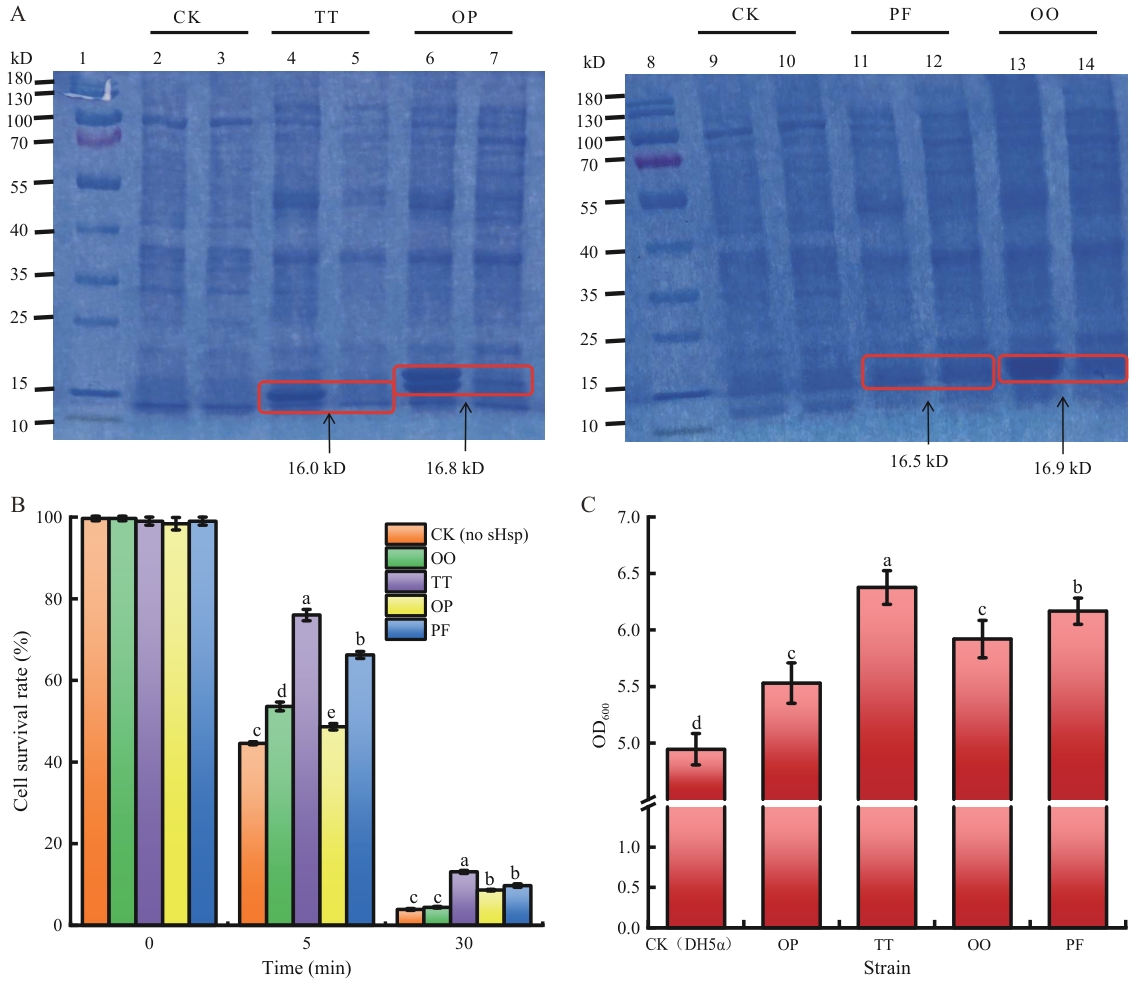
Fig. 1 Screening of small heat shock proteinsA: Expression of different small heat shock proteins in E. coli BL21(DE3). Lanes 1 and 8: 180 kD protein marker; 2, 4, 6, 9, 11, 13: supernatant after cell lysis; 3, 5, 7, 10, 12, 14: pellet after cell lysis. B: Effect of small heat shock protein expression on host cell survival under heat shock at 52 ℃. C: Effect of small heat shock protein expression on host biomass under cultivation at 45 ℃. TT, OO, PF and OP refer to the small heat shock proteins derived from Thermoanaerobacter tengcongensis MB4, Oenococcus oeni, Pyrococcus furiosus and Oceanithermus profundus, respectively
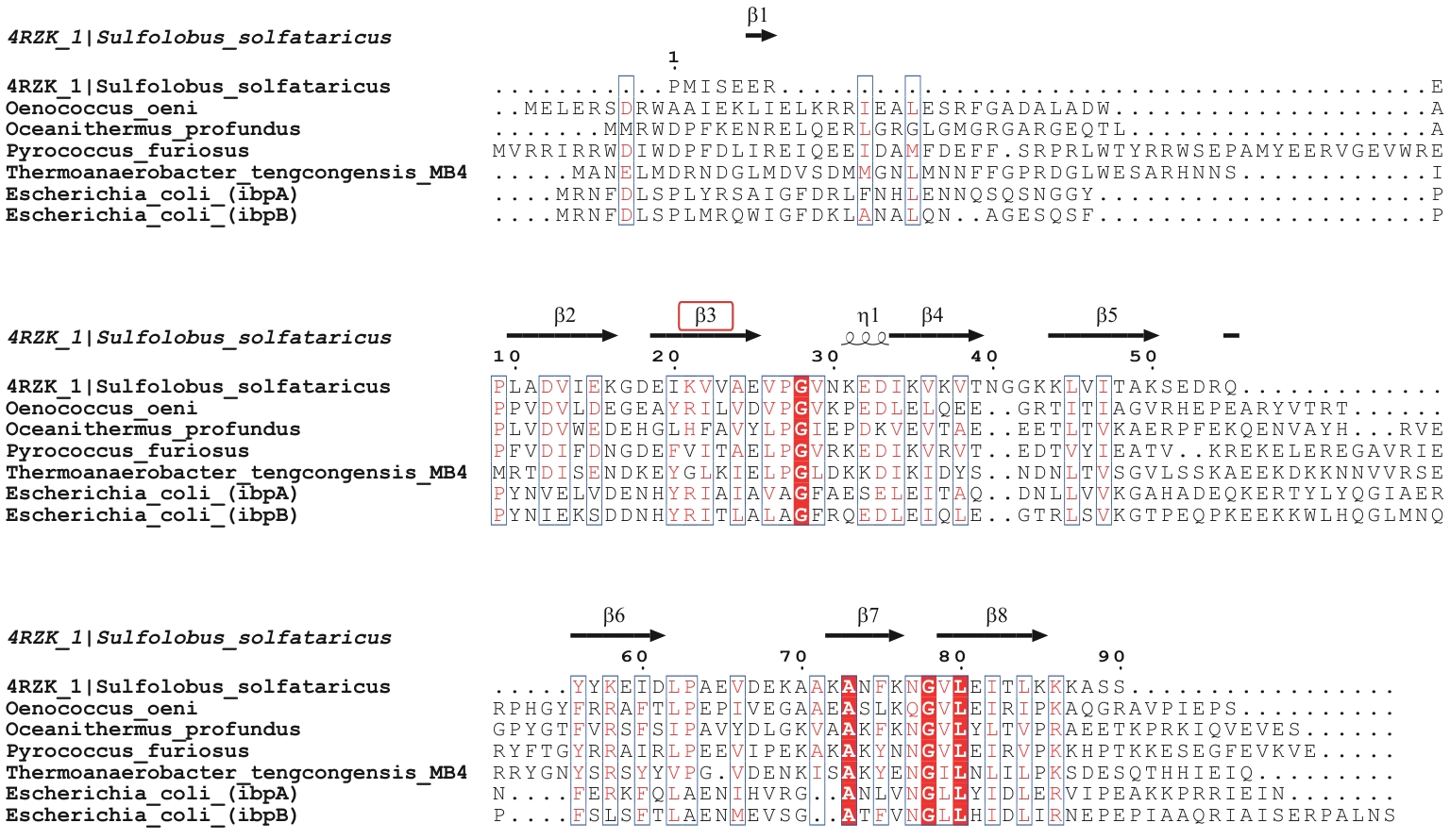
Fig. 2 Multiple sequence alignment of amino acid for small heat shock proteins
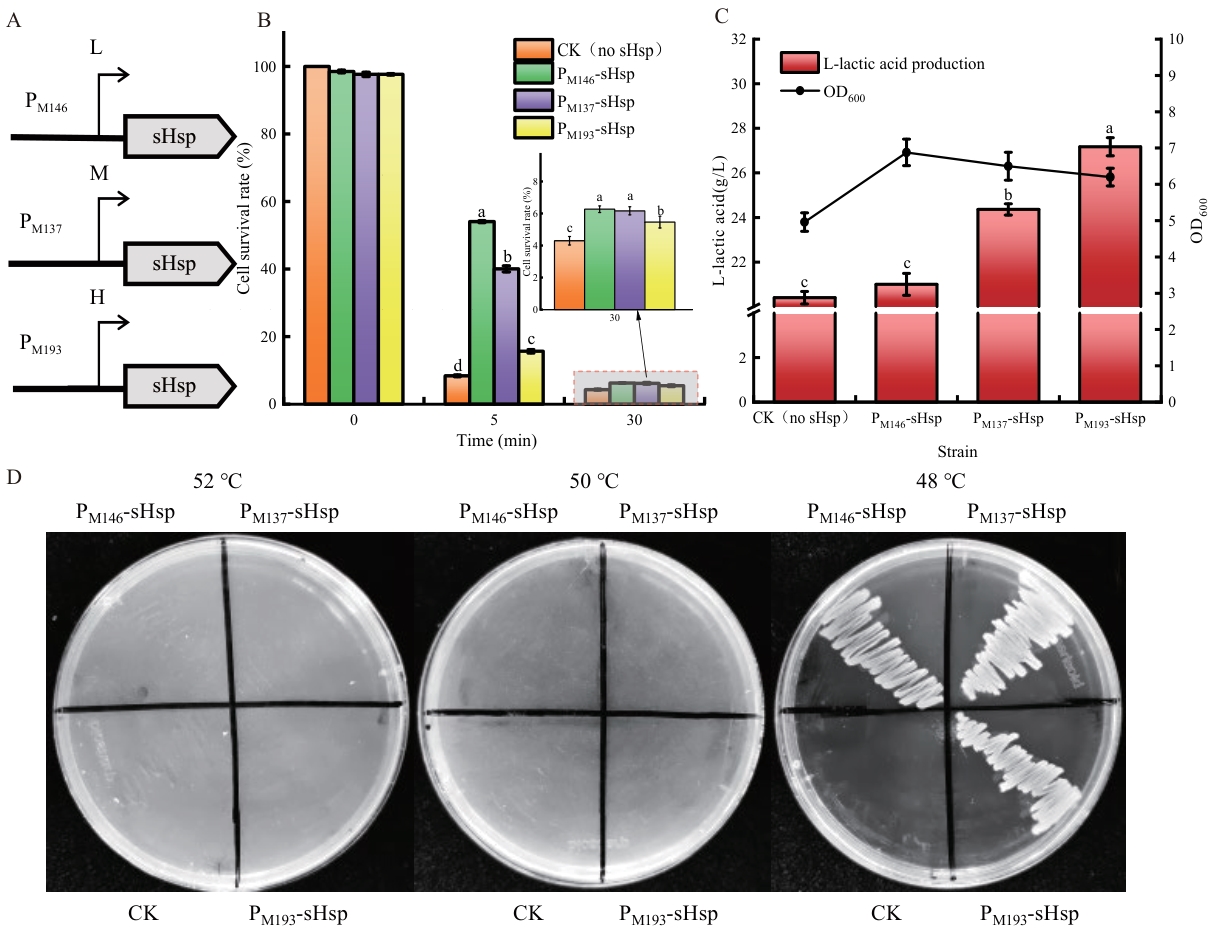
Fig. 3 Effects of heat shock protein expression driven by different promoters on host thermotoleranceA: Schematic diagram of small heat shock protein (sHsp) expression driven by promoters of different strengths. B: Effects of the expression of small heat shock proteins driven by promoters of different strengths on host cell survival rate under 52 ℃ heat stress. C: Effects of the expression of small heat shock proteins driven by different constitutive promoters on lactic acid fermentation at 45 ℃. D: Effect of different strength promoters driving the expression of small heat shock proteins on the host maximum temperature tolerance
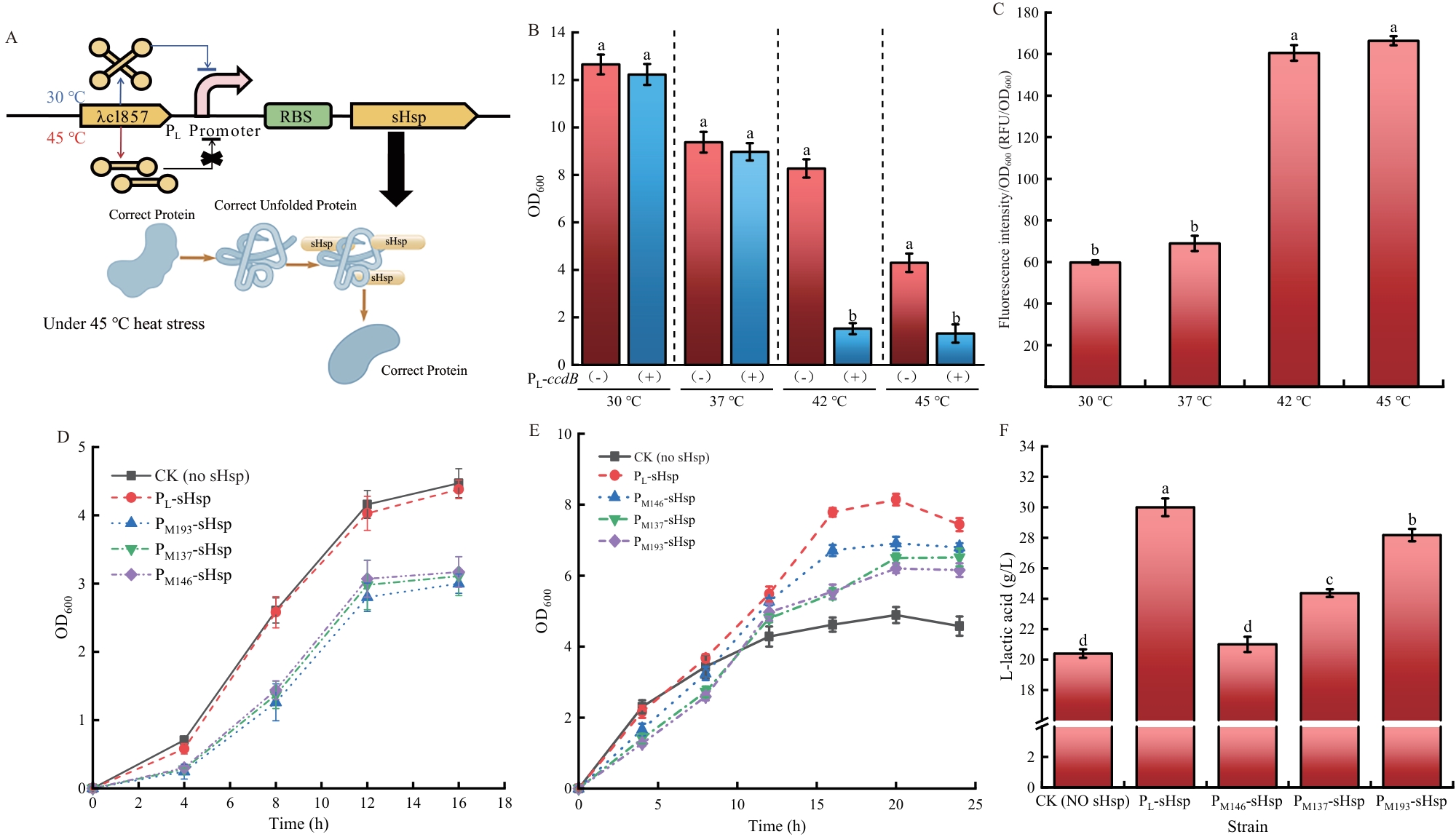
Fig. 4 Effects of thermosensitive promoter PL mediated heat shock protein expression on acid production during stress-tolerant fermentationA: Schematic diagram of dynamic regulation of thermosensitive promoter PL[20]. B-C: Evaluation of the temperature-controlled performance of the PL promoter using the lethal gene ccdB (B) and green fluorescent protein GFP (C) as reporter genes. D: Effect of the PL promoter on host biomass in comparison with a constitutive promoter during seed culture at 30 ℃. E: Effect of the PL promoter on host biomass in comparison with a constitutive promoter during fermentation at 45 ℃; F: Effect of the PL promoter on L‑lactic acid production in comparison with a constitutive promoter
启动子 Promoter | 热休克蛋白 Heat shock protein | 来源 Source | 特点 Characteristics | 参考文献 References |
|---|---|---|---|---|
| T7 | Hsp20 | Tepidimonas sediminis(沉积物暖单胞菌) | 强表达;泄漏表达、IPTG依赖、代谢负担重、菌株限制 | [ |
| PLac | IbpA/IbpB | Escherichia coli | 适应菌株范围广;IPTG依赖 | [ |
| PIbpA | IbpA/IbpB | Escherichia coli | σ32调控,在受到胁迫时才表达,生长负荷小;诱导温度严格、表达时间窗口窄 | [ |
| PgapA | Hsp20 | Thermoanaerobacter tengcongensis MB4 | 适用菌株范围广,组成型强表达,σ32/σ70双调控 | [ |
| PL | Hsp20 | Thermoanaerobacter tengcongensis MB4 | 无需诱导剂,通过温度控制,使小热休克蛋白在生长阶段和发酵阶段处于不同开关状态,减少生长期间负荷;生长阶段必须控制在较低温度30 ℃,会一定程度影响生长 | 本研究 |
Table 2 Common promoters for small heat shock proteins
启动子 Promoter | 热休克蛋白 Heat shock protein | 来源 Source | 特点 Characteristics | 参考文献 References |
|---|---|---|---|---|
| T7 | Hsp20 | Tepidimonas sediminis(沉积物暖单胞菌) | 强表达;泄漏表达、IPTG依赖、代谢负担重、菌株限制 | [ |
| PLac | IbpA/IbpB | Escherichia coli | 适应菌株范围广;IPTG依赖 | [ |
| PIbpA | IbpA/IbpB | Escherichia coli | σ32调控,在受到胁迫时才表达,生长负荷小;诱导温度严格、表达时间窗口窄 | [ |
| PgapA | Hsp20 | Thermoanaerobacter tengcongensis MB4 | 适用菌株范围广,组成型强表达,σ32/σ70双调控 | [ |
| PL | Hsp20 | Thermoanaerobacter tengcongensis MB4 | 无需诱导剂,通过温度控制,使小热休克蛋白在生长阶段和发酵阶段处于不同开关状态,减少生长期间负荷;生长阶段必须控制在较低温度30 ℃,会一定程度影响生长 | 本研究 |
| [1] | Li Y, Xu XG, Qu R, et al. Heterologous expression of Oenococcus oeni sHSP20 confers temperature stress tolerance in Escherichia coli [J]. Cell Stress Chaperones, 2018, 23(4): 653-662. |
| [2] | Sánchez-Adriá IE, Sanmartín G, Prieto JA, et al. Sourdough yeast strains exhibit thermal tolerance, high fermentative performance, and a distinctive aromatic profile in beer wort [J]. Foods, 2024, 13(7): 1059. |
| [3] | Zhang B, Geberekidan M, Yan Z, et al. Very high thermotolerance of an adaptive evolved Saccharomyces cerevisiae in cellulosic ethanol fermentation [J]. Fermentation, 2023, 9(4): 393. |
| [4] | Pan RZ, Yuan YC, Xu AM, et al. Biofilm engineering to improve succinic acid production in Escherichia coli by enhancing extracellular polysaccharide synthesis [J]. Bioresour Technol, 2025, 431: 132627. |
| [5] | Sun WJ, Chen Y, Li MK, et al. Integration of (S)-2,3-oxidosqualene enables E. coli to become Iron Man E. coli with improved overall tolerance [J]. Biotechnol Biofuels, 2023, 16: 191. |
| [6] | Kurokawa N, Ogawa M, Midorikawa R, et al. A study on the temperature-dependent behavior of small heat shock proteins from methanogens [J]. Int J Mol Sci, 2025, 26(12): 5748. |
| [7] | Ahn YJ, Im E. Heterologous expression of heat shock proteins confers stress tolerance in Escherichia coli, an industrial cell factory: a short review [J]. Biocatal Agric Biotechnol, 2020, 29: 101833. |
| [8] | Sato Y, Okano K, Honda K. Effects of small heat shock proteins from thermotolerant bacteria on the stress resistance of Escherichia coli to temperature, pH, and hyperosmolarity [J]. Extremophiles, 2024, 28: 12. |
| [9] | Kruglikov A, Wei YL, Xia XH. Proteins from thermophilic Thermus thermophilus often do not fold correctly in a mesophilic expression system such as Escherichia coli [J]. ACS Omega, 2022, 7(42): 37797-37806. |
| [10] | Blum P, Ory J, Bauernfeind J, et al. Physiological consequences of DnaK and DnaJ overproduction in Escherichia coli [J]. J Bacteriol, 1992, 174(22): 7436-7444. |
| [11] | Laksanalamai P, Maeder DL, Robb FT. Regulation and mechanism of action of the small heat shock protein from the hyperthermophilic Archaeon Pyrococcus furiosus [J]. J Bacteriol, 2001, 183(17): 5198-5202. |
| [12] | 孙翔英, 刘月芹, 孙欢, 等. 大肠杆菌耐热元器件的构建及其应用 [J]. 化工学报, 2014, 65(8): 3128-3135. |
| Sun XY, Liu YQ, Sun H, et al. Construction of heat resistance devices for Escherichia coli and their application [J]. CIESC J, 2014, 65(8): 3128-3135. | |
| [13] | 王金华, 王永泽, 赵筱, 等. 高效利用蔗糖生产L-乳酸的大肠杆菌及应用: CN115873773A [P]. 2023-03-31. |
| [14] | Zou SY, Chen WQ, Cao Y, et al. Lethal endotoxin (ccdB) based counterselection improved the efficiency of sequential gene editing in Escherichia coli [J]. Biotechnol Lett, 2025, 47(5): 118. |
| [15] | Datta S, Costantino N, Court DL. A set of recombineering plasmids for gram-negative bacteria [J]. Gene, 2006, 379: 109-115. |
| [16] | Jiang Y, Qian FH, Yang JJ, et al. CRISPR-Cpf1 assisted genome editing of Corynebacterium glutamicum [J]. Nat Commun, 2017, 8: 15179. |
| [17] | 刘利, 陈炜琪, 邹诗瑶, 等. 亚磷酸脱氢酶表达对大肠杆菌琥珀酸发酵的影响 [J]. 中国调味品, 2025, 50(1): 210-215. |
| Liu L, Chen WQ, Zou SY, et al. Effect of phosphite dehydrogenase expression on succinic acid fermentation in Escherichia coli [J]. China Condiment, 2025, 50(1): 210-215. | |
| [18] | Roy M, Bhakta K, Ghosh A. Minimal yet powerful: the role of archaeal small heat shock proteins in maintaining protein homeostasis [J]. Front Mol Biosci, 2022, 9: 832160. |
| [19] | Zhao J, Li QY, Sun T, et al. Engineering central metabolic modules of Escherichia coli for improving β-carotene production [J]. Metab Eng, 2013, 17: 42-50. |
| [20] | Jiang S, Li HQ, Zhang L, et al. Generic Diagramming Platform (GDP): a comprehensive database of high-quality biomedical graphics [J]. Nucleic Acids Res, 2025, 53(D1): D1670-D1676. |
| [21] | Boelens WC. Structural aspects of the human small heat shock proteins related to their functional activities [J]. Cell Stress Chaperones, 2020, 25(4): 581-591. |
| [22] | Gil-Durán C, Ravanal MC, Ubilla P, et al. Heterologous expression, purification and characterization of a highly thermolabile endoxylanase from the Antarctic fungus Cladosporium sp. [J]. Fungal Biol, 2018, 122(9): 875-882. |
| [23] | Konieczny I, Liberek K. Cooperative action of Escherichia coli ClpB protein and DnaK chaperone in the activation of a replication initiation protein [J]. J Biol Chem, 2002, 277(21): 18483-18488. |
| [24] | Fu XM, Chang ZY. Identification of a highly conserved pro-gly doublet in non-animal small heat shock proteins and characterization of its structural and functional roles in Mycobacterium tuberculosis Hsp 16.3 [J]. Biochem Mosc, 2006, 71(S1): S83-S90. |
| [25] | 周帮顺, 王茜, 李海燕, 等. Hsp提高细菌的逆境生存能力和乙醇产量 [J]. 生物技术, 2008, 18(4): 26-29. |
| Zhou BS, Wang X, Li HY, et al. Effect of heat shock treatment to increase the resistance to adversity and production of ethanol of E. coli [J]. Biotechnology, 2008, 18(4): 26-29. | |
| [26] | Miwa T, Taguchi H. Escherichia colismall heat shock protein IbpA plays a role in regulating the heat shock response by controlling the translation of σ32 [J]. Proc Natl Acad Sci U S A, 2023, 120(32): e2304841120. |
| [27] | Ting WW, Tan SI, Ng IS. Development of chromosome-based T7 RNA polymerase and orthogonal T7 promoter circuit in Escherichia coli W3110 as a cell factory [J]. Bioresour Bioprocess, 2020, 7: 54. |
| [28] | Suo YK, Luo S, Zhang YN, et al. Enhanced butyric acid tolerance and production by Class I heat shock protein-overproducing Clostridium tyrobutyricum ATCC 25755 [J]. J Ind Microbiol Biotechnol, 2017, 44(8): 1145-1156. |
| [29] | Saltepe B, Bozkurt EU, Hacıosmanoğlu N, et al. Genetic circuits to detect nanomaterial triggered toxicity through engineered heat shock response mechanism [J]. ACS Synth Biol, 2019, 8(10): 2404-2417. |
| [30] | Li ZP, Rinas U. Recombinant protein production associated growth inhibition results mainly from transcription and not from translation [J]. Microb Cell Fact, 2020, 19: 83. |
| [31] | Snoeck S, Guidi C, De Mey M. ‘Metabolic burden’ explained: stress symptoms and its related responses induced by (over)expression of (heterologous) proteins in Escherichia coli [J]. Microb Cell Fact, 2024, 23: 96. |
| [32] | Xu WB, Li SC, Bock R, et al. A heat-inducible expression system for external control of gene expression in plastids [J]. Plant Biotechnol J, 2024, 22(4): 960-969. |
| [33] | Lin TH, Cheng SY, Lin YF, et al. Development of the low-temperature inducible system for recombinant protein production in Escherichia coli nissle 1917 [J]. J Agric Food Chem, 2024, 72(13): 7318-7325. |
| [34] | Reinikainen P, Sevella B, Suutari M, et al. Analysis and modelling of the lambda pL promoter controlled expression of a cloned thermostable α-amylase gene in Escherichia coli during batch cultivation [J]. J Biotechnol, 1989, 9(3): 221-234. |
| [35] | Ezemaduka AN, Yu J, Shi X, et al. A small heat shock protein enables Escherichia coli to grow at a lethal temperature of 50 C conceivably by maintaining cell envelope integrity [J]. J Bacteriol, 2014, 196(11): 2004-2011. |
| [1] | LI Zheng, QIU Wei-yue, SUN Rui-xue, ZHAO Xiao. Overexpression of the xylR Gene Driven by Different Promoters Enhances Glucose-xylose Co-utilization Capability in Escherichia coli [J]. Biotechnology Bulletin, 2026, 42(1): 329-337. |
| [2] | YAN Meng-yang, LIANG Xiao-yang, DAI Jun-ang, ZHANG Yan, GUAN Tuan, ZHANG Hui, LIU Liang-bo, SUN Zhi-hua. Screening of Amoxicillin-degrading Bacteria and Study on Its Degradation Mechanisms [J]. Biotechnology Bulletin, 2025, 41(9): 314-325. |
| [3] | HUANG Xu-sheng, ZHOU Ya-li, CHAI Xu-dong, WEN Jing, WANG Ji-ping, JIA Xiao-yun, LI Run-zhi. Cloning of Plastidial PfLPAT1B Gene from Perilla frutescens and Its Functional Analysis in Oil Biosynthesis [J]. Biotechnology Bulletin, 2025, 41(7): 226-236. |
| [4] | MAO Li-jing, JIN Xiao-xuan, SHI Wan-ting, HU Fei-yang, ZHANG Yuan-rong, XIONG Liang-bin, REN Lu. Modifying the Probiotic Escherichia coli Nissle 1917 for the Biosynthesis of Indirubin via Metabolic Engineering [J]. Biotechnology Bulletin, 2025, 41(12): 74-81. |
| [5] | ZHOU Si-yan, DING Wei-quan, DONG Ping, WENG Han-zhi, XU Rui-rui, KANG Zhen. Advances in Synthetic Biology Platform Development and Application for Escherichiacoli Nissle 1917 [J]. Biotechnology Bulletin, 2025, 41(11): 47-61. |
| [6] | WEI Min-hua, LI Xiao-tong, JIANG Ya-wen, ZHOU Piao-piao, WANG Kai, SUN Hao, LU Nan, ZHANG Cheng-lin. Systems Metabolic Engineering for Highly Efficient L-isoleucine Production in Escherichia coli [J]. Biotechnology Bulletin, 2025, 41(11): 110-120. |
| [7] | YANG Yi-chen, ZHU Hong-yu, SU Xiao-yun, WANG Yuan, LUO Hui-ying, TIAN Jian, YAO Bin, HUANG Huo-qing, ZHANG Jie. Construction of an Efficient Microbial Cell Factory for Inositol Production from Glucose-fructose Syrup [J]. Biotechnology Bulletin, 2025, 41(11): 121-133. |
| [8] | LYU Huan-huan, ZHANG Gao-yang, WANG Sai-di, SUN Zhong-ke, LI Cheng-wei, LUO De-ping. Advances in the Biosynthesis of 5-aminolevulinic Acid (5-ALA) [J]. Biotechnology Bulletin, 2025, 41(11): 75-88. |
| [9] | HE Ting-yu, PANG Yu, ZHANG Yuan-yang, SUN Xue, LI Yu, LU Fu-ping, LI Qing-gang. Construction of a High-production Lacto -N-triose Ⅱ-producing Escherichia coli Strain [J]. Biotechnology Bulletin, 2025, 41(11): 143-152. |
| [10] | RAO Jun, ZHAO Chen, LI Duan-hua, LIAO Hao, HUANG Jia-yu, WANG Lu. Application of Auto-induction Strategy in Ergothioneine Biosynthesis [J]. Biotechnology Bulletin, 2025, 41(1): 333-346. |
| [11] | ZHANG Jing-an, HU Xiao-long, CAO Bei-bei, LIAO Min, SHU Chang-long, ZHANG Jie, WANG Kui, CAO Hai-qun. Construction and Characterization of Rapid Visual Expression Vector for Bacillus thuringiensis [J]. Biotechnology Bulletin, 2025, 41(1): 95-102. |
| [12] | WANG Zhou, YU Jie, WANG Jin-hua, WANG Yong-ze, ZHAO Xiao. Anaerobic Expression of Lactate Dehydrogenase to Improve the D-lactic Acid Optical Purity Procluced by Escherichia coli [J]. Biotechnology Bulletin, 2024, 40(5): 290-299. |
| [13] | ZHUANG Ke, LIANG Zhi-xuan, HE Ying-ting, XIE Qiu-ling. Transfer of Antibiotic-resistance Gene AmpR by Escherichia coli DH5α Through Outer Membrane Vesicles [J]. Biotechnology Bulletin, 2024, 40(12): 275-281. |
| [14] | YANG Hong-yan, HAN Xiao, YANG Jian-jun. Scaling up Production of pDNA Plasmids in Disposable Bioreactors [J]. Biotechnology Bulletin, 2024, 40(1): 168-175. |
| [15] | CHEN Cai-ping, REN Hao, LONG Teng-fei, HE Bing, LU Zhao-xiang, SUN Jian. Research Advances in the Treatment of Inflammation Bowel Disease Using Escherichia coli Nissle 1917 [J]. Biotechnology Bulletin, 2023, 39(6): 109-118. |
| Viewed | ||||||
|
Full text |
|
|||||
|
Abstract |
|
|||||
