







生物技术通报 ›› 2026, Vol. 42 ›› Issue (9): 14-28.doi: 10.13560/j.cnki.biotech.bull.1985.2026-0046
聂佳1,2, 林慧子1,2, 唐哲源1,2, 陈立余2,3( )
)
收稿日期:2026-01-16
出版日期:2026-09-26
发布日期:2026-09-16
通讯作者:
陈立余lychen@fafu.edu基金资助:
NIE Jia1,2, LIN Hui-zi1,2, TANG Zhe-yuan1,2, CHEN Li-yu2,3()
Received:2026-01-16
Published:2026-09-26
Online:2026-09-16
摘要:
近年来,随着全球气候变暖的加剧,极端天气频发,温度胁迫显著影响花粉育性,给农业生产带来巨大损失。绒毡层是位于花药壁内层的分泌细胞,不仅为小孢子发育提供必需的营养物质,还为花粉外壁的形成提供原料。在花药发育过程中,绒毡层细胞会经历程序性细胞死亡(programmed cell death, PCD),这一过程的提前或延迟均会导致花粉败育。现有研究表明,高温通常会导致绒毡层PCD的提前,而低温则可能抑制或延迟其发生。在此过程中往往伴随着活性氧(reactive oxygen species, ROS)的过度积累及激素信号紊乱,同时影响内质网(endoplasmic reticulum, ER)的结构及功能,导致大量错误折叠及未折叠蛋白质积累。温度胁迫还可能直接影响蛋白质的降解以破坏蛋白质稳态。此外,花药绒毡层发育及降解的遗传模块DYT1-TDF1-AMS-MYB80-MS1在响应温度胁迫时也发挥着重要作用。本文综述了绒毡层细胞在高低温胁迫下的表型特征,总结了高低温如何通过调控绒毡层DYT1-TDF1-AMS-MYB80-MS1转录激活级联通路的表达,破坏ROS、内质网和蛋白质稳态,以及引起激素信号紊乱来干扰绒毡层发育及PCD时序,进而影响花粉育性。此外,本文还讨论了在有性生殖阶段研究温度胁迫对花粉育性影响的挑战,并展望相关研究在作物育种和农业生产中的潜在应用价值,包括培育耐高低温品种、丰富作物抗逆基因库、优化栽培管理策略、研发新型化学药剂等方面。
聂佳, 林慧子, 唐哲源, 陈立余. 温度胁迫调控花药绒毡层发育的研究进展[J]. 生物技术通报, 2026, 42(9): 14-28.
NIE Jia, LIN Hui-zi, TANG Zhe-yuan, CHEN Li-yu. Advances in Regulation of Anther Tapetum Development under Temperature Stress[J]. Biotechnology Bulletin, 2026, 42(9): 14-28.
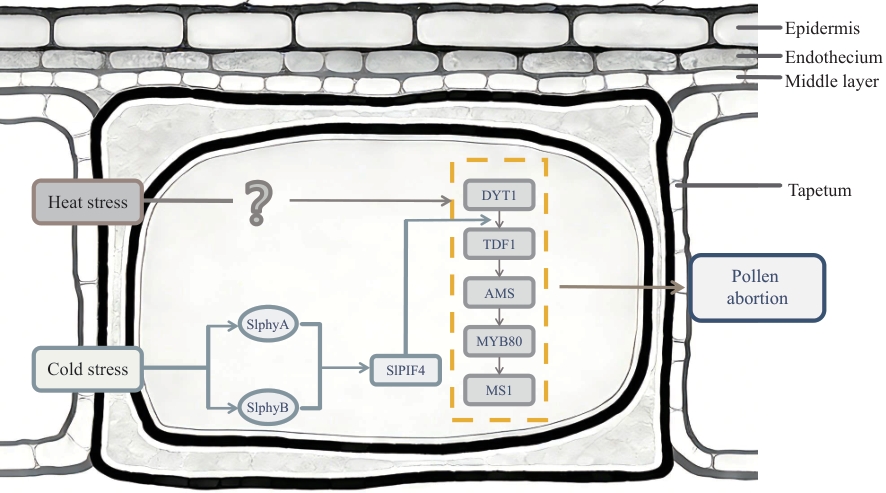
图1 phyA/B介导温度调控绒毡层发育及花粉育性温度胁迫通过SlphyA/SlphyB-SlPIF4信号调节SlDYT1-SlTDF1-SlAMS-SlMYB80-SlMS1级联反应,改变绒毡层PCD,使其在高温下加速降解或在低温下延迟降解,从而导致花粉败育
Fig. 1 phyA/B-mediated temperature regulation of tapetum development and pollen fertilityTemperature stress modulates the SlDYT1-SlTDF1-SlAMS-SlMYB80-SlMS1 cascade via SlphyA/SlphyB-SlPIF4 signaling, altering tapetum PCD, accelerating its degradation under heat stress or delaying it under cold stress, leading to pollen abortion
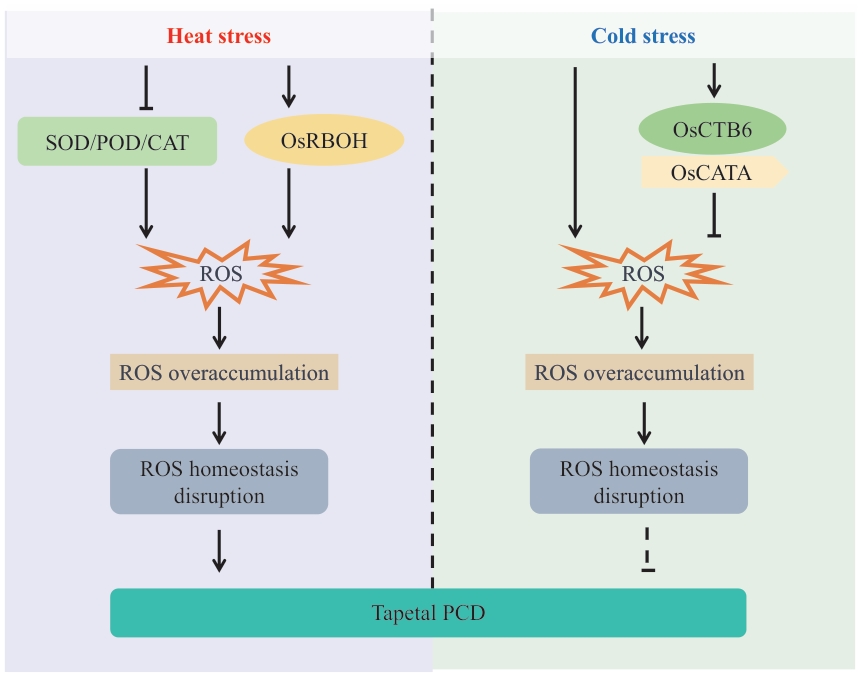
图2 高温与低温胁迫对ROS稳态的影响低温胁迫诱导ROS上调,水稻中OsCTB6与CATA相互作用,在低温下维持CATA的稳定,对ROS进行清除。低温胁迫下ROS的过量积累会导致ROS稳态被破坏,可能导致绒毡层PCD延迟。高温胁迫提高OsRBOH活性,促进ROS爆发,SOD、POD和CAT活性降低,导致ROS过早积累,使绒毡层PCD提前。箭头:促进;T型杆:抑制;虚线:机制尚未完全阐明
Fig. 2 The influence of high and low temperature stress on ROS homeostasisLow temperature stress induces the upregulation of reactive oxygen species (ROS). In rice, OsCTB6 interacts with CATA to maintain CATA stability under cold conditions and eliminate excess ROS. Excessive ROS accumulation under cold stress disrupts ROS homeostasis, thereby potentially delaying tapetal programmed cell death (PCD). By contrast, high temperature stress enhances OsRBOH activity and triggers ROS burst, accompanied by reduced activities of SOD, POD and CAT. This results in premature ROS accumulation and advanced tapetal PCD. Arrows: Promotion; T-bars: inhibition; dashed lines: mechanisms not yet fully elucidated
对比维度 Comparative aspects | 高温胁迫 High temperature stress | 低温胁迫 Low temperature stress |
|---|---|---|
细胞学表型 Cytological phenotype | 核心特征为绒毡层PCD提前启动、过早降解。四分体至单核小孢子早期就启动PCD,绒毡层提前解体,细胞层变薄甚至消失,细胞中液泡增多甚至液泡膜破裂、内质网异常、线粒体肿胀、胼胝质增厚及沉积异常[ | 核心特征为绒毡层PCD显著延迟、降解受阻。PCD启动时间大幅推迟,降解进程被抑制,细胞持续留存至花粉成熟期,出现绒毡层肿胀及细胞肥大、液泡化异常、内质网结构异常、胼胝质降解提前[ |
转录级联调控模式 Regulatory pattern of the transcriptional cascade | 主要抑制DYT1-TDF1-AMS-MYB80转录级联通路基因的表达,加速绒毡层PCD进程[ | 主要异常增强DYT1-TDF1-AMS-MYB80级联通路的转录活性,如低温下SlPIF4与SlDYT1形成复合体,显著增强SlTDF1的转录激活,导致绒毡层PCD信号被抑制;或直接抑制MYB80等核心基因表达,阻断PCD执行[ |
ROS调控机制 ROS regulatory mechanism | ROS爆发主要源于线粒体呼吸链功能紊乱与ABA介导的NADPH氧化酶激活,抗氧化酶(CAT、SOD)活性被显著抑制;过量ROS直接触发绒毡层PCD提前启动,是高温下绒毡层PCD提前的核心诱因[ | ROS积累主要源于抗氧化酶(如CATA)的蛋白稳定性被破坏;ROS稳态被破坏[ |
ABA调控机制 ABA regulatory mechanism | ABA水平升高通过激活ROS积累提前诱导绒毡层PCD,导致绒毡层提前降解[ | ABA积累通过负调控绒毡层糖代谢相关基因表达,扰乱花药中的糖分供应,介导绒毡层PCD异常[ |
表1 高温与低温胁迫影响绒毡层PCD的核心差异
Table 1 Core differences in the impact of high and low temperature stress on tapetal PCD
对比维度 Comparative aspects | 高温胁迫 High temperature stress | 低温胁迫 Low temperature stress |
|---|---|---|
细胞学表型 Cytological phenotype | 核心特征为绒毡层PCD提前启动、过早降解。四分体至单核小孢子早期就启动PCD,绒毡层提前解体,细胞层变薄甚至消失,细胞中液泡增多甚至液泡膜破裂、内质网异常、线粒体肿胀、胼胝质增厚及沉积异常[ | 核心特征为绒毡层PCD显著延迟、降解受阻。PCD启动时间大幅推迟,降解进程被抑制,细胞持续留存至花粉成熟期,出现绒毡层肿胀及细胞肥大、液泡化异常、内质网结构异常、胼胝质降解提前[ |
转录级联调控模式 Regulatory pattern of the transcriptional cascade | 主要抑制DYT1-TDF1-AMS-MYB80转录级联通路基因的表达,加速绒毡层PCD进程[ | 主要异常增强DYT1-TDF1-AMS-MYB80级联通路的转录活性,如低温下SlPIF4与SlDYT1形成复合体,显著增强SlTDF1的转录激活,导致绒毡层PCD信号被抑制;或直接抑制MYB80等核心基因表达,阻断PCD执行[ |
ROS调控机制 ROS regulatory mechanism | ROS爆发主要源于线粒体呼吸链功能紊乱与ABA介导的NADPH氧化酶激活,抗氧化酶(CAT、SOD)活性被显著抑制;过量ROS直接触发绒毡层PCD提前启动,是高温下绒毡层PCD提前的核心诱因[ | ROS积累主要源于抗氧化酶(如CATA)的蛋白稳定性被破坏;ROS稳态被破坏[ |
ABA调控机制 ABA regulatory mechanism | ABA水平升高通过激活ROS积累提前诱导绒毡层PCD,导致绒毡层提前降解[ | ABA积累通过负调控绒毡层糖代谢相关基因表达,扰乱花药中的糖分供应,介导绒毡层PCD异常[ |
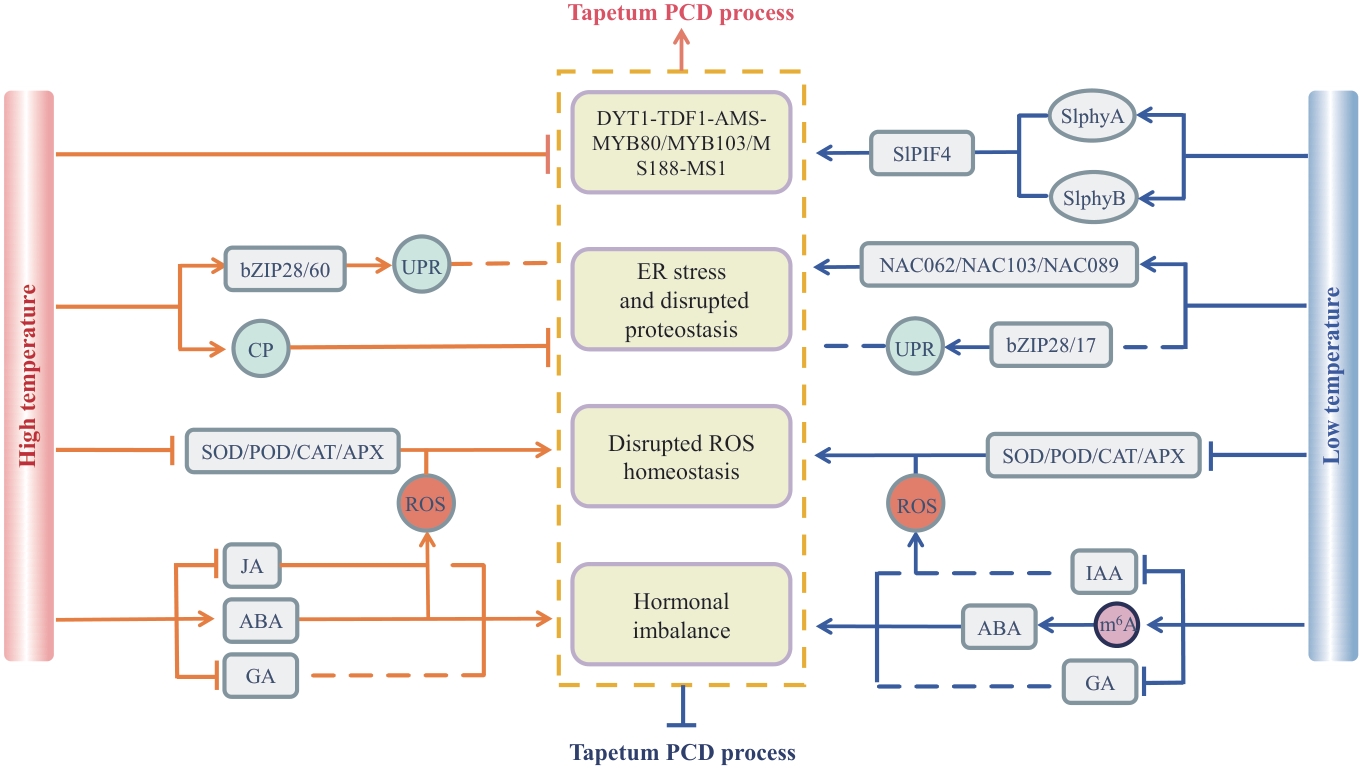
图3 绒毡层PCD对温度胁迫响应的调控网络温度胁迫主要通过4条途径调控绒毡层PCD进程:转录级联通路、内质网与蛋白质稳态、ROS稳态以及激素信号。高温胁迫主要抑制转录级联通路相关基因表达,通过上调bZIP28/60介导UPR并促进CP蛋白积累,扰乱内质网及蛋白质稳态;在ROS稳态方面,高温抑制抗氧化酶基因表达,同时通过上调ABA、下调JA加剧ROS失衡;此外高温还会降低GA含量,最终共同促进绒毡层PCD进程。低温胁迫则促进转录级联通路基因表达,激活NAC家族转录因子参与内质网稳态调控;低温同样抑制抗氧化酶基因表达,并通过降低IAA水平导致ROS积累;同时,低温引起ABA上调、GA下调,最终共同导致绒毡层PCD进程延迟。bZIP28/60/17:bZIP转录因子家族;NAC062/NAC103/NAC089:NAC转录因子家族;UPR:未折叠蛋白反应;CP:半胱氨酸蛋白酶;GA:赤霉素;ABA:脱落酸;JA:茉莉酸;IAA:生长素;CAT:过氧化氢酶;SOD:超氧化物歧化酶;POD:过氧化物酶;APX:抗坏血酸过氧化物酶。箭头:促进;T型杆:抑制;虚线:机制尚未完全阐明;橙色线代表高温,蓝色线代表低温
Fig. 3 Regulatory network of the tapetum PCD response to temperature stressTemperature stress regulates the progression of tapetal PCD mainly through four pathways: the transcriptional cascade, ER homeostasis and proteostasis, ROS homeostasis, and hormonal signaling. High-temperature stress mainly inhibits the expression of genes involved in the transcriptional cascade. It disrupts ER homeostasis and proteostasis by upregulating bZIP28/bZIP60 to mediate the UPR, as well as promoting the accumulation of CPs. With respect to ROS homeostasis, high temperature suppresses the expression of antioxidant enzyme genes and exacerbates ROS imbalance by elevating ABA levels and reducing JA levels. In addition, high temperature decreases GA levels. Collectively, these events accelerate the progression of tapetal PCD. Low-temperature stress promotes the expression of genes in the transcriptional cascade and activates NAC family transcription factors to regulate ER homeostasis. Similarly, low temperature inhibits the expression of antioxidant enzyme genes and induces ROS accumulation by reducing IAA levels. Meanwhile, low temperature increases ABA levels and decreases GA levels, which together lead to the delay of tapetal PCD progression. bZIP28/60/17: bZIP transcription factor family members; NAC062/NAC103/NAC089: NAC transcription factor family members; UPR: unfolded protein response; CP: cysteine protease; GA: gibberellin; ABA: abscisic acid; JA: jasmonic acid; IAA: auxin; CAT: catalase; SOD: superoxide dismutase; POD: peroxidase; APX: ascorbate peroxidase. Arrows: Promotion; T-bars: inhibition; dashed lines: mechanisms not yet fully elucidated; orange line: high temperature; blue line: low temperature
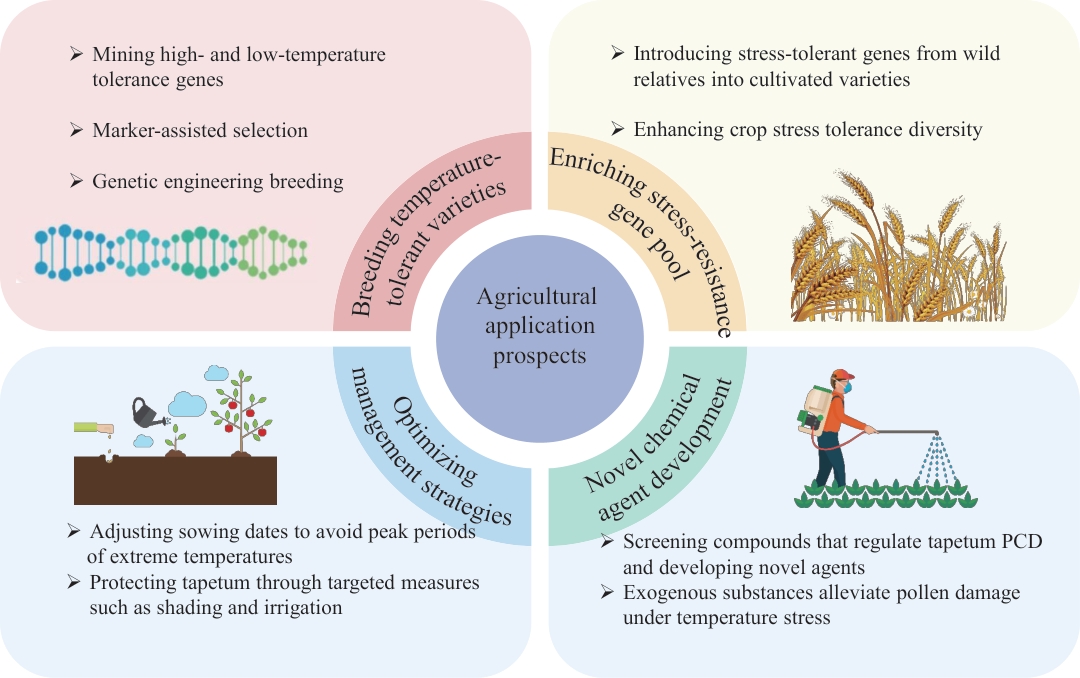
图4 绒毡层细胞温度响应机制的农业应用前景
Fig. 4 Agricultural application prospects of temperature response mechanism of tapetum cells
| [1] | Hayley D, Jacinthe R, Julia V, et al. 2026 likely to be among the four hottest years on record [EB/OL]. (2026-01-14)[2026-04-29]. . |
| [2] | Zhao C, Liu B, Piao SL, et al. Temperature increase reduces global yields of major crops in four independent estimates [J]. Proc Natl Acad Sci U S A, 2017, 114(35): 9326-9331. |
| [3] | Peng C, Hua W, Liu J. Unraveling the signaling pathways of plant cold stress: current insights and future directions [J]. Front Plant Sci. 2025, 16: 1666852. |
| [4] | 蒋金金, 苏汉东, 洪登峰, 等. 植物生物技术研究进展 [J]. 植物生理学报, 2023, 59(8): 1436-1462. |
| Jiang JJ, Su HD, Hong DF, et al. Advances and perspectives in plant biotechnology [J]. Plant Physiol J, 2023, 59(8): 1436-1462. | |
| [5] | Zheng YY, Lin XJ, Liang HM, et al. The long journey of pollen tube in the pistil [J]. Int J Mol Sci, 2018, 19(11): 3529. |
| [6] | 侯全璨, 牛菁华, 易仑, 等. 植物花药和花粉发育及其关键生物学事件调控机制 [J]. 科学通报, 2025, 70(19): 3048-3065. |
| Hou QC, Niu JH, Yi L, et al. Plant anther and pollen development and regulatory mechanisms of key biological events [J]. Chin Sci Bull, 2025, 70(19): 3048-3065. | |
| [7] | 冯瑶瑶, 孙继, 俞洋, 等. 温度胁迫对植物花粉发育的影响 [J]. 中国细胞生物学学报, 2019, 41(1): 141-149. |
| Feng YY, Sun J, Yu Y, et al. The effects of temperature stress on pollen development [J]. Chin J Cell Biol, 2019, 41(1): 141-149. | |
| [8] | 欧阳亦聃, 陈乐天. 作物育性调控和分子设计杂交育种前沿进展与展望 [J]. 中国科学: 生命科学, 2021, 51(10): 1385-1395. |
| Ouyang YD, Chen LT. Fertility regulation and molecular design hybrid breeding in crops [J]. Sci China Ser C, 2021, 51(10): 1385-1395. | |
| [9] | Hu W, Huang YJ, Loka DA, et al. Drought-induced disturbance of carbohydrate metabolism in anthers and male abortion of two Gossypium hirsutum cultivars differing in drought tolerance [J]. Plant Cell Rep, 2020, 39(2): 195-206. |
| [10] | Kiran A, Kumar S, Nayyar H, et al. Low temperature-induced aberrations in male and female reproductive organ development cause flower abortion in chickpea [J]. Plant Cell Environ, 2019, 42(7): 2075-2089. |
| [11] | Li ZQ, Zhao YF, Cheng XT, et al. High temperature-induced spindle destabilization results in aborted pollen production in Populus [J]. Forests, 2023, 14(4): 797. |
| [12] | Deng F, Zeng YL, Li QP, et al. Decreased anther dehiscence contributes to a lower fertilization rate of rice subjected to shading stress [J]. Field Crops Res, 2021, 273: 108291. |
| [13] | Chinnusamy V, Zhu JH, Zhu JK. Cold stress regulation of gene expression in plants [J]. Trends Plant Sci, 2007, 12(10): 444-451. |
| [14] | Shrestha S, Mahat J, Shrestha J, et al. Influence of high-temperature stress on rice growth and development. A review [J]. Heliyon, 2022, 8(12): e12651. |
| [15] | Lohani N, Singh MB, Bhalla PL. High temperature susceptibility of sexual reproduction in crop plants [J]. J Exp Bot, 2020, 71(2): 555-568. |
| [16] | Balasubramanian S, Sureshkumar S, Lempe J, et al. Potent induction of Arabidopsis thaliana flowering by elevated growth temperature [J]. PLoS Genet, 2006, 2(7): e106. |
| [17] | Sakata T, Takahashi H, Nishiyama I, et al. Effects of high temperature on the development of pollen mother cells and microspores in barley Hordeum vulgare L. [J]. J Plant Res, 2000, 113(4): 395-402. |
| [18] | 邹长松, 余迪求. 植物有性生殖对温度胁迫反应的研究进展 [J]. 云南植物研究, 2010, 32(6): 508-518. |
| Zou CS, Yu DQ. Temperature stress on plant sexual reproduction [J]. Acta Bot Yunnanica, 2010, 32(6): 508-518. | |
| [19] | Jagadish SV, Craufurd PQ, Wheeler TR. High temperature stress and spikelet fertility in rice (Oryza sativa L.) [J]. J Exp Bot, 2007, 58(7): 1627-1635. |
| [20] | Satake T, Hayase H. Male Sterility Caused by cooling treatment at the young microspore stage in rice plants: X. A secondary sensitive stage at the beginning of meiosis [J]. Jpn J Crop Sci, 1974, 43(1): 36-39. |
| [21] | 章建新, 赵明, 王美云, 等. 短高温对小麦花器官及旗叶的超微结构变化的直接影响 [J]. 中国农业大学学报, 1997, 2(1): 7-12. |
| Zhang JX, Zhao M, Wang MY, et al. A study on the direct effect of short time high temperature on the change of ultrastructure of flower organ and flag leaf in wheat [J]. J China Agric Univ, 1997, 2(1): 7-12. | |
| [22] | 高芸, 张玉雪, 马泉, 等. 春季低温对小麦花粉育性及粒数形成的影响 [J]. 作物学报, 2021, 47(1): 104-115. |
| Gao Y, Zhang YX, Ma Q, et al. Effects of low temperature in spring on fertility of pollen and formation of grain number in wheat [J]. Acta Agron Sin, 2021, 47(1): 104-115. | |
| [23] | 苏振新, 周鹊, 楼悦. 花药绒毡层发育及调控的分子研究进展 [J]. 中国科学: 生命科学, 2025, 55(2): 206-225. |
| Su ZX, Zhou Q, Lou Y. Advance in the anther tapetum development and their regulatory mechanisms [J]. Sci Sin Vitae, 2025, 55(2): 206-225. | |
| [24] | Walbot V, Egger RL. Pre-meiotic anther development: cell fate specification and differentiation [J]. Annu Rev Plant Biol, 2016, 67: 365-395. |
| [25] | Dickinson H. Pollen dressed for success [J]. Nature, 1993, 364(6438): 573-574. |
| [26] | 罗海山, 孟德璇, 陈晓阳, 等. 植物绒毡层异常导致花粉败育的机理研究进展 [J]. 作物研究, 2012, 26(6): 725-729. |
| Luo HS, Meng DX, Chen XY, et al. Research progress on the mechanism of pollen abortion caused by abnormal tapetum in plants [J]. Crop Res, 2012, 26(6): 725-729. | |
| [27] | Sun YJ, Ang YN, Fu M, et al. Temperature change regulates pollen fertility of a PTGMS rice line PA64S by modulating the ROS homeostasis and PCD within the tapetum [J]. Plant J, 2024, 120(2): 615-636. |
| [28] | Tariq N, Yaseen M, Xu D, et al. Rice anther tapetum: a vital reproductive cell layer for sporopollenin biosynthesis and pollen exine patterning [J]. Plant Biol J, 2023, 25(2): 233-245. |
| [29] | Kim SY, Hong CB, Lee I. Heat shock stress causes stage-specific male sterility in Arabidopsis thaliana [J]. J Plant Res, 2001, 114(3): 301-307. |
| [30] | Giorno F, Wolters-Arts M, Mariani C, et al. Ensuring reproduction at high temperatures: the heat stress response during anther and pollen development [J]. Plants, 2013, 2(3): 489-506. |
| [31] | Zhang ZB, Hu MH, Xu WW, et al. Understanding the molecular mechanism of anther development under abiotic stresses [J]. Plant Mol Biol, 2021, 105(1/2): 1074. |
| [32] | Oda S, Kaneko F, Yano K, et al. Morphological and gene expression analysis under cool temperature conditions in rice anther development [J]. Genes Genet Syst, 2010, 85(2): 107-120. |
| [33] | Gothandam KM, Kim ES, Chung YY. Ultrastructural study of rice tapetum under low-temperature stress [J]. J Plant Biol, 2007, 50(4): 396-402. |
| [34] | Mamun E, Alfred S, Cantrill L, et al. Effects of chilling on male gametophyte development in rice [J]. Cell Biol Int, 2006, 30(7): 583-591. |
| [35] | Liang Y, Li JH, Xu X, et al. Genotype-dependent induction of embryogenic callus and programmed cell death in Korean pine [J]. BMC Plant Biol, 2025, 25: 741. |
| [36] | Kutik J, Kuthanova A, Smertenko A, et al. Cadmium-induced cell death in BY-2 cell culture starts with vacuolization of cytoplasm and terminates with necrosis [J]. Physiol Plant, 2014, 151(4): 423-433. |
| [37] | Zheng Y, Zhang HT, Deng XJ, et al. The relationship between vacuolation and initiation of PCD in rice (Oryza sativa) aleurone cells [J]. Sci Rep, 2017, 7: 41245. |
| [38] | 刘林. 低温对西瓜花药发育的影响 [J]. 北方园艺, 2007(4): 16-17. |
| Liu L. Effect of low temperature on anther development in watermelon [J]. North Hortic, 2007(4): 16-17. | |
| [39] | Pan CT, Yang DD, Zhao XL, et al. PIF4 negatively modulates cold tolerance in tomato anthers via temperature-dependent regulation of tapetal cell death [J]. Plant Cell, 2021, 33(7): 2320-2339. |
| [40] | Oshino T, Abiko M, Saito R, et al. Premature progression of anther early developmental programs accompanied by comprehensive alterations in transcription during high-temperature injury in barley plants [J]. Mol Genet Genomics, 2007, 278(1): 31-42. |
| [41] | Fábián A, Péntek BK, Soós V, et al. Heat stress during male meiosis impairs cytoskeletal organization, spindle assembly and tapetum degeneration in wheat [J]. Front Plant Sci, 2024, 14: 1314021. |
| [42] | Howell SH. Endoplasmic reticulum stress responses in plants [J]. Annu Rev Plant Biol, 2013, 64: 477-499. |
| [43] | Suzuki K, Takeda H, Tsukaguchi T, et al. Ultrastructural study on degeneration of tapetum in anther of snap bean (Phaseolus vulgaris L.) under heat stress [J]. Sex Plant Reprod, 2001, 13(6): 293-299. |
| [44] | 崔海芳, 张凡, 尹俊龙, 等. 胼胝质沉积与花粉发育 [J]. 云南农业大学学报: 自然科学, 2017, 32(3): 551-557. |
| Cui HF, Zhang F, Yin JL, et al. Callose deposition and pollen development [J]. J Yunnan Agric Univ Nat Sci Ed, 2017, 32(3): 551-557. | |
| [45] | 刘丹丹. 低温处理对菜心花粉发育及相关基因表达的影响 [D]. 杭州: 浙江大学, 2016. |
| Liu DD. Effects of low temperature treatment on pollen development and associated gene expression in Chinese cabbage [D]. Hangzhou: Zhejiang University, 2016. | |
| [46] | 杨延红, 裴宝智, 王梦涵, 等. 高温对油菜花粉母细胞减数分裂及花粉活力的影响 [J]. 北方园艺, 2025(12): 39-47. |
| Yang YH, Pei BZ, Wang MH, et al. Effects of high temperature stress on pollen mother cell meiosis and pollen viability of Brassica napus L [J]. North Hortic, 2025(12): 39-47. | |
| [47] | Roopali B, Olive O, Tanushree H, et al. Transcription factors-Insights into abiotic and biotic stress resilience and crop improvement [J]. Current Plant Biology, 2025, 41: 100434. |
| [48] | Jung KH, Han MJ, Lee YS, et al. Rice Undeveloped Tapetum1 is a major regulator of early tapetum development [J]. Plant Cell, 2005, 17(10): 2705-2722. |
| [49] | Li N, Zhang DS, Liu HS, et al. The rice tapetum degeneration retardation gene is required for tapetum degradation and anther development [J]. Plant Cell, 2006, 18(11): 2999-3014. |
| [50] | Li DD, Xue JS, Zhu J, et al. Gene regulatory network for tapetum development in Arabidopsis thaliana [J]. Front Plant Sci, 2017, 8: 1559. |
| [51] | Phan HA, Iacuone S, Li SF, et al. The MYB80 transcription factor is required for pollen development and the regulation of tapetal programmed cell death in Arabidopsis thaliana [J]. Plant Cell, 2011, 23(6): 2209-2224. |
| [52] | Guan HL, Yu CY, Zeng ZH, et al. SlHB8 is a novel factor in enhancing cold resistance in tomato anthers by modulating tapetal cell death [J]. Int J Mol Sci, 2024, 25(17): 9336. |
| [53] | 杨雅婷, 苏立新, 范明霞. 植物花粉发育响应高温胁迫的研究进展 [J]. 世界热带农业信息, 2025(2): 16-18. |
| Yang YT, Su LX, Fan MX. Research progress of plant pollen development in response to high temperature stress [J]. World Trop Agric Inf, 2025(2): 16-18. | |
| [54] | Dündar G, Shao ZH, Higashitani N, et al. Autophagy mitigates high-temperature injury in pollen development of Arabidopsis thaliana [J]. Dev Biol, 2019, 456(2): 190-200. |
| [55] | Phan HA, Li SF, Parish RW. MYB80, a regulator of tapetal and pollen development, is functionally conserved in crops [J]. Plant Mol Biol, 2012, 78(1/2): 171-183. |
| [56] | Wang F, Chen XX, Dong SJ, et al. Crosstalk of PIF4 and DELLA modulates CBF transcript and hormone homeostasis in cold response in tomato [J]. Plant Biotechnol J, 2020, 18(4): 1041-1055. |
| [57] | Ko SS, Li MJ, Sun-Ben Ku M, et al. The bHLH142 transcription factor coordinates with TDR1 to modulate the expression of EAT1 and regulate pollen development in rice [J]. Plant Cell, 2014, 26(6): 2486-2504. |
| [58] | Niu NN, Liang WQ, Yang XJ, et al. EAT1 promotes tapetal cell death by regulating aspartic proteases during male reproductive development in rice [J]. Nat Commun, 2013, 4: 1445. |
| [59] | Wu LY, Jing XH, Zhang BL, et al. A natural allele of OsMS1 responds to temperature changes and confers thermosensitive genic male sterility [J]. Nat Commun, 2022, 13: 2055. |
| [60] | Alam P, Faizan M, Arif Y, et al. Reactive oxygen species: balancing agents in plants [J]. Front Plant Sci, 2025, 16: 1713590. |
| [61] | Xie DL, Zheng XL, Zhou CY, et al. Functions of redox signaling in pollen development and stress response [J]. Antioxidants, 2022, 11(2): 287. |
| [62] | Xie HT, Wan ZY, Li S, et al. Spatiotemporal production of reactive oxygen species by NADPH oxidase is critical for tapetal programmed cell death and pollen development in Arabidopsis [J]. Plant Cell, 2014, 26(5): 2007-2023. |
| [63] | Hu LF, Liang WQ, Yin CS, et al. Rice MADS3 regulates ROS homeostasis during late anther development [J]. Plant Cell, 2011, 23(2): 515-533. |
| [64] | Sachdev S, Ansari SA, Ansari MI. Reactive Oxygen Species in Plants: The Right Balance [M]. Singapore: Springer Nature Singapore, 2023. |
| [65] | Yu SX, Feng QN, Xie HT, et al. Reactive oxygen species mediate tapetal programmed cell death in tobacco and tomato [J]. BMC Plant Biol, 2017, 17: 76. |
| [66] | Liu ZH, Shi XY, Li S, et al. Oxidative stress and aberrant programmed cell death are associated with pollen abortion in isonuclear alloplasmic male-sterile wheat [J]. Front Plant Sci, 2018, 9: 595. |
| [67] | Xu WB, Miao YM, Kong J, et al. ROS signaling and its involvement in abiotic stress with emphasis on heat stress-driven anther sterility in plants [J]. Crop Environ, 2024, 3(2): 65-74. |
| [68] | Zhao Q, Guan XY, Zhou LJ, et al. OsPDIL1-1 controls ROS generation by modulating NADPH oxidase in developing anthers to alter the susceptibility of floret fertility to heat for rice [J]. Environ Exp Bot, 2023, 205: 105103. |
| [69] | 李金涛, 景莉清, 逯丹阳, 等. 植物抵御冷胁迫的分子机制研究进展 [J]. 信阳师范大学学报: 自然科学版, 2025, 38(3): 354-361. |
| Li JT, Jing LQ, Lu DY, et al. Molecular mechanisms of plant resistance to cold stress [J]. J Xinyang Norm Univ Nat Sci Ed, 2025, 38(3): 354-361. | |
| [70] | Gao SL, Li J, Zeng YW, et al. CTB6 confers cold tolerance at the booting stage by maintaining tapetum development in rice [J]. Adv Sci, 2025, 12(10): 2411357. |
| [71] | 杨雯一. 不同胁迫对各种植物体内抗氧化酶系统的影响综述 [J]. 化工管理, 2021(1): 92-93. |
| Yang WY. A review of the effects of different stresses on antioxidant enzyme systems in various plants [J]. Chem Enterp Manag, 2021(1): 92-93. | |
| [72] | Wang SP, Zhang GS, Zhang YX, et al. Comparative studies of mitochondrial proteomics reveal an intimate protein network of male sterility in wheat (Triticum aestivum L.) [J]. J Exp Bot, 2015, 66(20): 6191-6203. |
| [73] | Zhao Q, Guan XY, Zhou LJ, et al. ABA-triggered ROS burst in rice developing anthers is critical for tapetal programmed cell death induction and heat stress-induced pollen abortion [J]. Plant Cell Environ, 2023, 46(5): 1453-1471. |
| [74] | Zhao Q, Zhou LJ, Liu JC, et al. Involvement of CAT in the detoxification of HT-induced ROS burst in rice anther and its relation to pollen fertility [J]. Plant Cell Rep, 2018, 37(5): 741-757. |
| [75] | 卢奕霏, 顾迎港, 陈威, 等. 高温胁迫对小麦花药活性氧代谢的影响 [J]. 麦类作物学报, 2020, 40(4): 488-493. |
| Lu YF, Gu YG, Chen W, et al. Effect of high-temperature stress on reactive oxygen metabolism of wheat anther [J]. J Triticeae Crops, 2020, 40(4): 488-493. | |
| [76] | 张融雪, 孙玥, 苏京平, 等. 植物内质网胁迫研究进展 [J]. 生物技术进展, 2021, 11(3): 289-296. |
| Zhang RX, Sun Y, Su JP, et al. Progress on plant endoplasmic reticulum stress [J]. Curr Biotechnol, 2021, 11(3): 289-296. | |
| [77] | Liu JX, Howell SH. Endoplasmic reticulum protein quality control and its relationship to environmental stress responses in plants [J]. Plant Cell, 2010, 22(9): 2930-2942. |
| [78] | Pastor-Cantizano N, Angelos ER, Ruberti C, et al. Programmed cell death regulator BAP2 is required for IRE1-mediated unfolded protein response in Arabidopsis [J]. Nat Commun, 2024, 15: 5804. |
| [79] | Nakajima Y, Suzuki S. Environmental stresses induce misfolded protein aggregation in plant cells in a microtubule-dependent manner [J]. Int J Mol Sci, 2013, 14(4): 7771-7783. |
| [80] | Yang ZT, Guo ZQ, Wang SS, et al. NAC062 acts as an upstream regulator of NAC103 under endoplasmic reticulum stress [J]. Agron J, 2022, 114(4): 1981-1994. |
| [81] | 白雨婷, 张文晓, 周倩, 等. 转录因子在植物内质网胁迫中的作用及分子机制研究进展 [J]. 植物生理学报, 2024, 60(7): 1055-1067. |
| Bai YT, Zhang WX, Zhou Q, et al. Advances in roles and molecular mechanisms of transcription factors in endoplasmic reticulum stress in plants [J]. Plant Physiol Commun, 2024, 60(7): 1055-1067. | |
| [82] | Zhang SS, Yang HX, Ding L, et al. Tissue-specific transcriptomics reveals an important role of the unfolded protein response in maintaining fertility upon heat stress in Arabidopsis [J]. Plant Cell, 2017, 29(5): 1007-1023. |
| [83] | Gao HB, Brandizzi F, Benning C, et al. A membrane-tethered transcription factor defines a branch of the heat stress response in Arabidopsis thaliana [J]. Proc Natl Acad Sci USA, 2008, 105(42): 16398-16403. |
| [84] | Sun L, Lu SJ, Zhang SS, et al. The lumen-facing domain is important for the biological function and organelle-to-organelle movement of bZIP28 during ER stress in Arabidopsis [J]. Mol Plant, 2013, 6(5): 1605-1615. |
| [85] | Fan QQ, Jespersen D. Assessing heat tolerance in creeping bentgrass lines based on physiological responses [J]. Plants, 2023, 12(1): 41. |
| [86] | Jogam P, Savitikadi P, Sandhya D, et al. Tapetum-specific expression of cysteine protease induces male sterility in tomato [J]. Plant Gene, 2024, 38: 100454. |
| [87] | Shukla P, Singh NK, Kumar D, et al. Expression of a pathogen-induced cysteine protease (AdCP) in tapetum results in male sterility in transgenic tobacco [J]. Funct Integr Genomics, 2014, 14(2): 307-317. |
| [88] | Shukla P, Subhashini M, Singh NK, et al. Targeted expression of cystatin restores fertility in cysteine protease induced male sterile tobacco plants [J]. Plant Sci, 2016, 246: 52-61. |
| [89] | Shukla P, Gautam R, Singh NK, et al. A proteomic study of cysteine protease induced cell death in anthers of male sterile tobacco transgenic plants [J]. Physiol Mol Biol Plants, 2019, 25(4): 1073-1082. |
| [90] | Diaz-Mendoza M, Velasco-Arroyo B, Santamaria ME, et al. Plant senescence and proteolysis: two processes with one destiny [J]. Genet Mol Biol, 2016, 39(3): 329-338. |
| [91] | Huang BR, Xu CP. Identification and characterization of proteins associated with plant tolerance to heat stress [J]. J Integr Plant Biol, 2008, 50(10): 1230-1237. |
| [92] | Huang BR, Rachmilevitch S, Xu JC. Root carbon and protein metabolism associated with heat tolerance [J]. J Exp Bot, 2012, 63(9): 3455-3465. |
| [93] | Oliver SN, Dennis ES, Dolferus R. ABA regulates apoplastic sugar transport and is a potential signal for cold-induced pollen sterility in rice [J]. Plant Cell Physiol, 2007, 48(9): 1319-1330. |
| [94] | Baron KN, Schroeder DF, Stasolla C. Transcriptional response of abscisic acid (ABA) metabolism and transport to cold and heat stress applied at the reproductive stage of development in Arabidopsis thaliana [J]. Plant Sci, 2012, 188: 48-59. |
| [95] | 张晓晶, 李晨晨, 刘志宏, 等. 不同浓度ABA处理对冬小麦生理指标的影响 [J]. 江苏农业科学, 2015, 43(9): 103-105. |
| Zhang XJ, Li CC, Liu ZH, et al. Effects of different concentrations of ABA on physiological indexes of winter wheat [J]. Jiangsu Agric Sci, 2015, 43(9): 103-105. | |
| [96] | Zhu Y, Dun XL, Zhou ZF, et al. A separation defect of tapetum cells and microspore mother cells results in male sterility in Brassica napus: the role of abscisic acid in early anther development [J]. Plant Mol Biol, 2010, 72(1/2): 111-123. |
| [97] | Yang DD, Xu HC, Liu Y, et al. RNA N6-methyladenosine responds to low-temperature stress in tomato anthers [J]. Front Plant Sci, 2021, 12: 687826. |
| [98] | Ji XM, Dong BD, Shiran B, et al. Control of abscisic acid catabolism and abscisic acid homeostasis is important for reproductive stage stress tolerance in cereals [J]. Plant Physiol, 2011, 156(2): 647-662. |
| [99] | Oliver SN, Van Dongen JT, Alfred SC, et al. Cold-induced repression of the rice anther-specific cell wall invertase gene OSINV4 is correlated with sucrose accumulation and pollen sterility [J]. Plant Cell Environ, 2005, 28(12): 1534-1551. |
| [100] | Plackett ARG, Thomas SG, Wilson ZA, et al. Gibberellin control of stamen development: a fertile field [J]. Trends Plant Sci, 2011, 16(10): 568-578. |
| [101] | Kaneko M, Itoh H, Inukai Y, et al. Where do gibberellin biosynthesis and gibberellin signaling occur in rice plants [J]. Plant J, 2003, 35(1): 104-115. |
| [102] | Sakata T, Oda S, Tsunaga Y, et al. Reduction of gibberellin by low temperature disrupts pollen development in rice [J]. Plant Physiol, 2014, 164(4): 2011-2019. |
| [103] | Aya K, Ueguchi-Tanaka M, Kondo M, et al. Gibberellin modulates anther development in rice via the transcriptional regulation of GAMYB [J]. Plant Cell, 2009, 21(5): 1453-1472. |
| [104] | Tang JQ, Tian XJ, Mei EY, et al. WRKY53 negatively regulates rice cold tolerance at the booting stage by fine-tuning anther gibberellin levels [J]. Plant Cell, 2022, 34(11): 4495-4515. |
| [105] | Zhu YC, Li SS, Wang T, et al. Heat stress-induced reduction in bioactive GA content decreases rice thermotolerance by causing membrane damage through accumulated ROS [J]. Food Energy Secur, 2025, 14(5): e70124. |
| [106] | Li WX, Wen YS, Quan JJ, et al. Regulation of jasmonic acid signalling in tomato cold stress response: Insights into the MYB15-LOXD and MYB15-MYC2-LOXD regulatory modules [J]. Plant Biotechnol J, 2025, 23(10): 4246-4260. |
| [107] | Khan AH, Ma YZ, Wu YL, et al. High-temperature stress suppresses allene oxide cyclase 2 and causes male sterility in cotton by disrupting jasmonic acid signaling [J]. Crop J, 2023, 11(1): 33-45. |
| [108] | Liu DD, He YR, Wang YJ, et al. Tetrad stage transient cold stress skews auxin-mediated energy metabolism balance in Chinese cabbage pollen [J]. Plant Physiol, 2024, 195(2): 1312-1332. |
| [109] | Chaturvedi P, Wiese AJ, Ghatak A, et al. Heat stress response mechanisms in pollen development [J]. New Phytol, 2021, 231(2): 571-585. |
| [110] | Yao Q, Li P, Wang X, et al. Molecular mechanisms underlying the negative effects of transient heatwaves on crop fertility [J]. Plant Commun, 2024, 5(9): 101009. |
| [111] | Basharat S, Saeed W, Liu PW, et al. Long-term heat stress induces transcriptomic reprogramming of hormone signaling and metabolic pathways during rapeseed flowering [J]. Sci Rep, 2025, 15: 42411. |
| [112] | Xu YF, Wang RC, Wang YM, et al. A point mutation in LTT1 enhances cold tolerance at the booting stage in rice [J]. Plant Cell Environ, 2020, 43(4): 992-1007. |
| [113] | Liu B, Mo WJ, Zhang DB, et al. Cold influences male reproductive development in plants: a hazard to fertility, but a window for evolution [J]. Plant Cell Physiol, 2019, 60(1): 7-18. |
| [114] | Řehák J, Tsinyk M, Dvořák P, et al. Linking superoxide production and scavenging in plant development [J]. Plant Cell Environ, 2026, 49(4): 2048-2068. |
| [115] | Zeng R, Shi YT, Guo L, et al. A natural variant of COOL1 gene enhances cold tolerance for high-latitude adaptation in maize [J]. Cell, 2025, 188(5): 1315-1329.e13. |
| [1] | 陈义焰, 张冬儿, 张涛, 刘育灏, 唐杰, 盛夏冰, 胡远艺, 艾治勇, 李应将, 刘小林. 水稻OsSULTR2;2基因功能及调控苗期耐盐性分析[J]. 生物技术通报, 2026, 42(7): 116-125. |
| [2] | 王鸿睿, 赵怡如, 饶书培, 陈金焕. 黑果枸杞 LrCYP78A5 基因在干旱与盐胁迫响应中的功能研究[J]. 生物技术通报, 2026, 42(7): 182-192. |
| [3] | 徐玉娇, 孙玉帅, 刘道奇, 张丽, 张志昌, 姚玉新. VvHSP18.2过表达调节葡萄盐碱抗性的功能分析[J]. 生物技术通报, 2026, 42(4): 161-169. |
| [4] | 崔之瀚, 魏庆镇, 胡娜, 包崇来, 王华森. 园艺作物IQD基因研究进展[J]. 生物技术通报, 2026, 42(3): 230-241. |
| [5] | 王鹤瑶, 孙红梅. 园艺植物表皮毛功能及其形成机制研究进展[J]. 生物技术通报, 2026, 42(3): 242-254. |
| [6] | 郭秀娟, 冯宇, 吴瑞香, 王利琴, 杨建春. Ca2+处理对胡麻种子萌发影响的转录组分析[J]. 生物技术通报, 2025, 41(7): 139-149. |
| [7] | 冯冰, 闫彩霞, 刘艺, 董凯悦, 赵楠, 赵瑞, 陈少良. 灰杨PcAHL17负调控拟南芥的镉耐受性[J]. 生物技术通报, 2025, 41(6): 269-283. |
| [8] | 冯小康, 梁倩, 王学峰, 孙杰, 薛飞. 棉花SEC1复合体组分的鉴定与GhSCY1基因功能验证[J]. 生物技术通报, 2025, 41(3): 112-122. |
| [9] | 武志健, 刘广洋, 林志豪, 盛彬, 陈鸽, 许晓敏, 王军伟, 徐东辉. 蔬菜种子萌发的纳米调控及其机制研究进展[J]. 生物技术通报, 2025, 41(1): 14-24. |
| [10] | 文静, 李倩倩, 张明达, 谭茗月, 金博阳, 沈秀丽, 杜志强. Duox 2调控克氏原螯虾肠组织抗细菌先天免疫的分子机制[J]. 生物技术通报, 2025, 41(1): 324-332. |
| [11] | 廖杨梅, 赵国春, 翁学煌, 贾黎明, 陈仲. 无患子雄性不育品种‘琦蕊’不同发育时期雄花转录组分析[J]. 生物技术通报, 2024, 40(7): 197-206. |
| [12] | 蔡志成, 王媛媛, 桑晓涵, 曾丽仙, 邓文韬, 王佳媚. 低温等离子体活化溶液在抑菌及清除生物被膜中的研究进展[J]. 生物技术通报, 2024, 40(6): 95-104. |
| [13] | 陈盈盈, 吴丁洁, 刘源, 张航, 刘艳娇, 王晶宇, 李瑞丽. 14-3-3蛋白及其在植物中的功能研究进展[J]. 生物技术通报, 2024, 40(4): 12-22. |
| [14] | 李慧, 文钰芳, 王悦, 纪超, 石国优, 罗英, 周勇, 李志敏, 吴晓玉, 杨有新, 刘建萍. 盐胁迫下辣椒CaPIF4的表达特性与功能分析[J]. 生物技术通报, 2024, 40(4): 148-158. |
| [15] | 邹修为, 岳佳妮, 李志宇, 戴良英, 李魏. 水稻热激转录因子HsfA2b调控非生物胁迫抗性的功能分析[J]. 生物技术通报, 2024, 40(2): 90-98. |
| 阅读次数 | ||||||
|
全文 |
|
|||||
|
摘要 |
|
|||||
