







生物技术通报 ›› 2026, Vol. 42 ›› Issue (10): 238-249.doi: 10.13560/j.cnki.biotech.bull.1985.2026-0593
• 研究报告 • 上一篇
李贺勤1,2,3, 闫恒宇1, 袁语锌1, 段炎炎1, 李彩丽4, 单成钢5, 江绪文1,2,3( )
)
收稿日期:2026-05-26
出版日期:2026-10-26
发布日期:2026-10-15
通讯作者:
江绪文mjxw888@163.com基金资助:
LI He-qin1,2,3, YAN Heng-yu1, YUAN Yu-xin1, DUAN Yan-yan1, LI Cai-li4, SHAN Cheng-gang5, JIANG Xu-wen1,2,3()
Received:2026-05-26
Published:2026-10-26
Online:2026-10-15
摘要:
目的 呼吸爆发氧化酶同源物(respiratory burst oxidase homologs, RBOHs)是植物活性氧(ROS)生成的关键限速酶,广泛参与植物逆境胁迫的调控过程。探究丹参RBOHs基因在盐胁迫应答及活性成分积累中的调控特征,为深入解析SmRBOHs基因功能、阐明其调控丹参活性成分积累的分子机制提供理论支撑。 方法 以拟南芥RBOH蛋白序列为参考,系统鉴定丹参RBOHs基因家族成员,全面解析其序列特征、进化关系、启动子顺式作用元件与转录因子结合位点,并构建其蛋白互作调控网络;结合转录组数据筛选与丹参活性成分生物合成通路基因共表达的SmRBOHs。通过盐胁迫处理试验,利用RT-qPCR等技术,系统分析SmRBOHs表达模式与ROS含量、丹酚酸和丹参酮积累的相关性。 结果 从丹参基因组中鉴定到6个SmRBOHs,系统进化分析可将其划分为3个亚组,其基因启动子区富含盐胁迫、脱落酸(abscisic acid, ABA)等逆境响应顺式元件和转录因子结合位点。该家族基因具有组织表达特异性,可差异化响应ABA信号,且与丹酚酸、丹参酮合成通路基因存在共表达关系。盐胁迫下,SmRBOHs各成员表达模式分化明显,其中SmRBOH2表达量与H₂O₂、丹参酮含量呈负相关,与丹酚酸积累呈正相关,其余家族成员则呈相反变化趋势。 结论 丹参RBOHs广泛参与植物激素介导的生理调控与盐胁迫应答过程,且其转录表达受多类转录因子调控。丹参或可通过ABA介导的SnRK2-RBOH信号模块,差异化调控丹酚酸与丹参酮的生物合成,进而参与盐胁迫适应性应答。
李贺勤, 闫恒宇, 袁语锌, 段炎炎, 李彩丽, 单成钢, 江绪文. 丹参RBOH基因家族特征及盐胁迫响应分析[J]. 生物技术通报, 2026, 42(10): 238-249.
LI He-qin, YAN Heng-yu, YUAN Yu-xin, DUAN Yan-yan, LI Cai-li, SHAN Cheng-gang, JIANG Xu-wen. Characterization of the RBOH Gene Family and Analysis of Its Salt Stress Responses in Salvia miltiorrhiza[J]. Biotechnology Bulletin, 2026, 42(10): 238-249.
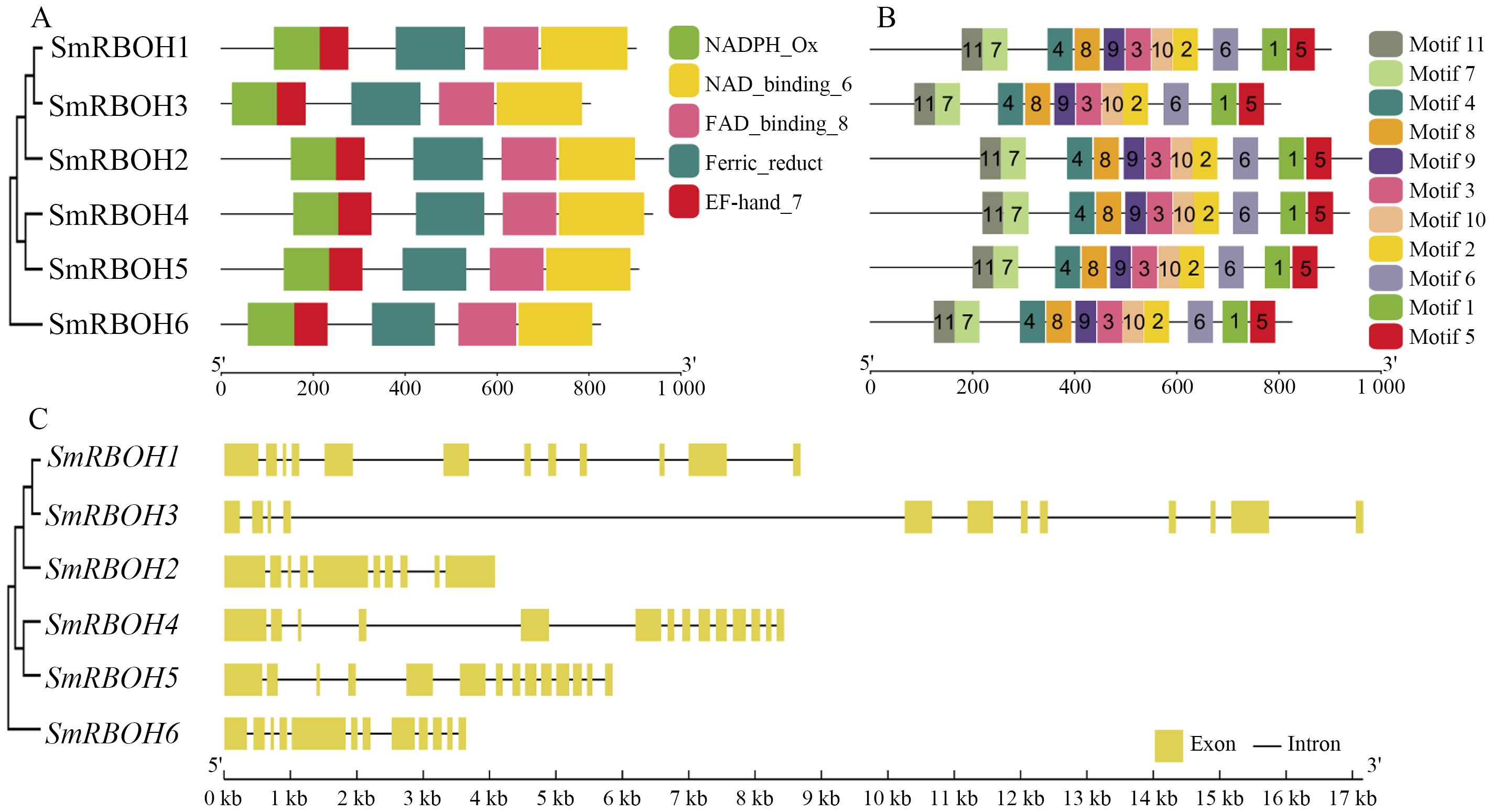
图1 SmRBOHs的保守结构域(A)、基因基序(B)和基因结构(C)
Fig. 1 Conserved domain (A), gene motif (B), and gene structure (C) of SmRBOHs
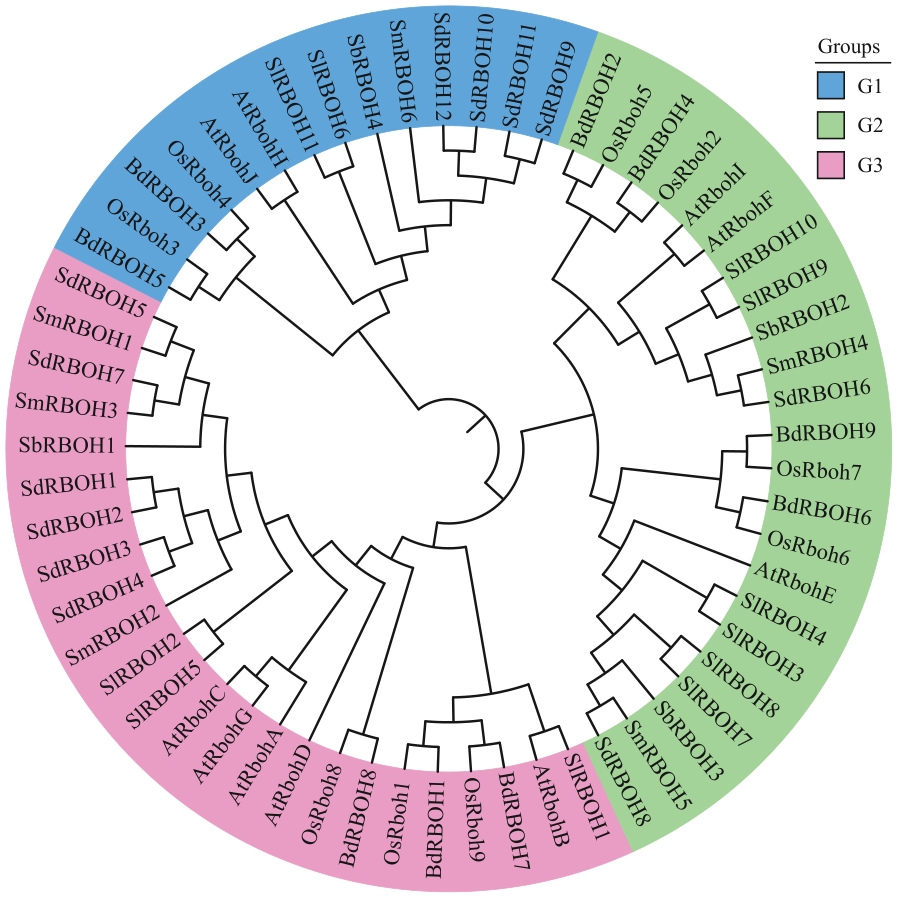
图2 丹参、拟南芥、水稻、番茄、黄芩和墨西哥鼠尾草RBOH蛋白的系统进化关系
Fig. 2 Phylogenetic relationships of RBOH proteins from Salvia miltiorrhiza, Arabidopsis thaliana, Oryza sativa, Solanum lycopersicum, Scutellaria baicalensis, and Salvia divinorum
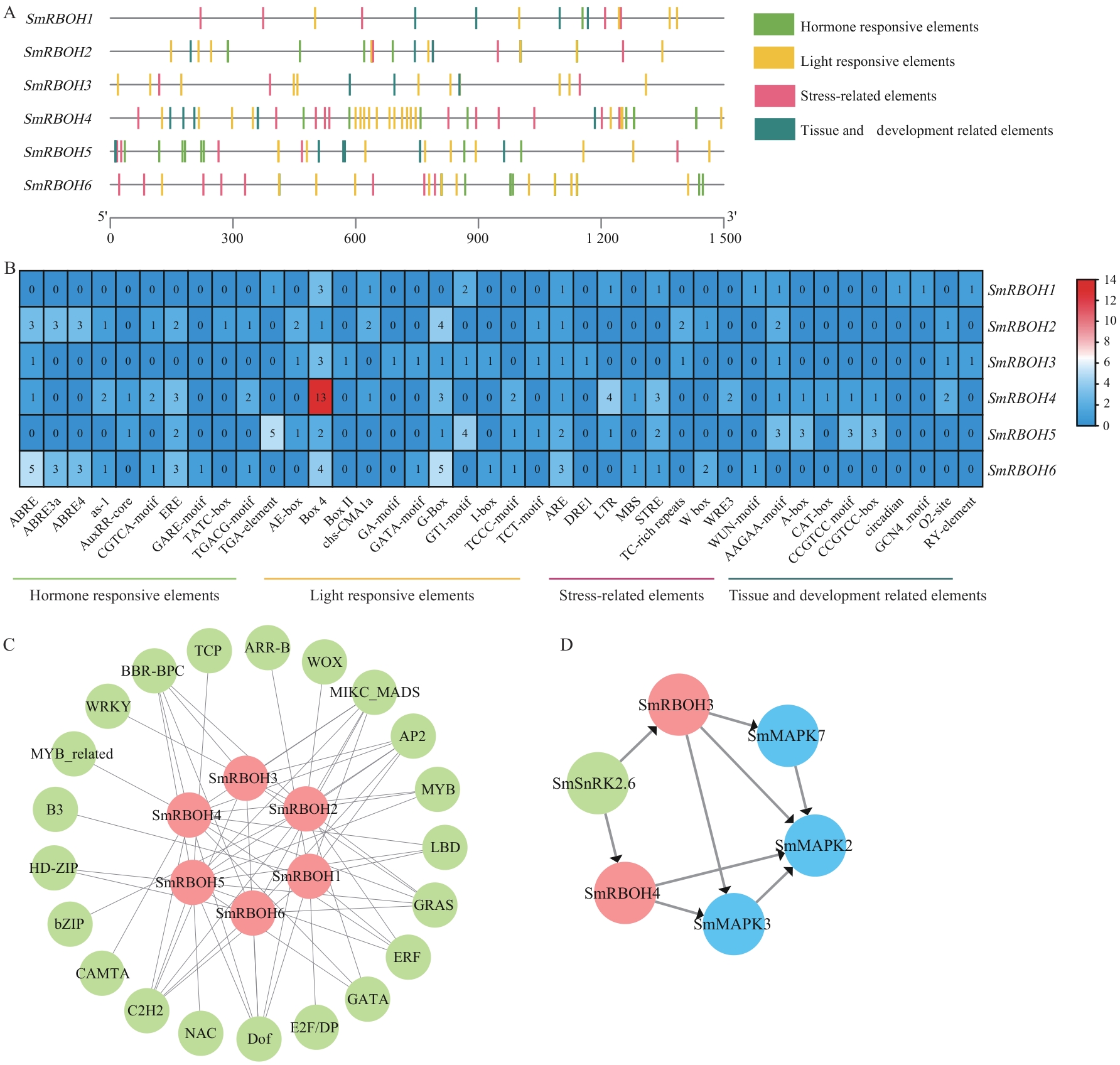
图3 SmRBOHs顺式作用元件及转录因子结合位点和蛋白互作分析A:顺式作用元件类型;B:顺式作用元件数量;C:转录因子结合位点;D:蛋白互作分析
Fig. 3 Analysis of cis-acting elements, transcription factor binding sites, and protein-protein interactions of the SmRBOHsA: Types of cis-acting elements. B: Numbers of cis-acting elements. C: Transcription factor binding sites. D: Protein-protein interaction analysis
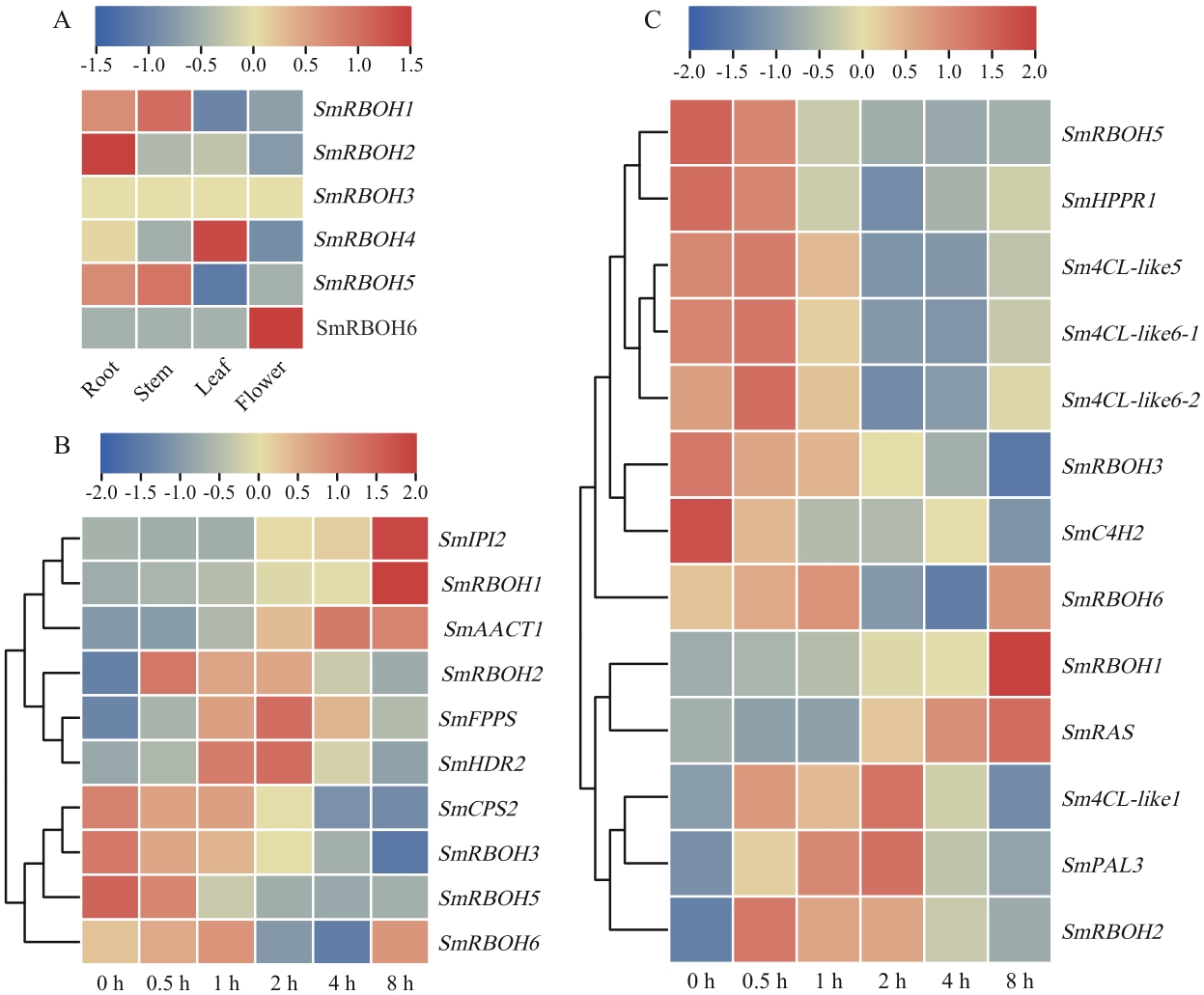
图4 SmRBOHs表达模式A:SmRBOHs在不同组织中的表达;B:SmRBOHs与丹参酮生物合成途径基因响应ABA的共表达模式;C:SmRBOHs与丹酚酸生物合成途径基因响应ABA的共表达模式
Fig. 4 Expression patterns of SmRBOHsA: Expression of SmRBOHs in different tissues. B: Co-expression pattern of SmRBOHs and genes involved in the biosynthesis pathway of tanshinone in response to ABA. C: Co-expression pattern of SmRBOHs and genes involved in the biosynthesis pathway of salvianolic acid in response to ABA
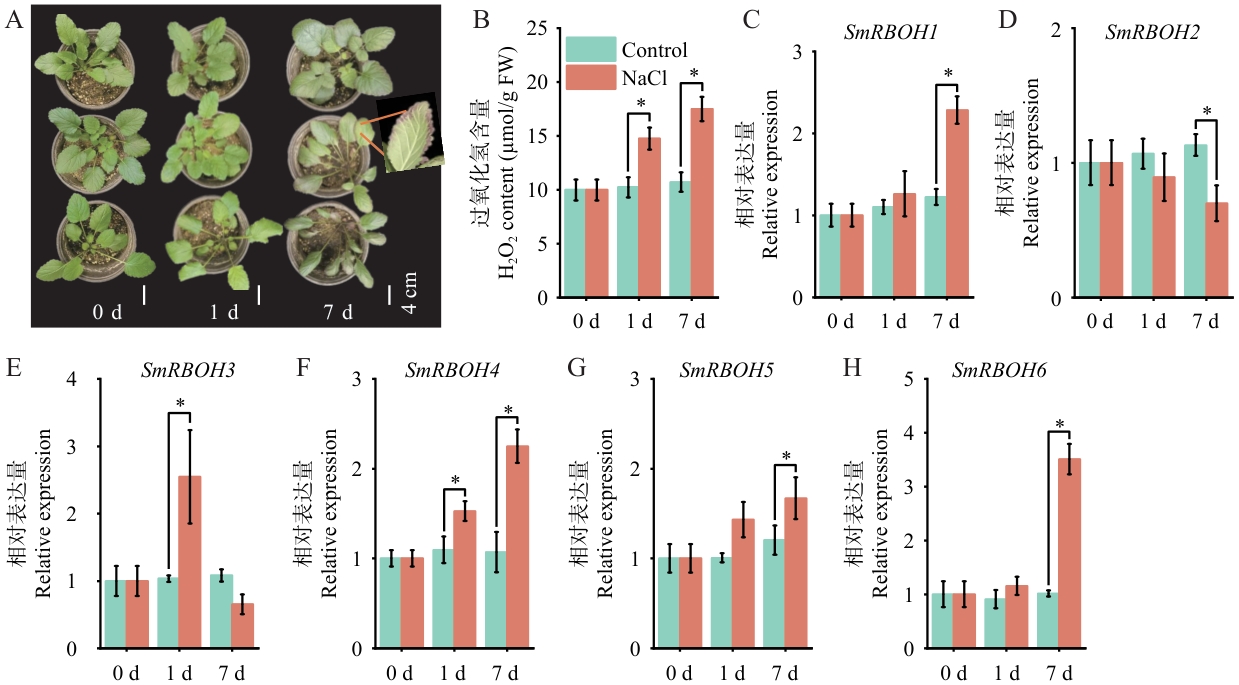
图5 盐胁迫下丹参盆栽苗表型、根系H2O2含量和SmRBOHs表达特征A‒B:盐处理的丹参盆栽苗(A)和根系H2O2含量(B);C‒H:盐处理的丹参根系SmRBOHs的相对表达量。*P<0.05,下同
Fig. 5 Phenotypes of pot seedlings, root H2O2 content, and SmRBOHs expression of S. miltiorrhiza under salt stressA‒B: S. miltiorrhiza pot seedlings(A) and root H2O2 content (B) under salt stress. C‒H: Relative expression of SmRBOHs in roots of salt‑treated S. miltiorrhiza seedlings. *P<0.05. The same below
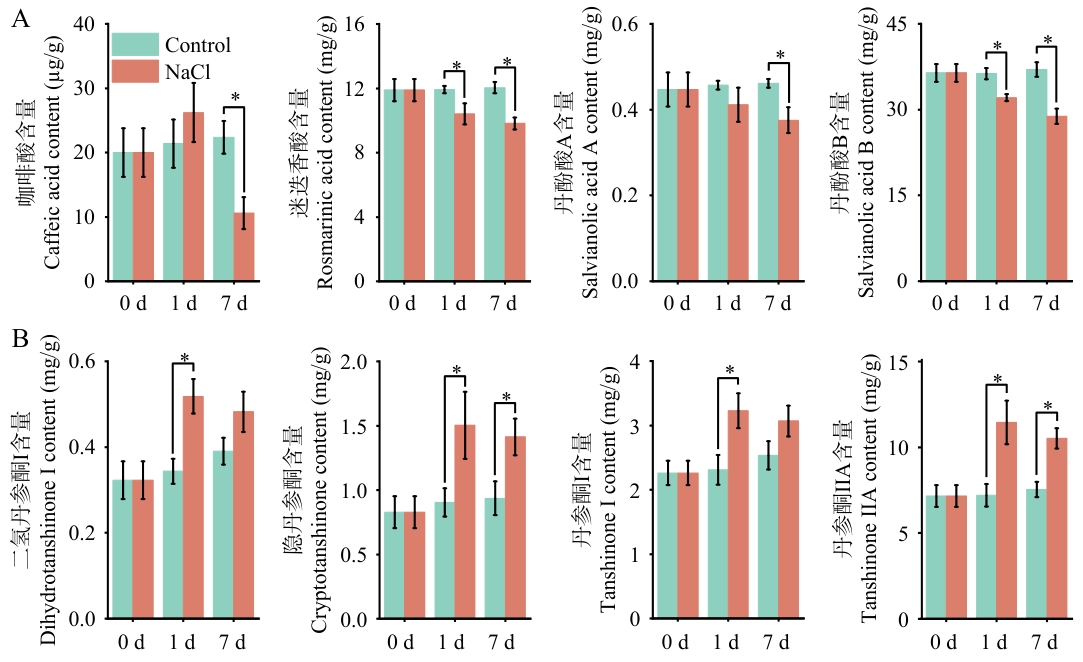
图6 盐胁迫对丹参根系丹酚酸(A)和丹参酮(B)含量的影响
Fig. 6 Effect of salt stress on the contents of salvianolic acid (A) and tanshinone (B) in the roots of S. miltiorrhiza
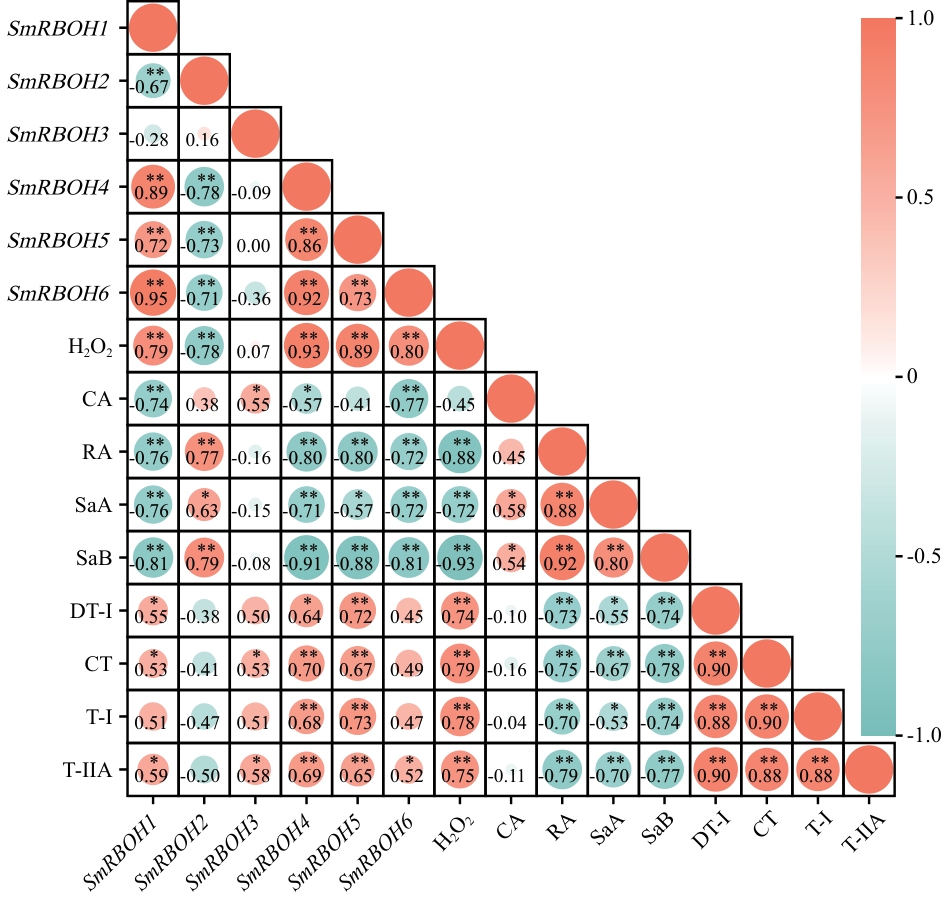
图7 不同处理丹参根系SmRBOHs表达水平与H2O2含量、丹酚酸含量和丹参酮含量的相关性分析CA:咖啡酸;RA:迷迭香酸;SaA:丹酚酸A;SaB:丹酚酸B;DT-I:二氢丹参酮I;CT:隐丹参酮;T-I:丹参酮I;T-IIA:丹参酮IIA。**P<0.01
Fig. 7 Correlation analysis of SmRBOHs expression in roots of S. miltiorrhiza under different treatments with H2O2, salvianolic acid, and tanshinone contentsCA: Caffeic acid. RA: Rosmarinic acid. SaA: Salvianolic acid A. SaB: Salvianolic acid B. DT-I: Dihydrotanshinone I. CT: Cryptotanshinone. T-I: Tanshinone I. T-IIA: Tanshinone IIA. **P<0.01
| [27] | Rosignoli S, Paiardini A. Boosting the full potential of PyMOL with structural biology plugins [J]. Biomolecules, 2022, 12(12): 1764. |
| [28] | Livak KJ, Schmittgen TD. Analysis of relative gene expression data using real-time quantitative PCR and the 2-ΔΔCt method [J]. Methods, 2001, 25(4): 402-408. |
| [29] | Yang JW, Ma CL, Jia R, et al. Different responses of two maize cultivars to Spodoptera frugiperda (Lepidoptera: Noctuidae) larvae infestation provide insights into their differences in resistance [J]. Front Plant Sci, 2023, 14: 1065891. |
| [30] | Huang Q, Sun MH, Yuan TP, et al. The AP2/ERF transcription factor SmERF1L1 regulates the biosynthesis of tanshinones and phenolic acids in Salvia miltiorrhiza [J]. Food Chem, 2019, 274: 368-375. |
| [31] | Zhang HY, Wang X, Yan A, et al. Evolutionary analysis of respiratory burst oxidase homolog (RBOH) genes in plants and characterization of ZmRBOHs [J]. Int J Mol Sci, 2023, 24(4): 3858. |
| [32] | Wang YH, Liu ZS, Li L, et al. The characteristics and expression analysis of the tomato SlRBOH gene family under exogenous phytohormone treatments and abiotic stresses [J]. Int J Mol Sci, 2024, 25(11): 5780. |
| [33] | Du LH, Jiang Z, Zhou YD, et al. Genome-wide identification and expression analysis of respiratory burst oxidase homolog (RBOH) gene family in eggplant (Solanum melongena L.) under abiotic and biotic stress [J]. Genes, 2023, 14(9): 1665. |
| [34] | Liu MM, Zhang Y, Pan T, et al. Genome-wide analysis of respiratory burst oxidase homolog gene family in pea (Pisum sativum L.) [J]. Front Plant Sci, 2023, 14: 1321952. |
| [35] | Kaur G, Pati PK. Analysis of cis-acting regulatory elements of respiratory burst oxidase homolog (Rboh) gene families in Arabidopsis and rice provides clues for their diverse functions [J]. Comput Biol Chem, 2016, 62: 104-118. |
| [36] | Zhang T, Wu AQ, Yue YP, et al. uORFs: important cis-regulatory elements in plants [J]. Int J Mol Sci, 2020, 21(17): 6238. |
| [37] | Shi M, Hua Q, Kai GY. Comprehensive transcriptomic analysis in response to abscisic acid in Salvia miltiorrhiza [J]. Plant Cell Tissue Organ Cult PCTOC, 2021, 147(2): 389-404. |
| [38] | de Zelicourt A, Colcombet J, Hirt H. The role of MAPK modules and ABA during abiotic stress signaling [J]. Trends Plant Sci, 2016, 21(8): 677-685. |
| [39] | Manna M, Rengasamy B, Sinha AK. Revisiting the role of MAPK signalling pathway in plants and its manipulation for crop improvement [J]. Plant Cell Environ, 2023, 46(8): 2277-2295. |
| [40] | Jalmi SK, Sinha AK. ROS mediated MAPK signaling in abiotic and biotic stress- striking similarities and differences [J]. Front Plant Sci, 2015, 6: 769. |
| [41] | Acharya BR, Jeon BW, Zhang W, et al. Open Stomata 1 (OST1) is limiting in abscisic acid responses of Arabidopsis guard cells [J]. New Phytol, 2013, 200(4): 1049-1063. |
| [42] | Begum K, Das A, Ahmed R, et al. Genome-wide analysis of respiratory burst oxidase homolog (Rboh) genes in Aquilaria species and insight into ROS-mediated metabolites biosynthesis and resin deposition [J]. Front Plant Sci, 2023, 14: 1326080. |
| [43] | Wang J, Liu XJ, Kang YD, et al. Functional analysis and interaction networks of Rboh in poplar under abiotic stress [J]. Front Plant Sci, 2025, 16: 1553057. |
| [44] | Pan L, Cai LR, Lu Y, et al. Genome-wide identification and expression analysis Pvrboh genes reveal their potential roles in salt tolerance and calcium signaling [J]. Plant Cell Physiol, 2026, 67(1): 8-19. |
| [45] | Anderssen S, Naômé A, Jadot C, et al. AURTHO: Autoregulation of transcription factors as facilitator of cis-acting element discovery [J]. Biochim Biophys Acta Gene Regul Mech, 2022, 1865(5): 194847. |
| [46] | Li WR, Yu JC, Wang RH, et al. Overexpression of SmGRAS5 enhances tolerance to abiotic stresses in Salvia miltiorrhiza [J]. Plant Physiol Biochem, 2025, 221: 109669. |
| [47] | Lv BB, Feng QQ, Shao GG, et al. The transcription factor Dof32 coordinates salvianolic acid biosynthesis and drought tolerance in Salvia miltiorrhiza [J]. Plant Physiol, 2025, 198(2): kiaf221. |
| [48] | Zhao GM, Shi QM, Han Y, et al. The physiological and biochemical responses of a medicinal plant (Salvia miltiorrhiza L.) to stress caused by various concentrations of NaCl [J]. PLoS One, 2014, 9(2): e89624. |
| [49] | Bi Q, Yao H, Wang F, et al. Integrative analysis of the pharmaceutical active ingredient and transcriptome of the aerial parts of Glycyrrhiza uralensis under salt stress reveals liquiritin accumulation via ABA-mediated signaling [J]. Mol Genet Genomics, 2022, 297(2): 333-343. |
| [50] | Zheng FX, Xu ZT, Deng XJ, et al. Comprehensive identification of aquaporins under salt stress, and functional characterization of DoTIP1-1 in Dendrobium officinale [J]. Plant Physiol Biochem, 2026, 231: 110952. |
| [1] | Wang PT, Liu WC, Han C, et al. Reactive oxygen species: Multidimensional regulators of plant adaptation to abiotic stress and development [J]. J Integr Plant Biol, 2024, 66(3): 330-367. |
| [2] | Mittler R, Zandalinas SI, Fichman Y, et al. Reactive oxygen species signalling in plant stress responses [J]. Nat Rev Mol Cell Biol, 2022, 23(10): 663-679. |
| [3] | Shabbir R, Javed T, Sun SR, et al. Reactive oxygen species-(ROS) in plant defense: jack-of-all-trades [J]. Crit Rev Biotechnol, 2026, 46(1): 152-160. |
| [4] | Sun LR, Zhao ZJ, Hao FS. NADPH oxidases, essential players of hormone signalings in plant development and response to stresses [J]. Plant Signal Behav, 2019, 14(11): 1657343. |
| [5] | Su CY, Ming QL, Rahman K, et al. Salvia miltiorrhiza: Traditional medicinal uses, chemistry, and pharmacology [J]. Chin J Nat Med, 2015, 13(3): 163-182. |
| [6] | Yang L, Huang XL, Wang ZH, et al. Research progress on the pharmacological properties of active ingredients from Salvia miltiorrhiza: a review [J]. Phytomedicine, 2025, 148: 157272. |
| [7] | 刘佳欣, 张会龙, 邹荣松, 等. 不同类型盐生植物适应盐胁迫的生理生长机制及Na+逆向转运研究进展 [J]. 生物技术通报, 2023, 39(1): 59-71. |
| Liu JX, Zhang HL, Zou RS, et al. Research progress in Na+ antiport and physiological growth mechanisms of differernt halophytes adapted to salt stress [J]. Biotechnol Bull, 2023, 39(1): 59-71. | |
| [8] | 孙良丹. 盐碱地特色中药农业新理念思考与实践 [J]. 华北理工大学学报: 自然科学版, 2024, 46(1): 1-7. |
| Sun LD. Innovation and practice of new concepts in traditional Chinese medicine agriculture in saline-alkali land [J]. J N China Univ Sci Technol Nat Sci Ed, 2024, 46(1): 1-7. | |
| [9] | 黄姚姚, 申俊龙, 李洁. 逆境出质量: 从种质与环境的相互作用探讨道地药材的质量形成机制 [J]. 中草药, 2025, 56(8): 2945-2953. |
| Huang YY, Shen JL, Li J. Adversity breeds quality: Exploring quality formation mechanism of genuine medicinal materials from interaction between germplasm and environment [J]. Chin Tradit Herb Drugs, 2025, 56(8): 2945-2953. | |
| [10] | Qi JX, Yang SQ, Salam A, et al. OsRbohI regulates rice growth and development via jasmonic acid signalling [J]. Plant Cell Physiol, 2023, 64(6): 686-699. |
| [11] | Wang HQ, Zhao XY, Xuan W, et al. Rice roots avoid asymmetric heavy metal and salinity stress via an RBOH-ROS-auxin signaling cascade [J]. Mol Plant, 2023, 16(10): 1678-1694. |
| [12] | Chen YT, Zhang R, Wang RJ, et al. Overexpression of OsRbohH enhances heat and drought tolerance through ROS homeostasis and ABA mediated pathways in rice (Oryza sativa L.) [J]. Plants, 2024, 13(17): 2494. |
| [13] | Huang Y, Cao HS, Yang L, et al. Tissue-specific respiratory burst oxidase homolog-dependent H2O2 signaling to the plasma membrane H+-ATPase confers potassium uptake and salinity tolerance in Cucurbitaceae [J]. J Exp Bot, 2019, 70(20): 5879-5893. |
| [14] | Di QH, Zhou MD, Li YS, et al. Respiratory burst oxidase homolog 5.1 regulates H3K4me3 deposition and transcription after cold priming in cucumber [J]. Plant Physiol, 2025, 197(2): kiae461. |
| [15] | Zhang H, Liu XY, Tang C, et al. A respiratory burst oxidase homolog protein in Pyrus regulates stigmatic ROS production to control pollen tube growth [J]. Plant Physiol, 2025, 198(4): kiaf336. |
| [16] | Yang XQ, Zhang F, Yang M, et al. The NADPH-oxidase LsRbohC1 plays a role in lettuce (Lactuca sativa) seed germination [J]. Plant Physiol Biochem, 2020, 154: 751-757. |
| [17] | Huang WT, Zhang YL, Zhou JL, et al. The respiratory burst oxidase homolog protein D (GhRbohD) positively regulates the cotton resistance to Verticillium dahliae [J]. Int J Mol Sci, 2021, 22(23): 13041. |
| [18] | Chai SY, Yang ZY, Deng XX, et al. ZnO quantum dots alleviate salt stress in Salvia miltiorrhiza by enhancing growth, scavenging reactive oxygen species, and modulating stress-responsive genes [J]. Environ Pollut, 2024, 344: 123363. |
| [19] | Li HQ, Zhang JX, Mi XT, et al. Melatonin priming enhances the seed germination and seedling performance of Salvia miltiorrhiza under salt stress [J]. Ind Crops Prod, 2026, 242: 122972. |
| [20] | 韩金龙, 张锋, 黄亭亭, 等. 26种药用植物黄河三角洲地区引种适应性评价 [J]. 现代中药研究与实践, 2017, 31(4): 5-7, 16. |
| Han JL, Zhang F, Huang TT, et al. Evaluation on the adaptability of the introduction of 26 species of medicinal plants in the Yellow River Delta [J]. Res Pract Chin Med, 2017, 31(4): 5-7, 16. | |
| [21] | 窦家聪, 邢晓飞, 杨久涛, 等. 不同覆膜材料对黄河三角洲盐碱地丹参生长的影响 [J]. 中国农技推广, 2025, 41(12): 87-89, 96. |
| Dou JC, Xing XF, Yang JT, et al. Effects of different film mulching materials on the growth of Salvia miltiorrhiza in saline-alkali land of the Yellow River Delta [J]. China Agric Technol Ext, 2025, 41(12): 87-89, 96. | |
| [22] | Chen CJ, Wu Y, Li JW, et al. TBtools-II: a “one for all, all for one” bioinformatics platform for biological big-data mining [J]. Mol Plant, 2023, 16(11): 1733-1742. |
| [23] | Zhou CH, Lin CC, Xing PY, et al. SmGDB: genome database of Salvia miltiorrhiza, an important TCM Plant [J]. Genes Genom, 2022, 44(6): 699-707. |
| [24] | 张鑫苗, 伍国强, 魏明. MAPK在植物响应逆境胁迫中的作用 [J]. 草业学报, 2024, 33(1): 182-197. |
| Zhang XM, Wu GQ, Wei M. The role of MAPK in plant response to abiotic stress [J]. Acta Prataculturae Sin, 2024, 33(1): 182-197. | |
| [25] | 周颖, 白艳红, 王钰, 等. 丹参SnRK2基因家族的鉴定与表达 [J]. 分子植物育种, 2022, 20(7): 2233-2243. |
| Zhou Y, Bai YH, Wang Y, et al. Genome-wide idenfication and expression pattern analysis of SnRK2 in Salvia miltiorrhiza Bunge [J]. Mol Plant Breed, 2022, 20(7): 2233-2243. | |
| [26] | Xie YF, Ding ML, Zhang B, et al. Genome-wide characterization and expression profiling of MAPK cascade genes in Salvia miltiorrhiza reveals the function of SmMAPK3 and SmMAPK1 in secondary metabolism [J]. BMC Genomics, 2020, 21(1): 630. |
| [1] | 郑淑雅, 苏玉婷, 何玉美, 赵盼, 周心怡, 刘冉, 刘平丽, 郭惠红. 杨树PagRAX2_16G及其启动子的克隆与功能分析[J]. 生物技术通报, 2026, 42(9): 186-195. |
| [2] | 任文斌, 陈登科, 吴翠翠. 花生转录因子AhZHD9的生物信息学分析及耐盐性研究[J]. 生物技术通报, 2026, 42(9): 297-305. |
| [3] | 张静, 李圆圆, 王燕, 江雅洁, 杨寒冰, 柴文臣, 霍辰思, 罗丹, 阎世江. 青花菜BoFLC3的克隆与开花调控机制研究[J]. 生物技术通报, 2026, 42(9): 169-177. |
| [4] | 王鸿睿, 赵怡如, 饶书培, 陈金焕. 黑果枸杞 LrCYP78A5 基因在干旱与盐胁迫响应中的功能研究[J]. 生物技术通报, 2026, 42(7): 182-192. |
| [5] | 冉丹丹, 邰森林, 欧小宏, 周涛, 徐娇. 天麻尿苷二磷酸糖基转移酶基因家族鉴定与分析[J]. 生物技术通报, 2026, 42(7): 163-172. |
| [6] | 董亚茹, 修妤, 赵东晓, 朱红, 朱琳, 刘惠芬. 基于转录组的桑树GRAS基因家族鉴定及MnGRAS22盐胁迫响应分析[J]. 生物技术通报, 2026, 42(7): 193-203. |
| [7] | 李万, 武亚倩, 吴芳, 赵永平. 马铃薯StDREB4基因响应盐和干旱胁迫的功能研究[J]. 生物技术通报, 2026, 42(6): 53-63. |
| [8] | 张艾岑, 闫会, 马居奎, 张允刚, 李强. 甘薯DNA甲基转移酶和去甲基化酶基因家族的全基因组鉴定与表达分析[J]. 生物技术通报, 2026, 42(6): 1-12. |
| [9] | 李旭龙, 徐世强, 张龙, 李静宇, 何伟贤, 陈立凯, 王继华. 巴戟天萜烯合成酶基因家族鉴定、进化及表达模式分析[J]. 生物技术通报, 2026, 42(6): 314-325. |
| [10] | 孟洪玉, 刘亚楠, 武峻新, 申琼. 南瓜NAC转录因子基因家族鉴定及生物信息学分析[J]. 生物技术通报, 2026, 42(6): 237-249. |
| [11] | 熊仕发, 陈益存, 吴立文, 施翔, 张盛剿, 彭方有, 陈涛梅, 汪阳东. 白栎TCP基因家族的鉴定及功能分析[J]. 生物技术通报, 2026, 42(6): 258-266. |
| [12] | 梁慧琪, 陈益存, 汪阳东, 赵耘霄, 高暝. 山苍子PAT1基因亚家族鉴定及其在嫁接愈合过程中的表达分析[J]. 生物技术通报, 2026, 42(5): 302-311. |
| [13] | 顾恒, 郑栋, 宰舟颖, 陈贡伟, 岳远征, 王良桂, 杨秀莲. 桂花OfSVB1响应盐胁迫的功能研究[J]. 生物技术通报, 2026, 42(5): 332-339. |
| [14] | 冯成蒿, 党雨乐, 王志泽, 聂蔚丹, 杨中敏, 杜崇. 基于RNA-seq筛选番茄防御南方根结线虫病的差异基因与RPP13的表达特征分析[J]. 生物技术通报, 2026, 42(4): 141-152. |
| [15] | 倪飞飞, 陈益存, 高暝, 张盛剿, 彭方有, 陈涛梅, 赵耘霄, 汪阳东. 山苍子TCP基因鉴定及其调控萜类合成的研究[J]. 生物技术通报, 2026, 42(4): 227-238. |
| 阅读次数 | ||||||
|
全文 |
|
|||||
|
摘要 |
|
|||||
