







生物技术通报 ›› 2026, Vol. 42 ›› Issue (8): 207-216.doi: 10.13560/j.cnki.biotech.bull.1985.2025-1168
• 研究报告 • 上一篇
张仲文1, 王卫民1, 肖志亮2, 史久长1, 郝贤伟1, 王威1, 谢鹏岗3, 许佳丹1, 赵炯平1( ), 杨爱国2()
收稿日期:2025-10-30
出版日期:2026-08-26
发布日期:2026-08-17
通讯作者:
赵炯平zhaojp@zjtobacco.com基金资助:
ZHANG Zhong-wen1, WANG Wei-min1, XIAO Zhi-liang2, SHI Jiu-chang1, HAO Xian-wei1, WANG Wei1, XIE Peng-gang3, XU Jia-dan1, ZHAO Jiong-ping1(), YANG Ai-guo2()
Received:2025-10-30
Published:2026-08-26
Online:2026-08-17
摘要:
目的 克隆烟草NtPLA2A基因,探究其介导激素信号通路增强烟草青枯病抗性的分子机制。 方法 克隆了烟草NtPLA2A基因,对其进行生物信息学分析和青枯菌侵染下的表达分析,并探究NtPLA2A在本氏烟抵抗青枯菌入侵中的作用。 结果 结果表明,NtPLA2A基因编码区长1 284 bp,编码428个氨基酸。蛋白分子量为46.57 kD,理论等电点为8.74,为稳定亲水蛋白。生物信息学分析显示,NtPLA2A蛋白具有典型的Patatin-like phospholipase结构域,且与其他物种的PLA蛋白具有较高的氨基酸序列同源性。启动子分析表明,NtPLA2A基因启动子区域包含低温、光及激素等环境因子的作用元件。青枯菌侵染后,NtPLA2A基因在不同抗/感青枯病烟草材料中均受到不同程度的上调表达,且水杨酸、茉莉酸和乙烯处理也能诱导其上调表达。VIGS结果显示,沉默NtPLA2A基因降低了本氏烟草对青枯菌的抗性。 结论 明确了烟草NtPLA2A基因序列、结构及表达特征,其受青枯菌与SA/JA/ET诱导,沉默该基因后本氏烟抗青枯病能力显著下降。
张仲文, 王卫民, 肖志亮, 史久长, 郝贤伟, 王威, 谢鹏岗, 许佳丹, 赵炯平, 杨爱国. NtPLA2A介导激素信号通路增强烟草青枯病抗性的机制[J]. 生物技术通报, 2026, 42(8): 207-216.
ZHANG Zhong-wen, WANG Wei-min, XIAO Zhi-liang, SHI Jiu-chang, HAO Xian-wei, WANG Wei, XIE Peng-gang, XU Jia-dan, ZHAO Jiong-ping, YANG Ai-guo. Mechanism of NtPLA2A-mediated Hormone Signaling Pathway in Enhancing Tobacco Resistance to Bacterial Wilt[J]. Biotechnology Bulletin, 2026, 42(8): 207-216.
用途 Purpose | 正向引物 Forward primer (5′-3′) | 反向引物 Reverse primer (5′-3′) |
|---|---|---|
| NtPLA2A基因克隆 | ATGGGTAGAACTTTTGTAG | TTATTGGTGTTTGACAGA |
| NtPLA2A荧光定量PCR | AGCACAGGTGGACTAATAAG | TGAAGACGATAGGTTGAAGG |
| Actin | GGATGATGTGCTATGTTGATC | ACCAAACAGTTGAACTAAACAT |
表1 本研究中所用到的引物信息
Table 1 Primers used in this study
用途 Purpose | 正向引物 Forward primer (5′-3′) | 反向引物 Reverse primer (5′-3′) |
|---|---|---|
| NtPLA2A基因克隆 | ATGGGTAGAACTTTTGTAG | TTATTGGTGTTTGACAGA |
| NtPLA2A荧光定量PCR | AGCACAGGTGGACTAATAAG | TGAAGACGATAGGTTGAAGG |
| Actin | GGATGATGTGCTATGTTGATC | ACCAAACAGTTGAACTAAACAT |
网站(网址) Website (URL) | 分析用途 Purpose of analysis |
|---|---|
| ProtParam (https://web.expasy.org/protparam) | 预测蛋白的理化性质 |
| ProtScale(https://web.expasy.org/protscale) | 预测蛋白的亲疏水性 |
| SOPMA(https://npsa-prabi.ibcp.fr/cgibin/npsa_automat.pl page=npsa_sopm.html) | 预测蛋白的二级结构 |
| SWISS-MODEL(https://swissmodel. expasy.org) | 预测蛋白的三级结构 |
| TMHMM-2.0(http://www.csbio.sjtu.edu.cn/bioinf/MHMM/) | 预测蛋白的跨膜结构域 |
| Plant-mPLoc(http://www.csbio.sjtu.edu.cn/bioinf/plantmulti) | 预测蛋白的亚细胞定位 |
| PlantCARE(http://bioinformatics.psb.ugent.be/webtools/plantcare/html/) | 预测基因启动子中的顺式作用元件 |
表2 NtPLA2A蛋白生信分析在线软件
Table 2 NtPLA2A protein bioinformatics analysis online software
网站(网址) Website (URL) | 分析用途 Purpose of analysis |
|---|---|
| ProtParam (https://web.expasy.org/protparam) | 预测蛋白的理化性质 |
| ProtScale(https://web.expasy.org/protscale) | 预测蛋白的亲疏水性 |
| SOPMA(https://npsa-prabi.ibcp.fr/cgibin/npsa_automat.pl page=npsa_sopm.html) | 预测蛋白的二级结构 |
| SWISS-MODEL(https://swissmodel. expasy.org) | 预测蛋白的三级结构 |
| TMHMM-2.0(http://www.csbio.sjtu.edu.cn/bioinf/MHMM/) | 预测蛋白的跨膜结构域 |
| Plant-mPLoc(http://www.csbio.sjtu.edu.cn/bioinf/plantmulti) | 预测蛋白的亚细胞定位 |
| PlantCARE(http://bioinformatics.psb.ugent.be/webtools/plantcare/html/) | 预测基因启动子中的顺式作用元件 |
| 基因 Gene | 沉默序列 Silencing sequence (5'-3') |
|---|---|
| NtPLA2A | GGTAGAACTTTTGTAGCTGCACTAACTTTATTAGTGACTCTTCATGTTCTACTACCTGTTATGGTTTCTGCTGCTACAAAAGGAAAGATAGTAACAGTTTTGAGCATAGATGGAGGTGGCATCAGAGGCATTATTCCTGGCACCCTTCTTGCTTTCCTTGAATCCAAGCTTCAGGACATAGATGGACCGAATGCAAGAATTGCAGACTATTTTGATGTTGTAGCTGGAACGAGCACAGGTGGACTAATAAGCACCATGCTCACAGCTCCAAACAAGGATAATCGCCCTTTATATGCA |
| NtPDS | ATGCTAACTAGCTGGAGACTCTTTCCTGCTTCGTTCACCAGGCCTAAGTACTGCCCAAGTGGATTTTATTGCAGGGCTGAGGATCAACTGAGTAGTATAAATGAACGTCAAAAGAAGAAGAAAGTGCTGATAGTAGGTTCAGGCTGGGCTGGCCTTGGAGCTGCTCACCATCTCTGCAAACAGGGCTTTGAGGTCGTTGTTCTTGAAGGTGGCTATGAATTTGGACCCAAAAATCAATCCCTAAGCCCTGACGATGTGGCTATTCGCGGTTTCTGGTATCCCTATCGAAATATATTTGAT |
表3 NtPLA2A和NtPDS基因沉默序列
Table 3 Gene-silencing sequence of NtPLA2A and NtPDS
| 基因 Gene | 沉默序列 Silencing sequence (5'-3') |
|---|---|
| NtPLA2A | GGTAGAACTTTTGTAGCTGCACTAACTTTATTAGTGACTCTTCATGTTCTACTACCTGTTATGGTTTCTGCTGCTACAAAAGGAAAGATAGTAACAGTTTTGAGCATAGATGGAGGTGGCATCAGAGGCATTATTCCTGGCACCCTTCTTGCTTTCCTTGAATCCAAGCTTCAGGACATAGATGGACCGAATGCAAGAATTGCAGACTATTTTGATGTTGTAGCTGGAACGAGCACAGGTGGACTAATAAGCACCATGCTCACAGCTCCAAACAAGGATAATCGCCCTTTATATGCA |
| NtPDS | ATGCTAACTAGCTGGAGACTCTTTCCTGCTTCGTTCACCAGGCCTAAGTACTGCCCAAGTGGATTTTATTGCAGGGCTGAGGATCAACTGAGTAGTATAAATGAACGTCAAAAGAAGAAGAAAGTGCTGATAGTAGGTTCAGGCTGGGCTGGCCTTGGAGCTGCTCACCATCTCTGCAAACAGGGCTTTGAGGTCGTTGTTCTTGAAGGTGGCTATGAATTTGGACCCAAAAATCAATCCCTAAGCCCTGACGATGTGGCTATTCGCGGTTTCTGGTATCCCTATCGAAATATATTTGAT |
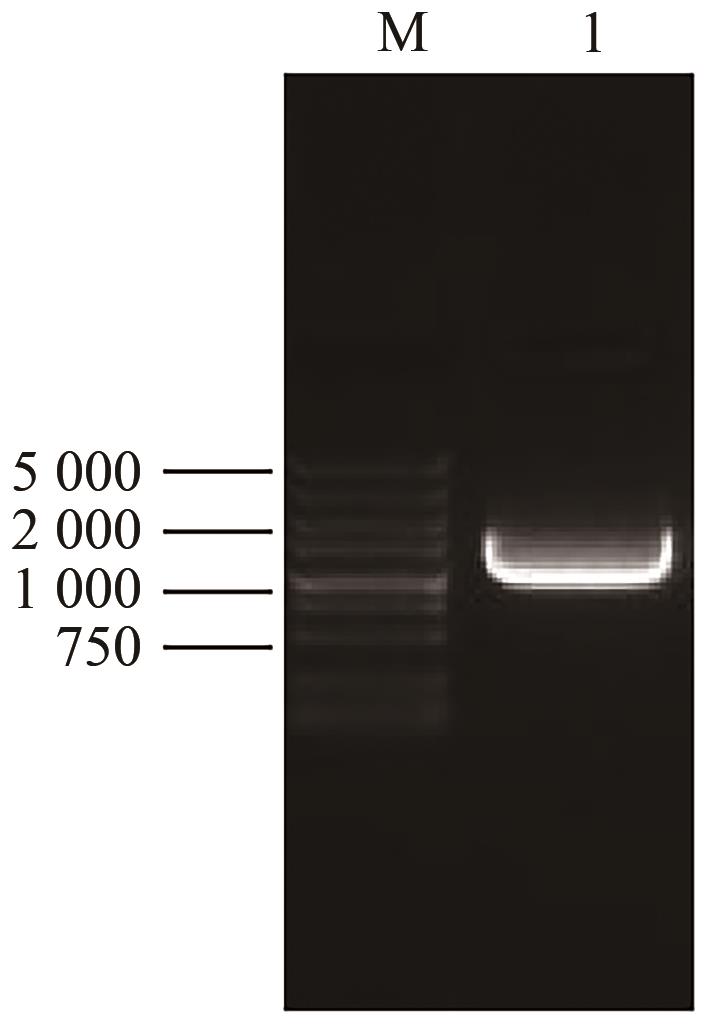
图1 NtPLA2A基因扩增产物
Fig. 1 Amplified product of NtPLA2A gene
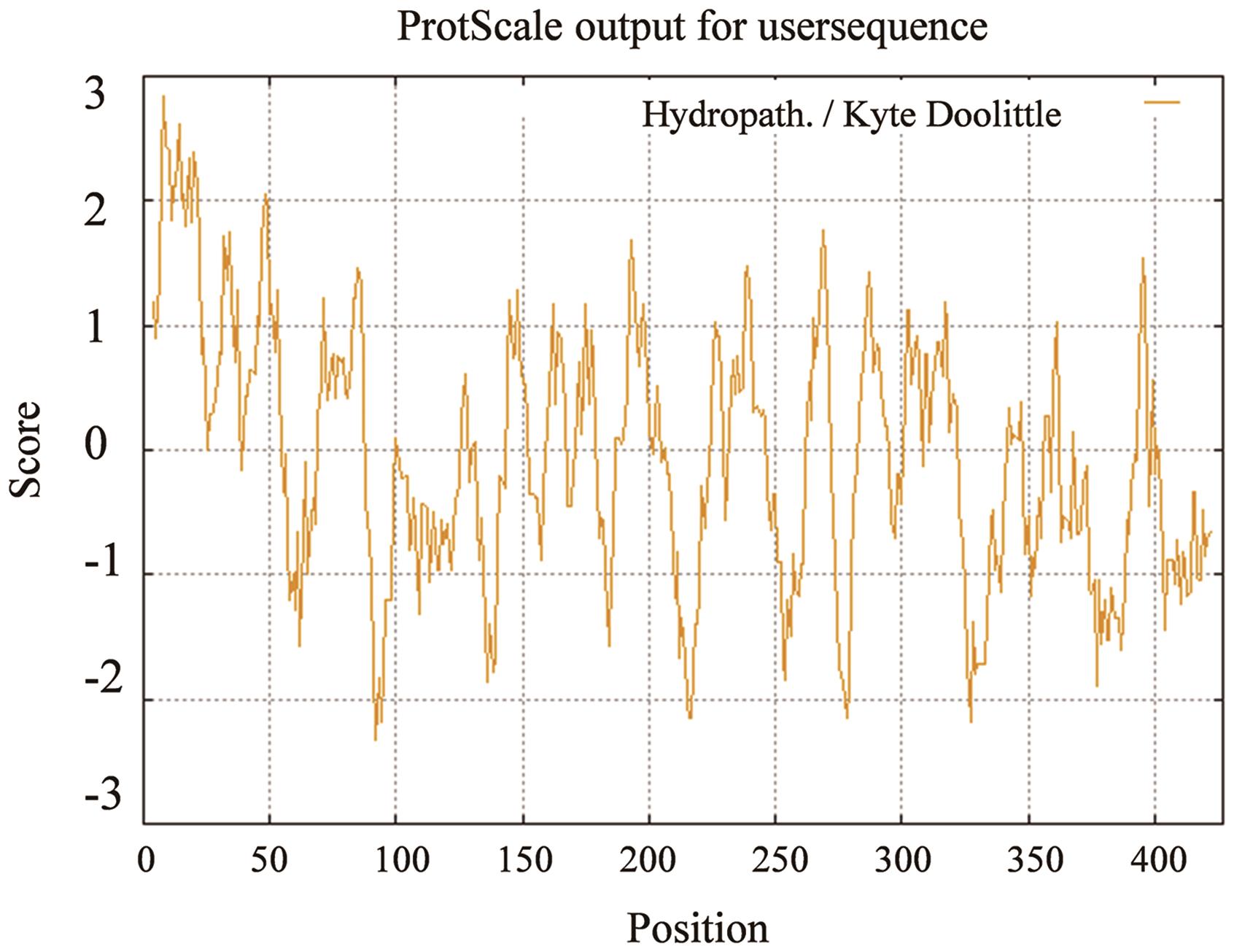
图2 NtPLA2A蛋白的亲/疏水性预测
Fig. 2 Prediction of hydrophilicity/hydrophobicity of NtPLA2A protein
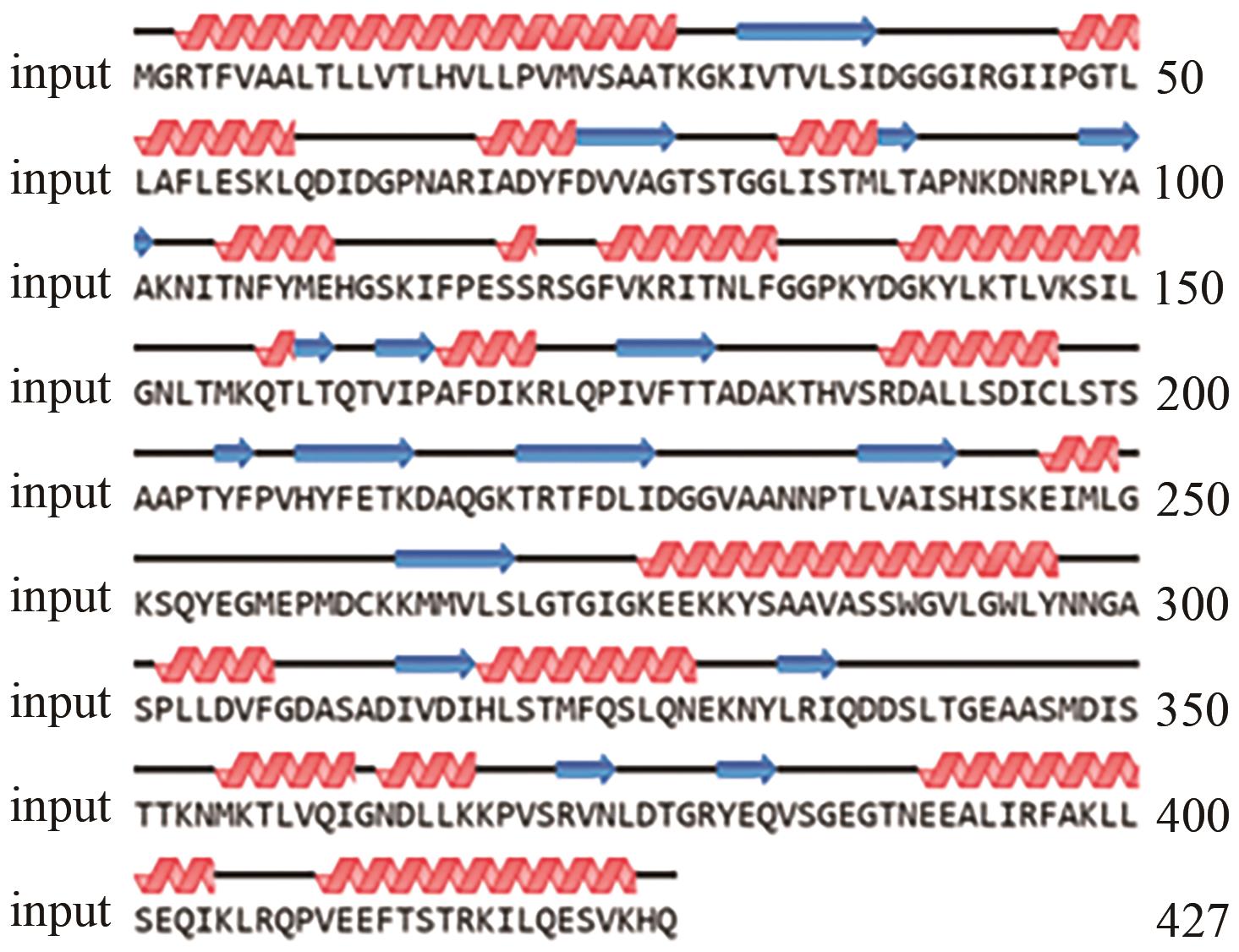
图3 NtPLA2A蛋白的二级结构预测
Fig. 3 Secondary structure prediction of NtPLA2A protein
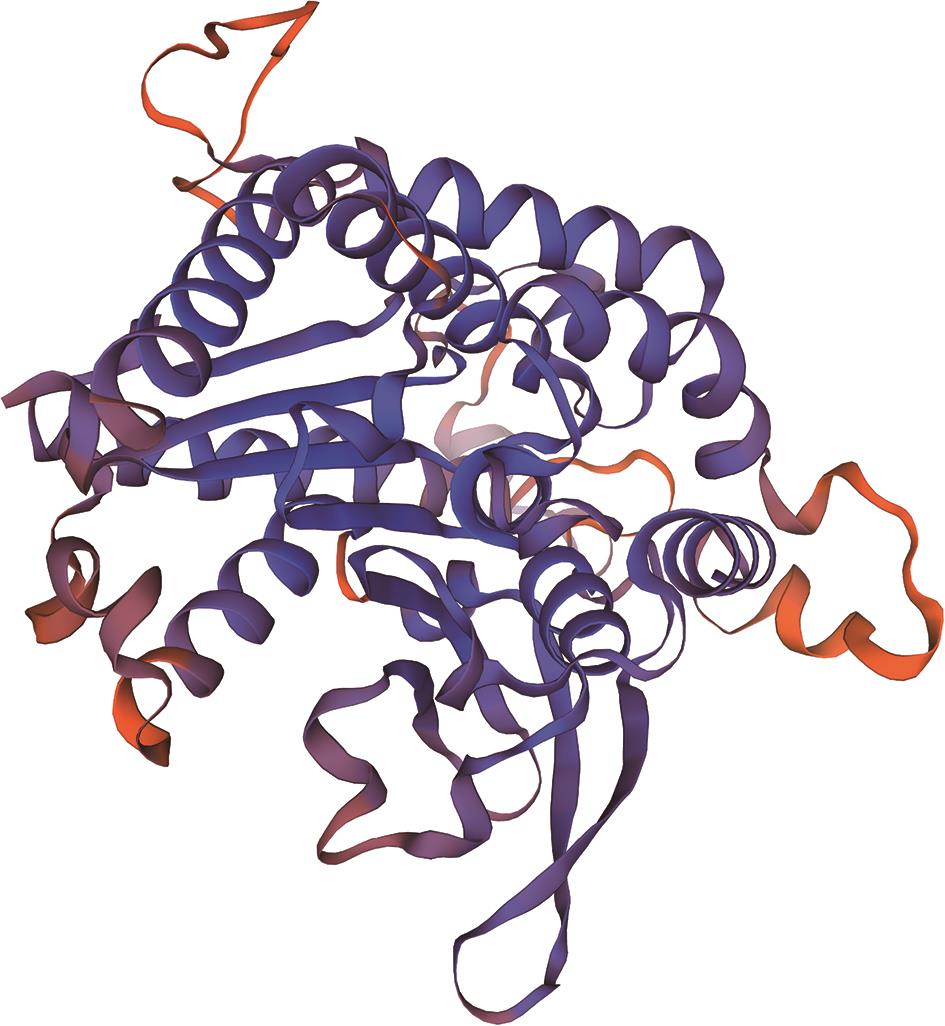
图4 NtPLA2A蛋白的三级结构
Fig. 4 Tertiary structure prediction of NtPLA2A protein
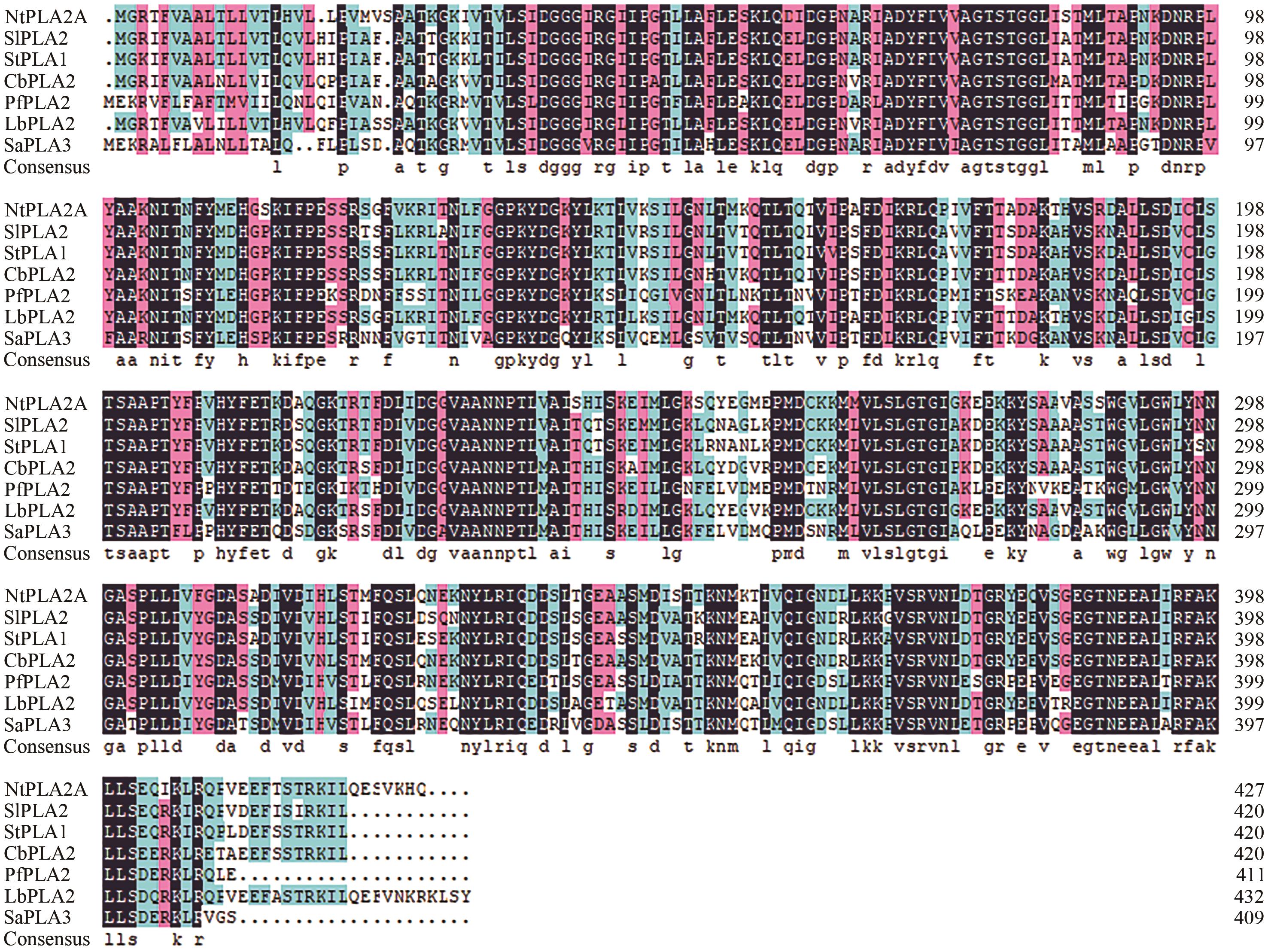
图5 烟草NtPLA2A蛋白质同源序列比对
Fig. 5 Alignment of NtPLA2A protein homologous sequences in Nicotiana tabacum
顺式元件 Cis-element | 序列 Sequence (5′-3′) | 数量 Number | 功能 Function |
|---|---|---|---|
| CAAT-box | CAAAT | 24 | 启动子和增强子区域的常见顺式作用元件 Common cis-acting element in promoter and enhancer regions |
| GARE-motif | TCTGTTG | 3 | 赤霉素响应元件 Gibberellin-responsive element |
| LTR | CCGAAA | 2 | 参与低温响应的顺式作用元件 Cis-acting element involved in low-temperature responsiveness |
| TCT-motif | TCTTAC | 2 | 光响应元件的组成部分 Components of a light responsive element |
| TATA-box | TACAAAA | 47 | 转录起始点-30附近的核心启动子元件 Core promoter element around -30 of transcription start |
| TCA-element | CCATCTTTTT | 1 | 参与水杨酸反应的顺式作用元件 Cis-acting element involved in salicylic acid responsiveness |
| TGACG-motif | TGACG | 2 | 参与茉莉酸甲酯(MeJA)响应的顺式调控元件 Cis-acting regulatory element involved in the MeJA-responsiveness |
| O2-site | GATGATGTGG | 1 | 参与玉米醇溶蛋白代谢调控的顺式调控元件 Cis-acting regulatory element involved in zein metabolism regulation |
| MRE | AACCTAA | 1 | 参与光响应的MYB结合位点 MYB binding site involved in light responsiveness |
| chs-CMA2a | TCACTTGA | 1 | 光响应元件 Components of a light responsive element |
| ATCT-motif | AATCTAATCC | 1 | 光响应保守DNA模块的组成部分 Components of a conserved DNA module involved in light responsiveness |
| CGTCA-motif | CGTCA | 1 | 参与茉莉酸甲酯响应的顺式作用调控元件 Cis-acting regulatory element involved in the MeJA-responsiveness |
| GT1-motif | GGTTAA | 1 | 光响应元件 Light responsive element |
表4 NtPLA2A基因启动子顺式作用元件预测
Table 4 Prediction of cis-acting elements in NtPLA2A promoter
顺式元件 Cis-element | 序列 Sequence (5′-3′) | 数量 Number | 功能 Function |
|---|---|---|---|
| CAAT-box | CAAAT | 24 | 启动子和增强子区域的常见顺式作用元件 Common cis-acting element in promoter and enhancer regions |
| GARE-motif | TCTGTTG | 3 | 赤霉素响应元件 Gibberellin-responsive element |
| LTR | CCGAAA | 2 | 参与低温响应的顺式作用元件 Cis-acting element involved in low-temperature responsiveness |
| TCT-motif | TCTTAC | 2 | 光响应元件的组成部分 Components of a light responsive element |
| TATA-box | TACAAAA | 47 | 转录起始点-30附近的核心启动子元件 Core promoter element around -30 of transcription start |
| TCA-element | CCATCTTTTT | 1 | 参与水杨酸反应的顺式作用元件 Cis-acting element involved in salicylic acid responsiveness |
| TGACG-motif | TGACG | 2 | 参与茉莉酸甲酯(MeJA)响应的顺式调控元件 Cis-acting regulatory element involved in the MeJA-responsiveness |
| O2-site | GATGATGTGG | 1 | 参与玉米醇溶蛋白代谢调控的顺式调控元件 Cis-acting regulatory element involved in zein metabolism regulation |
| MRE | AACCTAA | 1 | 参与光响应的MYB结合位点 MYB binding site involved in light responsiveness |
| chs-CMA2a | TCACTTGA | 1 | 光响应元件 Components of a light responsive element |
| ATCT-motif | AATCTAATCC | 1 | 光响应保守DNA模块的组成部分 Components of a conserved DNA module involved in light responsiveness |
| CGTCA-motif | CGTCA | 1 | 参与茉莉酸甲酯响应的顺式作用调控元件 Cis-acting regulatory element involved in the MeJA-responsiveness |
| GT1-motif | GGTTAA | 1 | 光响应元件 Light responsive element |
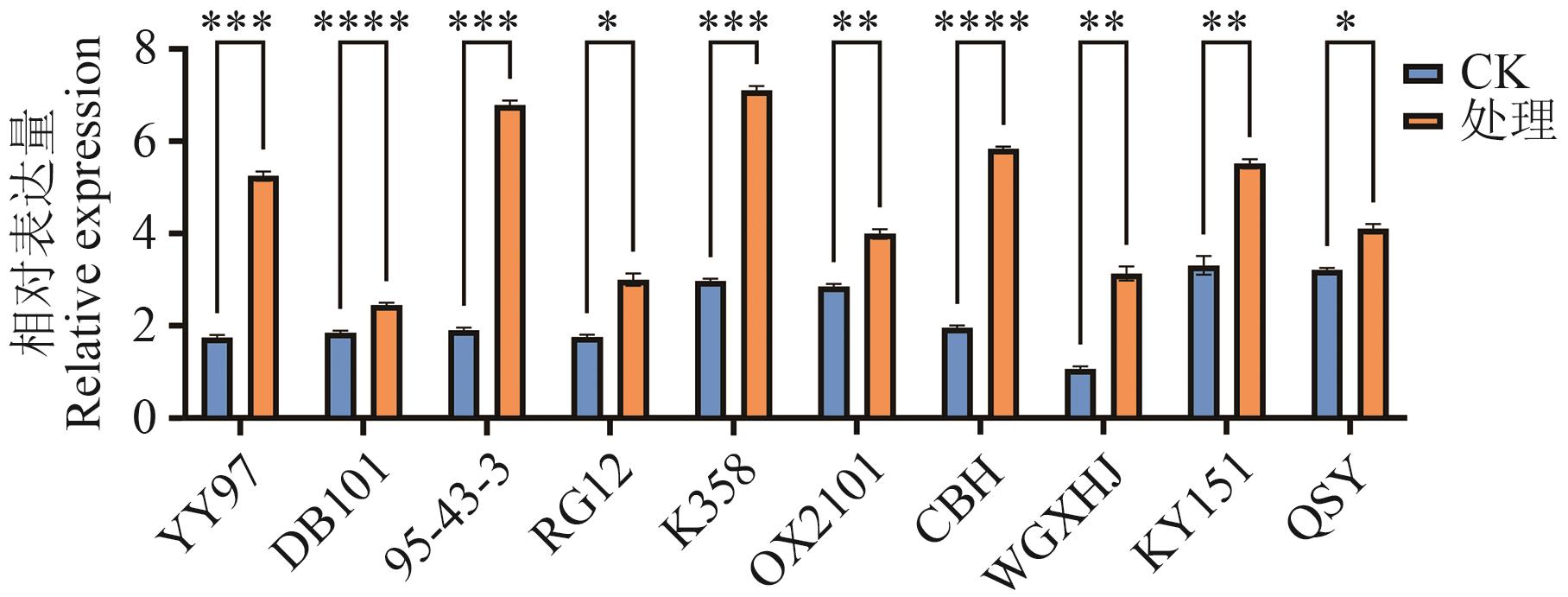
图6 不同烟草材料接种青枯菌3 h后NtPLA2A的表达模式岩烟97(YY97)、长脖黄(CBH)、未岗小白筋(WGXHJ)和庆胜烟(QSY);****P<0.000 1,***P<0.001,**P<0.01,*P<0.05,ns (P>0.05),下同
Fig. 6 Expression pattern of NtPLA2A in different tobacco inoculated with Ralstonia solanacearum for 3 hYY97 (Yanyan 97), DB101, 95-43-3, RG12, K358, OX2101, CBH (Changbohuang), WGXHJ (Weigang Xiaobaijin), KY151, QSY (Qingshengyan). ****P<0.000 1,***P<0.001,**P<0.01,*P<0.05, ns (P>0.05). The same below
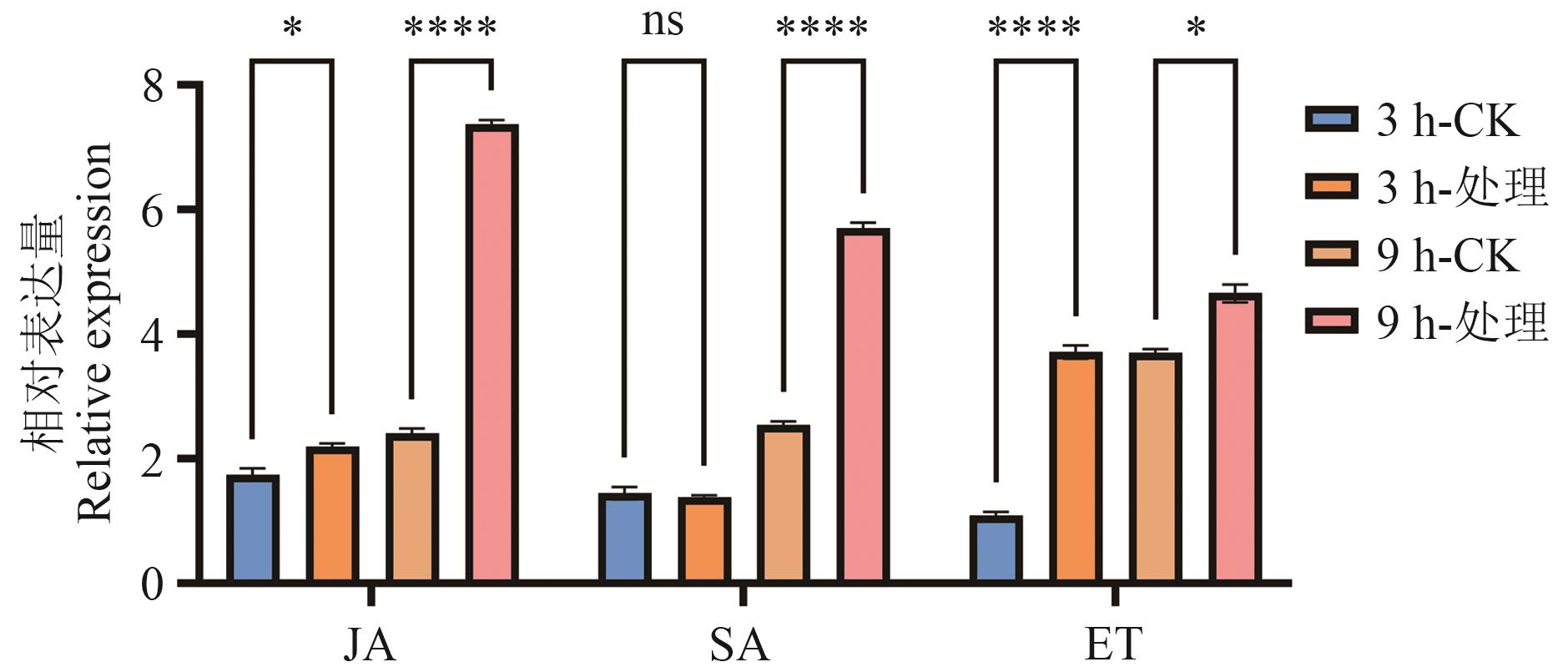
图7 NtPLA2A在JA、SA和ET处理下的表达模式
Fig. 7 Expression analysis of NtPLA2A under JA, SA and ET treatment
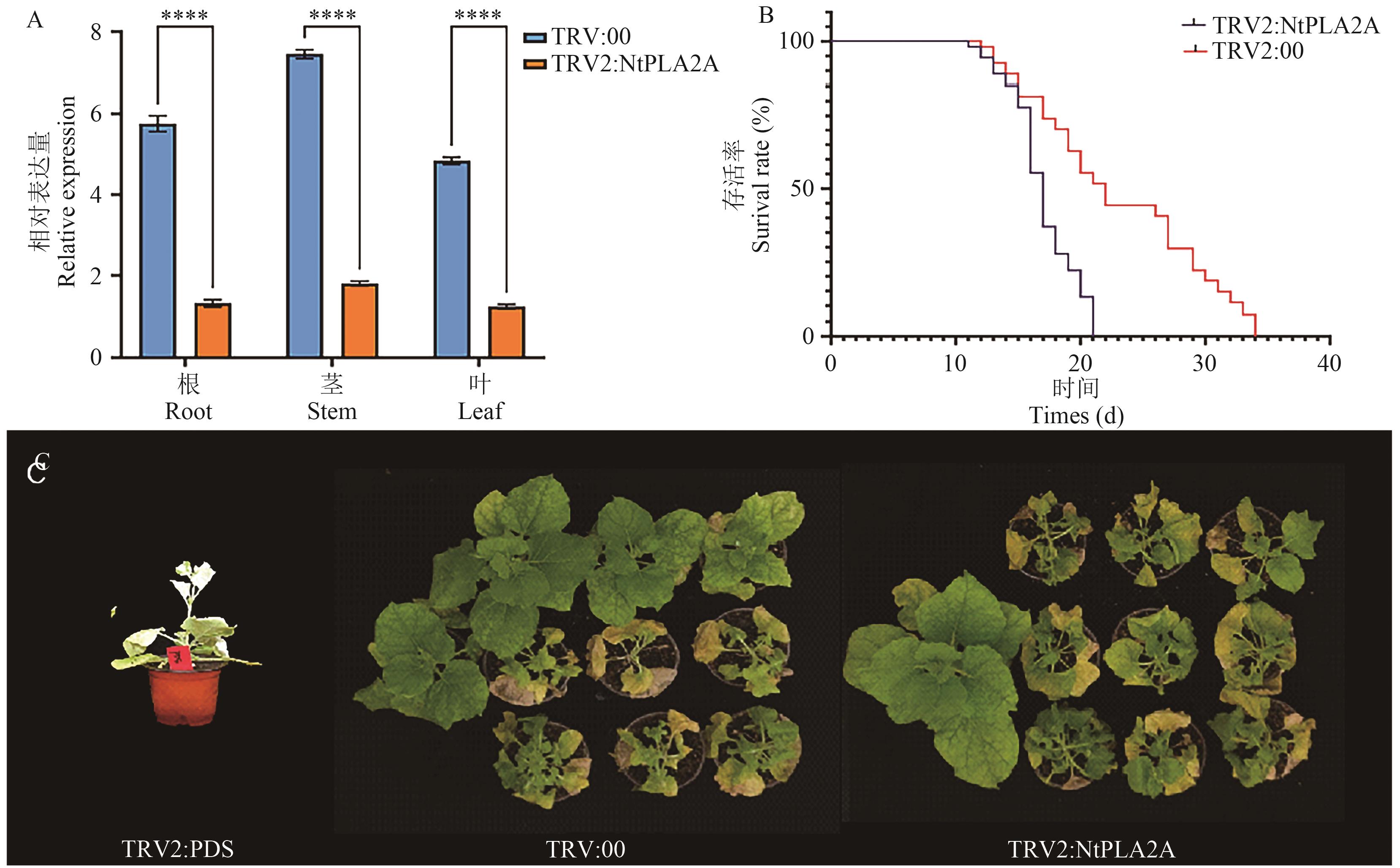
图8 病毒诱导的基因沉默NtPLA2A基因对本氏烟青枯病抗性的影响A:本氏烟中NtPLA2A在不同组织中的沉默效率; B:对照组TRV∶00及试验组TRV2∶NtPLA2A的存活率;C:本氏烟中NtPDS沉默后白化效果,对照组TRV∶00及试验组TRV2∶NtPLA2A发病情况
Fig. 8 Effect of virus-induced gene silencing of NtPLA2A on the resistance of N. benthamianaA: Silencing efficiency of NtPLA2A in different tissues of N. benthamiana. B: Survival rate of control group TRV∶00 and experimental group TRV2∶NtPLA2A. C: Bleaching effect after silencing of NtPDS in N. benthamiana, and disease incidence in control group TRV∶00 and experimental group TRV2∶NtPLA2A
| [1] | Wei YL, Cai ZC, Che ZY, et al. Effects of phospholipase C inhibition on the regulation of membrane lipid metabolism in maize leaves [J]. Front Plant Sci, 2025, 16: 1547477. |
| [2] | Campos ML. A novel role for a phospholipase D in plant immunity [J]. Plant Physiol, 2020, 183(1): 33-34. |
| [3] | Wang GL, Ryu S, Wang XM. Plant phospholipases: an overview [M]//Lipases and Phospholipases. Totowa, NJHumana Press2012: 123-137. |
| [4] | Hong YY, Pan XQ, Welti R, et al. Phospholipase Dα3 is involved in the hyperosmotic response in Arabidopsis [J]. Plant Cell, 2008, 20(3): 803-816. |
| [5] | Fan RY, Zhao F, Gong Z, et al. Insights into the mechanism of phospholipid hydrolysis by plant non-specific phospholipase C [J]. Nat Commun, 2023, 14: 194. |
| [6] | Hong YY, Zhao J, Guo L, et al. Plant phospholipases D and C and their diverse functions in stress responses [J]. Prog Lipid Res, 2016, 62: 55-74. |
| [7] | Gonorazky G, Guzzo MC, Abd-El-Haliem AM, et al. Silencing of the tomato phosphatidylinositol-phospholipase C2 (SlPLC2) reduces plant susceptibility to Botrytis cinerea [J]. Mol Plant Pathol, 2016, 17(9): 1354-1363. |
| [8] | Jang JH, Lee OR. Overexpression of ginseng patatin-related phospholipase pPLAIIIβ alters the polarity of cell growth and decreases lignin content in Arabidopsis [J]. J Ginseng Res, 2020, 44(2): 321-331. |
| [9] | Wu W, Li WX, Huang CH. Phospholipase A2, a nonnegligible enzyme superfamily in gastrointestinal diseases [J]. Biochimie, 2022, 194: 79-95. |
| [10] | Hirschberg HJHB, Simons JFA, Dekker N, et al. Cloning, expression, purification and characterization of patatin, a novel phospholipase A [J]. Eur J Biochem, 2001, 268(19): 5037-5044. |
| [11] | Rydel TJ, Williams JM, Krieger E, et al. The crystal structure, mutagenesis, and activity studies reveal that patatin is a lipid acyl hydrolase with a Ser-Asp catalytic dyad [J]. Biochemistry, 2003, 42(22): 6696-6708. |
| [12] | Tavernier E, Pugin A. Phospholipase activities associated with the tonoplast from Acer pseudoplatanus cells: identification of a phospholipase A1 activity [J]. BBA Biomembr, 1995, 1233(2): 118-122. |
| [13] | Singh A, Baranwal V, Shankar A, et al. Rice phospholipase a superfamily: organization, phylogenetic and expression analysis during abiotic stresses and development [J]. PLoS One, 2012, 7(2): e30947. |
| [14] | Li MY, Bahn SC, Guo L, et al. Patatin-related phospholipase pPLAIIIβ-induced changes in lipid metabolism alter cellulose content and cell elongation in Arabidopsis [J]. Plant Cell, 2011, 23(3): 1107-1123. |
| [15] | Kwak JS, Kwon DH, Song JT, et al. A mutation in the pPLA-IIα gene encoding PATATIN-RELATED PHOSPHOLIPASE a causes late flowering in Arabidopsis [J]. Biochem Biophys Res Commun, 2021, 582: 16-20. |
| [16] | Seo YS, Kim EY, Mang HG, et al. Heterologous expression, and biochemical and cellular characterization of CaPLA1 encoding a hot pepper phospholipase A1 homolog [J]. Plant J, 2008, 53(6): 895-908. |
| [17] | Liu CX, Li X, Meng DX, et al. A 4-bp insertion at ZmPLA1 encoding a putative phospholipase a generates haploid induction in maize [J]. Mol Plant, 2017, 10(3): 520-522. |
| [18] | Liu HY, Wang K, Jia ZM, et al. Efficient induction of haploid plants in wheat by editing of TaMTL using an optimized Agrobacterium-mediated CRISPR system [J]. J Exp Bot, 2020, 71(4): 1337-1349. |
| [19] | Scherer GFE, Ryu SB, Wang XM, et al. Patatin-related phospholipase A: nomenclature, subfamilies and functions in plants [J]. Trends Plant Sci, 2010, 15(12): 693-700. |
| [20] | Yang WY, Zheng Y, Bahn SC, et al. The patatin-containing phospholipase a pPLAIIα modulates oxylipin formation and water loss in Arabidopsis thaliana [J]. Mol Plant, 2012, 5(2): 452-460. |
| [21] | 姜惠娜, 敬松, 李晗玉, 等. 西藏野生垂穗披碱草EnPLA1基因克隆与表达分析 [J]. 草地学报, 2021, 29(10): 2141-2148. |
| Jiang HN, Jing S, Li HY, et al. Cloning and expression analysis of EnPLA1 gene in Tibetan wild Elymus nutans Griseb [J]. Acta Agrestia Sin, 2021, 29(10): 2141-2148. | |
| [22] | Narusaka Y, Narusaka M, Seki M, et al. Expression profiles of Arabidopsis phospholipase a IIA gene in response to biotic and abiotic stresses [J]. Plant Cell Physiol, 2003, 44(11): 1246-1252. |
| [23] | 李慧欣, 车致远, 王旭, 等. 玉米磷脂酶A基因家族鉴定及其在盐胁迫条件下的差异表达分析 [J]. 玉米科学, 2025, 33(1): 14-21. |
| Li HX, Che ZY, Wang X, et al. Identification of maize phospholipase a gene family and analysis of its differential expression under salt stress [J]. J Maize Sci, 2025, 33(1): 14-21. | |
| [24] | Yang WY, Devaiah SP, Pan XQ, et al. AtPLAI is an acyl hydrolase involved in basal jasmonic acid production and Arabidopsis resistance to Botrytis cinerea [J]. J Biol Chem, 2007, 282(25): 18116-18128. |
| [25] | Saddhe A, Potock M. Comparative phylogenomic and structural analysis of canonical secretory PLA2 and novelPLA2-like family in plants [J]. Front Plant Sci,14(14), 1118670. |
| [26] | Zhang Y, Wang L, Chen X. Phospholipase A2 family members orchestrate plant immune responses through hormone signaling and second messenger production [J]. Nat Commun, 14(1), 1-12. |
| [27] | Hayward AC. Biology and epidemiology of bacterial wilt caused by Pseudomonas solanacearum [J]. Annu Rev Phytopathol, 1991, 29: 65-87. |
| [28] | Xiao ZL, Liu ZW, Zhang HF, et al. Transcriptomics and virus-induced gene silencing identify defence-related genes during Ralstonia solanacearum infection in resistant and susceptible tobacco [J]. Genomics, 2024, 116(2): 110784. |
| [29] | Wicker E, Grassart L, Coranson-Beaudu R, et al. Ralstonia solanacearum strains from Martinique (French west Indies) exhibiting a new pathogenic potential [J]. Appl Environ Microbiol, 2007, 73(21): 6790-6801. |
| [30] | Jiang GF, Wei Z, Xu J, et al. Bacterial wilt in China: history, current status, and future perspectives [J]. Front Plant Sci, 2017, 8: 1549. |
| [31] | Wu W, Zou HS, Zheng HY, et al. Ralstonia solanacearum type III effector RipAF1 mediates plant resistance signaling by ADP-ribosylation of host FBN1 [J]. Hortic Res, 2024, 11(8): uhae162. |
| [32] | 张林琳,宫瑞,崔彦玲,等.用VIGS分析SmWRKY30在茄子抗青枯病中的作用[J].中国农业科学, 58(3), 548-563. |
| Zhang L, Gong R, Cu, Y, et al. Analysis of the role of SmWRKY30 in eggplant resistance against bacterial wilt using VIGS [J]. Sc Agric Sin, 2025, 58(3): 548-563. | |
| [33] | 周明,陈燕,李阳,等.植物激素信号交叉对话在抗病反应中的作用机制[J]. 植物生理学报,2023, 59 (4):721-732. |
| Zhou M, Chen Y, Li Y, et al. Mechanism of hormone signal crosstalk in plant disease resistance response [J]. Plant Physiol J, 2023, 59(4), 721-732. | |
| [34] | 李明,张华,王伟,等. 乙烯与茉莉酸协同调控PLA基因表达增强番茄对青枯病抗性的分子机制[J]. 植物病理学报, 2024, 53(2): 210-225. |
| Li M, Zhang H, Wang W, et al. Molecular mechanism of ethylene and jasmonate co-regulating PLA gene expression to enhance tomato resistance against bacterial wilt [J]. Acta Phytopathol Sin, 53(2), 210-225. |
| [1] | 郑晓雨, 汪忆雪, 赵晓敏, 吴君章, 任洁馨, 钱亚新, 肖志亮, 刘正文, 潘晓薇, 李依婷. 烟草倍半萜合成酶基因NtEAS的体外功能鉴定[J]. 生物技术通报, 2026, 42(8): 197-206. |
| [2] | 翟莹, 高双, 计俊杰, 于海伟, 赵艳, 马天意, 张梅娟, 李珊珊. 工业大麻转录因子CsMYB12抗旱功能的研究[J]. 生物技术通报, 2026, 42(6): 294-303. |
| [3] | 安飞飞, 罗秀芹, 蔡杰, 薛晶晶, 朱文丽. 木薯MeMYB106基因克隆及其在叶片花青素合成中的功能[J]. 生物技术通报, 2026, 42(6): 13-21. |
| [4] | 顾恒, 郑栋, 宰舟颖, 陈贡伟, 岳远征, 王良桂, 杨秀莲. 桂花OfSVB1响应盐胁迫的功能研究[J]. 生物技术通报, 2026, 42(5): 332-339. |
| [5] | 金旋, 向芬, 戴翠婷, 杨辉, 李赛君, 刘红艳, 钱思维, 蔺万煌, 李维. 茶树CsTDIFL基因的克隆、表达特性分析及其对氨基酸合成的调控[J]. 生物技术通报, 2026, 42(5): 323-331. |
| [6] | 张欣, 陈骋, 霍元博, 黄仁丽, 张丽, 张凯, 童华荣, 袁连玉. 茶树CsCRD1基因的克隆及其对叶绿素生物合成的影响[J]. 生物技术通报, 2026, 42(5): 280-291. |
| [7] | 彭朝凤, 夏琳, 刘瑞霞, 闫新可, 牧杨威, 刘梦茹, 杨军, 武明珠. 基于VIGS和CRISPR/Cas9技术的烟草NtPPO5基因功能分析[J]. 生物技术通报, 2026, 42(4): 251-262. |
| [8] | 刘青媛, 吴洪启, 陈秀娥, 陈剑, 姜远泽, 何燕子, 喻奇伟, 刘仁祥. 转录因子NtMYB96a调控烟草耐旱性的功能研究[J]. 生物技术通报, 2026, 42(4): 239-250. |
| [9] | 孙婷, 张艳, 刘玉珊, 冯媛媛, 秦恒山, 张军, 何小岗, 张景荣. 黄秋葵AeF3H基因的克隆与功能分析[J]. 生物技术通报, 2026, 42(4): 153-160. |
| [10] | 朱志炎, 宋芷薇, 何珊, 张德清, 何勇, 田志宏. 烟草靶斑病拮抗菌的鉴定及其防治特性[J]. 生物技术通报, 2026, 42(4): 310-320. |
| [11] | 张驰昊, 刘晋囡, 董家乐, 晁跃辉. 紫花苜蓿酵母表达文库的构建及候选耐盐基因的筛选与鉴定[J]. 生物技术通报, 2026, 42(2): 239-249. |
| [12] | 刘梦茹, 夏琳, 刘瑞霞, 闫新可, 杨军, 张菁华, 武明珠. 烟草多酚氧化酶NtPPO1-2基因克隆及功能分析[J]. 生物技术通报, 2026, 42(2): 218-227. |
| [13] | 王亚乐, 李雪君, 孙计平, 孙焕. 烟草豫浓香201对低温胁迫的生理响应及转录组分析[J]. 生物技术通报, 2026, 42(2): 228-238. |
| [14] | 张驰昊, 刘晋囡, 晁跃辉. 蒺藜苜蓿bZIP转录因子MtbZIP29的克隆及功能分析[J]. 生物技术通报, 2026, 42(1): 241-250. |
| [15] | 倪莹, 李雷, 汪进萱, 马波, 孟昕, 冷平生, 吴静, 胡增辉. 紫丁香So4CL的克隆及功能分析[J]. 生物技术通报, 2026, 42(1): 139-149. |
| 阅读次数 | ||||||
|
全文 |
|
|||||
|
摘要 |
|
|||||
